
Kutai National Park serves as conservation haven for 324 fauna species
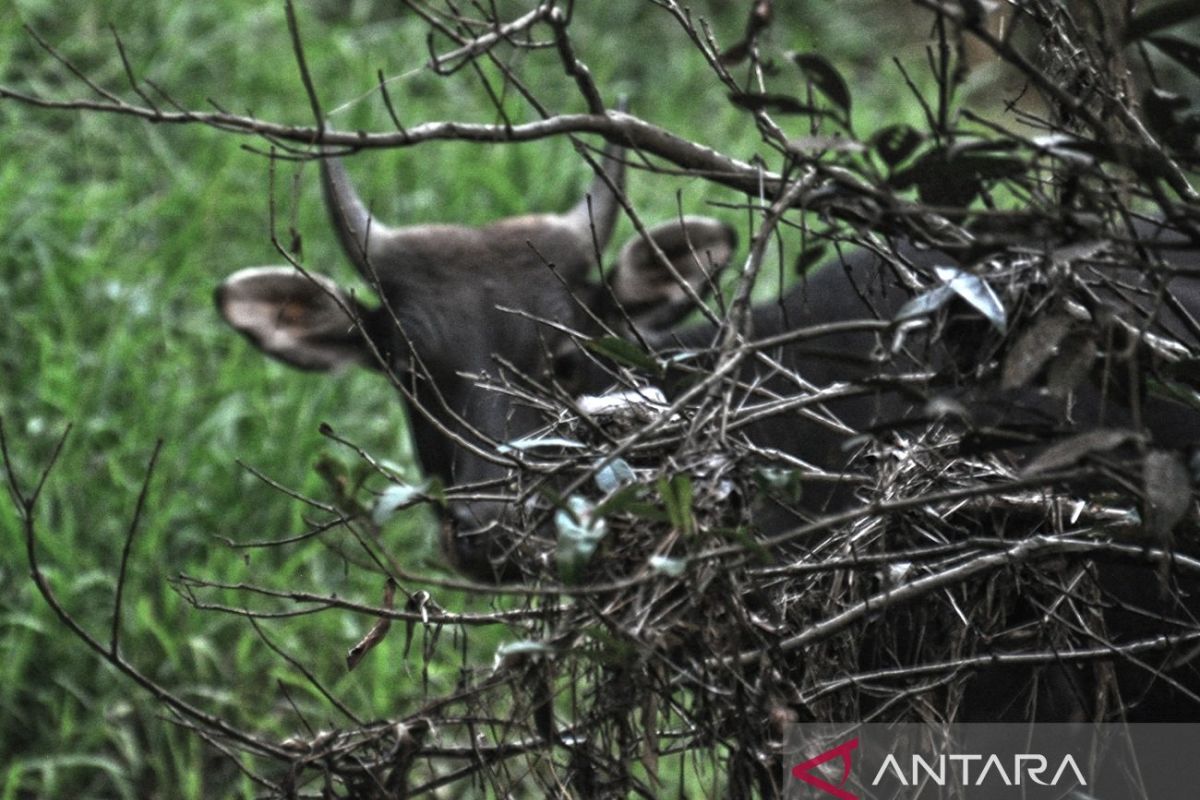
The Kutai National Park (TNK) Agency in East Kalimantan Province is optimising its function as a nature conservation area to safeguard 324 fauna species, including several classified as endangered. “We have recorded faunal diversity in Kutai National Park at 324 species, comprising 90 mammal species, 196 butterfly species, and 38 cave fauna species,” said Head of the Kutai National Park Agency Syaiful Bahri in Samarinda on Thursday. He conveyed that the protection area places special priority on rescuing three endemic species with endangered status: the Northeast Bornean orangutan (Pongo pygmaeus morio), the proboscis monkey (Nasalis larvatus), and the wild Bornean banteng (Bos javanicus lowi). He continued that to ensure maximum wildlife monitoring amidst potential habitat disturbances, park management has adapted by utilising technology in the form of thermal drones and camera traps. The monitoring camera lenses, he added, have also captured the movement of the Bornean ground-cuckoo and confirmed the presence of the great argus pheasant, which was previously discovered in the Rantau Pulung subdistrict area of East Kutai Regency. Given the significant conservation challenges on the ground, the Kutai National Park Agency is actively building synergy with non-governmental organisations such as the Yayasan Jejak Pulang from Samboja to strengthen orangutan conservation instruments. “The main focus of this collaboration at present is conducting a study on habitat suitability within the TNK forest area as a release site for orangutans ready to be returned to the wild,” he explained. Management fully recognises that efforts to preserve the landscape covering areas of Bontang City, Kutai Kartanegara Regency, and East Kutai Regency absolutely require awareness support from local residents. “Community involvement is realised through the development of special-interest tourism, engaging the Tourism Awareness Group (Pokdarwis) to make residents the frontline protectors of the forest as well as drivers of the local economy through the Social Forestry programme,” Syaiful concluded. Kutai National Park is a nature conservation area spanning 193,753.42 hectares, divided into seven ecosystem types dominated by dipterocarp forest covering 145,745.46 hectares.