
Kutai National Park Becomes a Bastion for Tropical Rainforest Flora Preservation
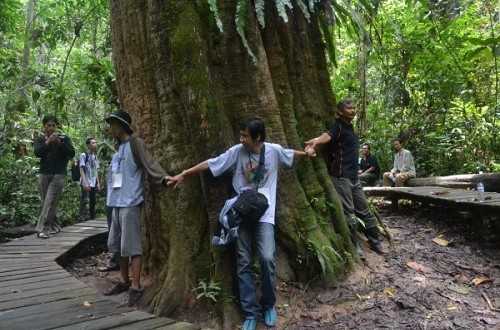
Kutai National Park (TNK) is reinforcing its role as a bastion for the preservation of Indonesia’s tropical rainforests. The 193,753-hectare area in East Kalimantan serves as a habitat for thousands of plant species, including several key flora that play a vital role in maintaining the ecosystem’s balance.
The Kutai National Park Authority is currently safeguarding at least six key flora species: pasak bumi (Eurycoma longifolia), ulin or ironwood (Eusideroxylon zwageri), bendang (Borassodendron borneense), meranti (Shorea spp), the black orchid (Coelogyne pandurata), and coastal mangrove ecosystems.
Head of the Kutai National Park Authority, Syaiful Bahri, stated that the protection of natural habitats, control of illegal logging, and forest rehabilitation are the primary measures to ensure the sustainability of these distinctive Kalimantan plants. “Protecting natural habitats, controlling illegal logging, and rehabilitation programmes are our top priorities so that the existence of these distinctive plants is maintained and can be utilised sustainably,” he said in Kutai Timur on Saturday (13/6/2026).
The existence of these flora is not only crucial for biodiversity but also supports the ecological functions of the tropical rainforest. Mangroves, for instance, protect the coastline from abrasion and serve as spawning grounds for various marine biota. Meanwhile, meranti trees form the canopy of lowland forests, providing a habitat for numerous wild animals.
TNK also pays special attention to the ulin tree, known as the identity flora of Kalimantan. The population of this tree has faced pressure due to past exploitation, as its wood is highly valued economically and renowned for its exceptional strength. Similar protective measures are applied to meranti trees, whose timber is in high market demand but are now threatened by land conversion, despite their crucial role as shelter for endemic wildlife such as orangutans.
Furthermore, the park management encourages the cultivation of pasak bumi to reduce the pressure of direct harvesting from the wild. This herbal plant is widely sought after for its known health benefits. Routine patrols are also conducted to protect the black orchid, an iconic Kalimantan epiphyte that is highly sensitive to environmental changes and vulnerable to death if the forest’s microclimatic humidity is altered.
In high-rainfall areas, protection is also extended to the bendang palm, an endemic species whose fruit serves as a food source for various wild animals, playing a crucial role in maintaining the forest’s natural food chain. Along the coastal areas bordering the Makassar Strait, management works to protect the mangrove ecosystem from pollution threats, recognising its function as a coastal shield, carbon sink, and supporter of coastal fisheries productivity.
Kutai National Park is currently recorded as a habitat for 1,302 plant species from 118 families, including eight Dipterocarpaceae genera and 15 endemic species. This biological wealth makes the area a critical site for sustaining Indonesia’s tropical rainforests amidst pressures from land conversion and environmental change.