
Kutai Lawas Community Preserves Nutuk Beham Tradition as an Expression of Gratitude
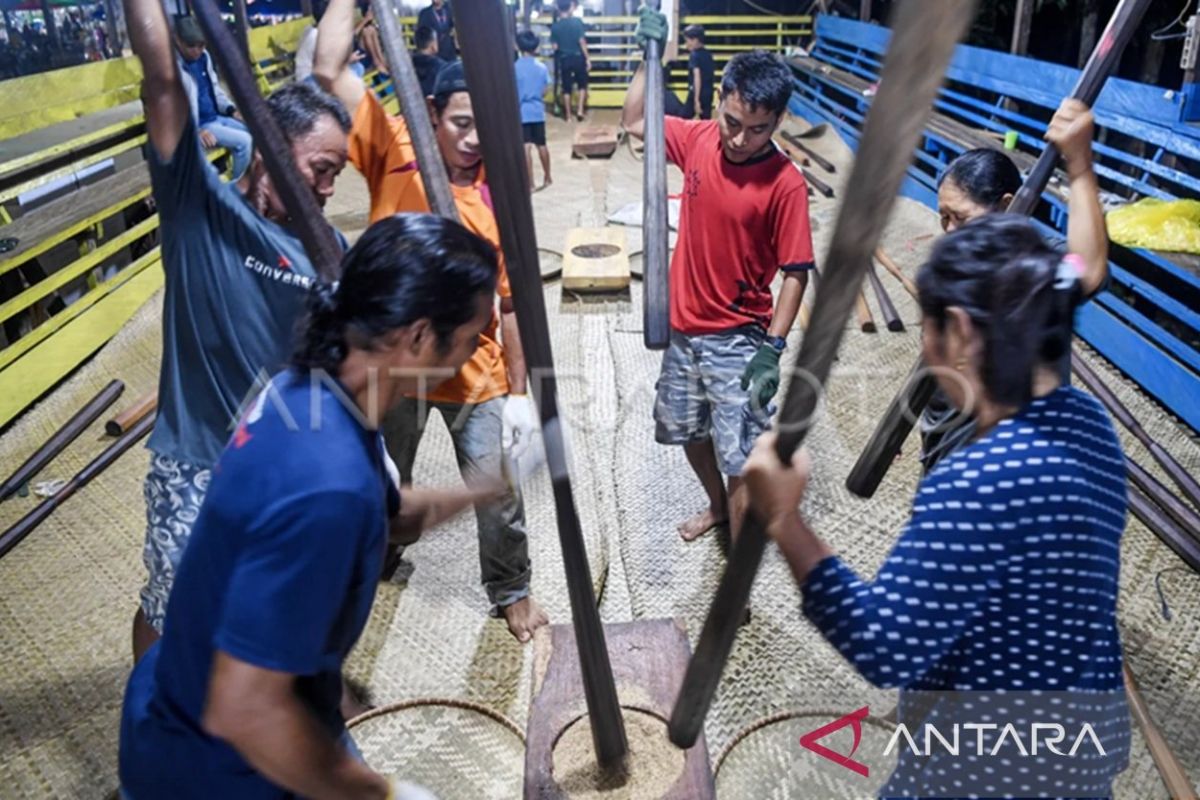
The indigenous community of Kutai Lawas in Kedang Ipil Village, Kutai Kartanegara Regency, East Kalimantan, continues to maintain the Nutuk Beham tradition as a form of gratitude for abundant rice harvests. “We must always remember our ancestral heritage, so that the tradition of respecting the rice processing process can continue and be understood by the younger generations,” said Sartin, a traditional leader of Kedang Ipil Village, in Kutai Kartanegara on Sunday.
This effort to preserve culture, he noted, serves as a manifestation of the residents’ existence in nurturing local wisdom, which is considered rich in spiritual values. Sartin explained that the food processing begins by taking selected soaked rice grains, which are then mass-roasted over traditional hearths until they release a characteristic fragrant aroma. “After cooling sufficiently, villagers work together to pound the glutinous rice in a large wooden mortar in turns,” he explained.
The communal effort of processing the rice typically takes up to three full days to ensure the resulting glutinous rice is perfectly clean. The close interaction that naturally develops over several days automatically strengthens the bonds of brotherhood among the villagers.
The Head of the East Kalimantan Cultural Preservation Centre, Lestari, stated that due to the community’s efforts in ensuring the continuity of this ancestral ritual, the government has officially designated this celebration as one of Indonesia’s Intangible Cultural Heritage from the East Kalimantan region. “In addition to protecting it, we must all develop and find ways to facilitate various development activities for this proud traditional festival,” said Lestari.
Support in the form of regulations from the authorities is believed to help the indigenous community remain legally protected while conducting their annual cultural preservation. “The historical value and the philosophical message regarding the ancient prohibition against wasting rice are also continuously taught to future generations to instil respect for nature’s sustainability,” she added. At the peak of the tradition, the collectively pounded rice is cooked and served warm for all residents and visitors from outside the region to enjoy.