
Kusamba Fishers Lose Their Catch as Their Story Is Told in a Film
Coastal erosion and changes in fish migration patterns have caused catches among fishers in Kusamba, Klungkung Regency, Bali, to decline. The impact is also being felt by the local fish-salting industry, which now processes fish shipped in from other areas. This is one of the climate-related challenges in Bali highlighted in a short film as part of the Bali Climate Lens programme.
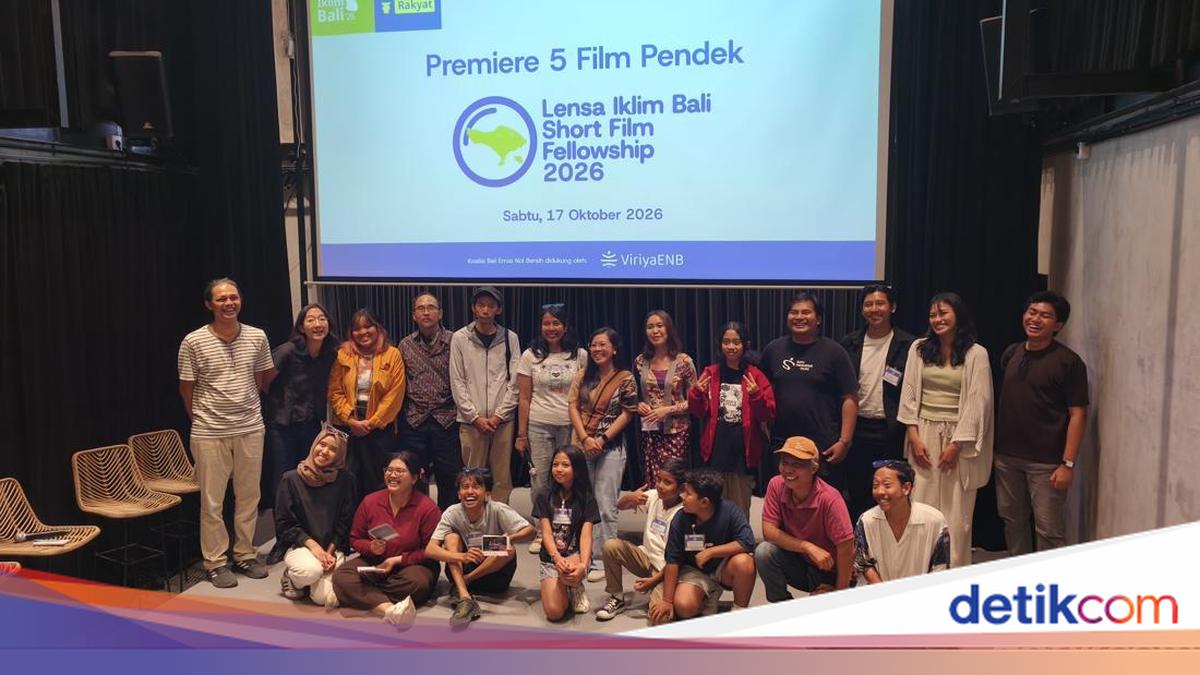
The programme, organised by the Bali Zero Emissions Coalition, screened five short films for the public during Bali Climate Week. The films explore environmental and climate issues affecting people’s lives, including problems whose impacts are not always immediately apparent.
“We are trying to bring forward human stories and community stories that are rarely told when we talk about climate action or solutions,” said Aisyah Madeleine, communications specialist at the Bali Zero Emissions Coalition, on Saturday (17 October 2026).
The five films selected through a curation process are Dapur Laut, produced by Niskala Studio; Berlayar, produced by Minikino; Where The Sun is Harvested, produced by Singaraja Menonton; Viewfinder, by Feugee; and Satu Pemberhentian Lagi, by Amrita Studio.
The films cover different themes but share a common thread: environmental and climate issues connected to the lives of people in Bali.
The documentary Dapur Laut, directed by I Wayan Rio Kharisma, focuses on the lives of I Nengah Sudiarta and Ni Wayan Sudiati, a married couple who depend on the sea along the coast of Kusamba Beach in Klungkung Regency.
Nengah works as a fisher, while Sudiati works at a fish-salting business in Kusamba. After relying on the sea for their livelihood for years, they are now facing changes in local fishing conditions.
Coastal erosion and shifts in fish migration patterns have reduced catches. Nengah often goes out to sea and returns without any fish. Meanwhile, the shortage of locally caught fish means Kusamba’s fish-salting industry has to process supplies brought in from other areas.
“Many of the fish, according to the fishers there, come from Java or Lombok—in other words, they are not from the local waters,” Rio said when speaking at Bali Climate Lens on Saturday (17 October 2026).
Another environmental issue is explored in Where The Sun is Harvested. The film takes an educational approach to solar-panel use through the story of three children from Bondalem Village, Tejakula District, Buleleng Regency.
The children go on an adventure to learn where the water used by their village comes from. Solar panels are central to residents’ lives in the film because they generate electricity to power pumps drawing water from bore wells.
The film’s director, Dian Suryantini, said Bondalem relies on solar panels to meet its electricity needs. This is linked to the village’s lack of natural water sources, including mountain springs and rivers.
“Bondalem Village has no water source at all, whether a spring from the mountains or a river,” she said.
Aisyah said the films screened through Bali Climate Lens would be promoted as educational and public-awareness tools on the issues they address.
The programme also works with relevant organisations that support and facilitate the films’ production and publication. Through these works, the organisers hope people will understand climate issues through the stories and experiences of those directly affected.
Source: jawawa.id (https://jawawa.id/newsitem/kusamba-fishers-lose-their-catch-as-their-story-is-told-in-a-film-1792245016)
Originally published by detikBali (https://www.detik.com/bali/berita/d-8711794/nelayan-kusamba-kehilangan-tangkapan-kisahnya-diangkat-dalam-film), translated from Indonesian