
Kura Kura Bali Special Economic Zone engages community to create a circular economy
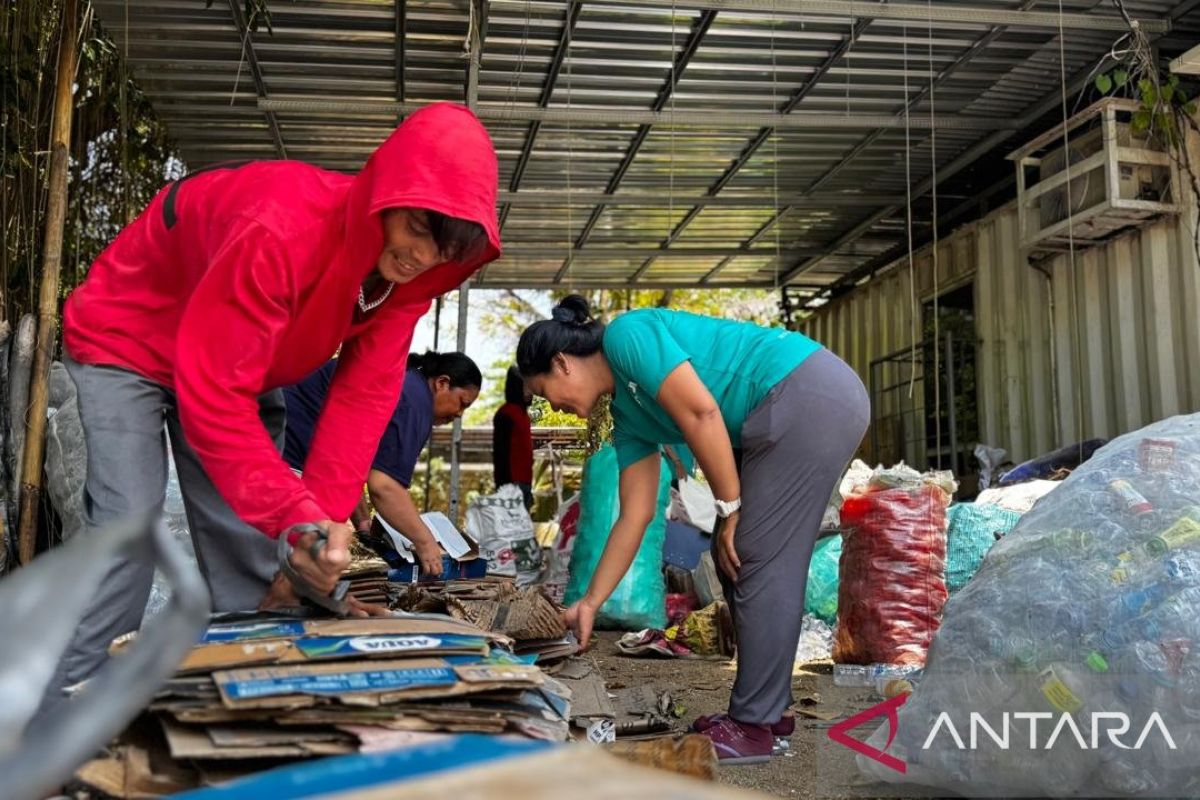
Denpasar (ANTARA) – The management of the Kura Kura Special Economic Zone (SEZ) in Denpasar, Bali, is involving local communities in the management of non-organic waste, including plastic, to establish a circular economy and reduce the amount of rubbish sent to landfill.
“This service innovation is one of our long-term efforts in environmental governance,” said Zefri Alfaruqy, head of communications at Bali Turtle Island Development (BTID), the operator of the Kura Kura SEZ, in Denpasar on Saturday.
The programme, called the Serangan Non Organic Waste Initiative (SNOWI), integrates waste collection, weighing, digital recording, temporary storage and delivery to third parties.
Local community members belonging to Nukari take turns visiting several banjar (hamlets) in Serangan Village, where the Kura Kura SEZ is located, to collect non-organic waste from residents and pay them for it.
The waste is then sorted by type and sent to a digital technology and circular-economy start-up partner, which manages the non-organic materials.
“This means the added economic value of the non-organic waste circulates and returns to the people of Serangan,” he said.
The initiative has been welcomed by local residents, including I Made Arta, a shop owner from Banjar Tengah. The community manages his waste, and he receives money from its sale.
He had collected cardboard and used cans for about two weeks before handing them over to the community group.
“I collect this rubbish to keep my home clean. It doesn’t look good scattered around the yard, it can become a breeding ground for mosquitoes, and it is not good for health,” he said.
The SEZ operator plans to expand the service, which collects waste directly at its source, particularly to more banjar in Serangan Village.
The effort is expected to reduce the volume of waste that ends up at landfill without any value being recovered.
Data from the National Waste Management Information System (SIPSN), run by the Ministry of Environment, show that Denpasar generated around 1,004 tonnes of waste a day in 2025, equivalent to 366,806.75 tonnes a year.
That figure is projected to rise to around 1,033 tonnes a day, or 377,075.72 tonnes a year, in 2026.
Source: jawawa.id (https://jawawa.id/newsitem/kura-kura-bali-special-economic-zone-engages-community-to-create-a-circular-economy-1794628291)
Originally published by Antara (Indonesian) (https://www.antaranews.com/berita/5853447/kek-kura-kura-bali-libatkan-komunitas-hasilkan-ekonomi-sirkular), translated from Indonesian