
KUR Distribution to Production Sector Provides Economic Added Value to MSMEs
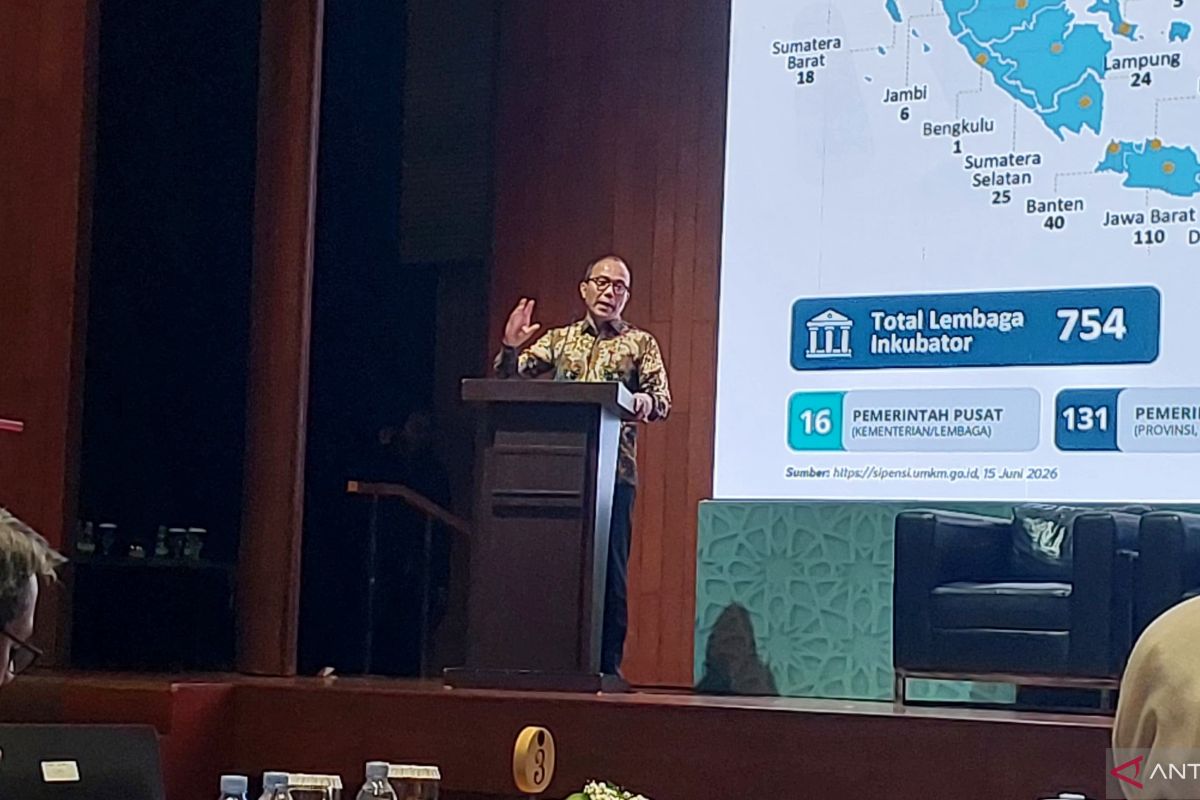
Jakarta (ANTARA) - The Deputy for Entrepreneurship at the Ministry of MSMEs, Riza Damanik, stated that allocating People’s Business Credit (KUR) to the production sector is a crucial point in the government’s economic strategy to improve the economic standard of MSME players.
He noted that distribution to production sectors—such as agriculture, fisheries, livestock, plantations, and processing industries—has a much larger multiplier effect on job creation, which in turn impacts the national economy.
“If this is distributed to the production sector, agriculture, fisheries, livestock, plantations, creative economy, food processing, and so on, it will certainly create more jobs and provide much greater economic added value to our MSMEs,” Riza said during the Islamic Financial Dialogue in Jakarta on Wednesday.
Riza stated that the Ministry of MSMEs, together with 47 financing institutions including Sharia-based institutions, is disbursing KUR amounting to Rp297 trillion this year. Of that total, Rp149 trillion, or more than 50.5 per cent, has been distributed to 2.34 million MSMEs across Indonesia for the period from January to 1 July 2024.
Of the Rp149 trillion already distributed, 64.3 per cent was received by MSME players in the production sector, amounting to Rp95.8 trillion.
According to Riza, MSME financing has traditionally been dominated by the trading (retail) sector, where business owners simply purchase goods and resell them.
By directing KUR towards the production sector, the government can undertake long-term investment in the economic structure and build a foundation for creating employment within the surrounding community.
Regarding financing for the Sharia MSME sector, Riza mentioned that the government has distributed approximately Rp8.51 trillion of the total budget, representing about 5.7 per cent.
“In terms of quantity, I would say it is relatively small compared to others. This is certainly a task for us to find ways to encourage more of our MSMEs,” said Riza.
He added that with the Muslim population in Indonesia reaching 90 per cent across 19 provinces, financing institutions must focus on providing more ease of access and literacy to facilitate financing for Indonesian MSMEs.
The government has set an increasing target for financing volume to support the people’s economy for micro, small, and medium enterprises, with a target of Rp1,500 trillion to be distributed to priority sectors such as food self-sufficiency, energy, and the Free Nutritious Meal (MBG) Programme.