
KUR Disbursements Using IP as Collateral Grow, Now Reaching Rp 5.85 T
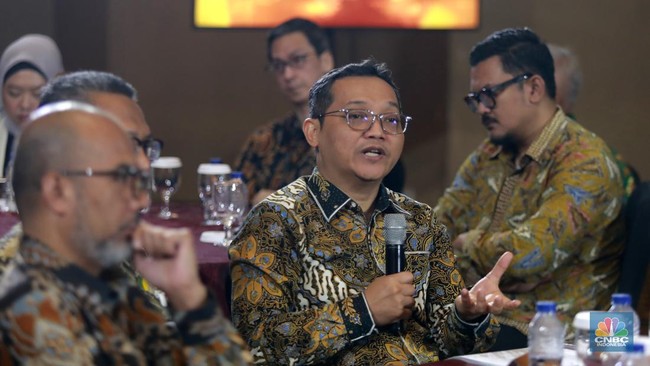
The government has disbursed Rp 5.85 trillion in credit programme funds to support the creative economy sector up to the first half of 2026. This realisation has exceeded half of the Rp 10 trillion target set for this year for people’s business credit (KUR) focused on the creative economy sector. “So we hope that by the end of this year, the total ceiling of Rp 10 trillion can be fulfilled,” said Ferry Irawan, Deputy for Management and Business Development of State-Owned Enterprises at the Coordinating Ministry for Economic Affairs, at the UMKM Finance Summit 2026 on Tuesday. Ferry emphasised that the realisation of KUR for the creative economy sector increased from Rp 2.82 trillion in the first quarter of 2026 to Rp 3.03 trillion in the second quarter, with the total number of debtors reaching 93,182 creative economy players. According to Ferry, in accordance with Article 19 of Coordinating Ministerial Regulation Number 1 of 2026, collateral for this KUR programme can be in the form of tangible or intangible assets, including intellectual property, subject to the policy and objective assessment of KUR distribution. Therefore, he stressed that the distribution of KUR for this programme has utilised a new collateral scheme that significantly leverages the intellectual property rights (HAKI) of creative economy players. “So the total up to now in the first and second quarters is Rp 5.85 trillion. Thus, HAKI can increasingly be accepted as a customary form of collateral,” Ferry stated. Within this creative economy sector, Ferry said there are at least 17 sub-sectors, including cultural creativity such as culinary, crafts, fashion, fine arts, and performing arts. Then design creativity such as architecture, interior design, visual communication design, and product design. There are also forms of digital and technological creativity, such as games and applications. As well as media creativity, such as film, animation and video, advertising, television and media, music, publishing, and photography.