
KUR Disbursement Reaches Rp105.8 Trillion as of 17 May 2026
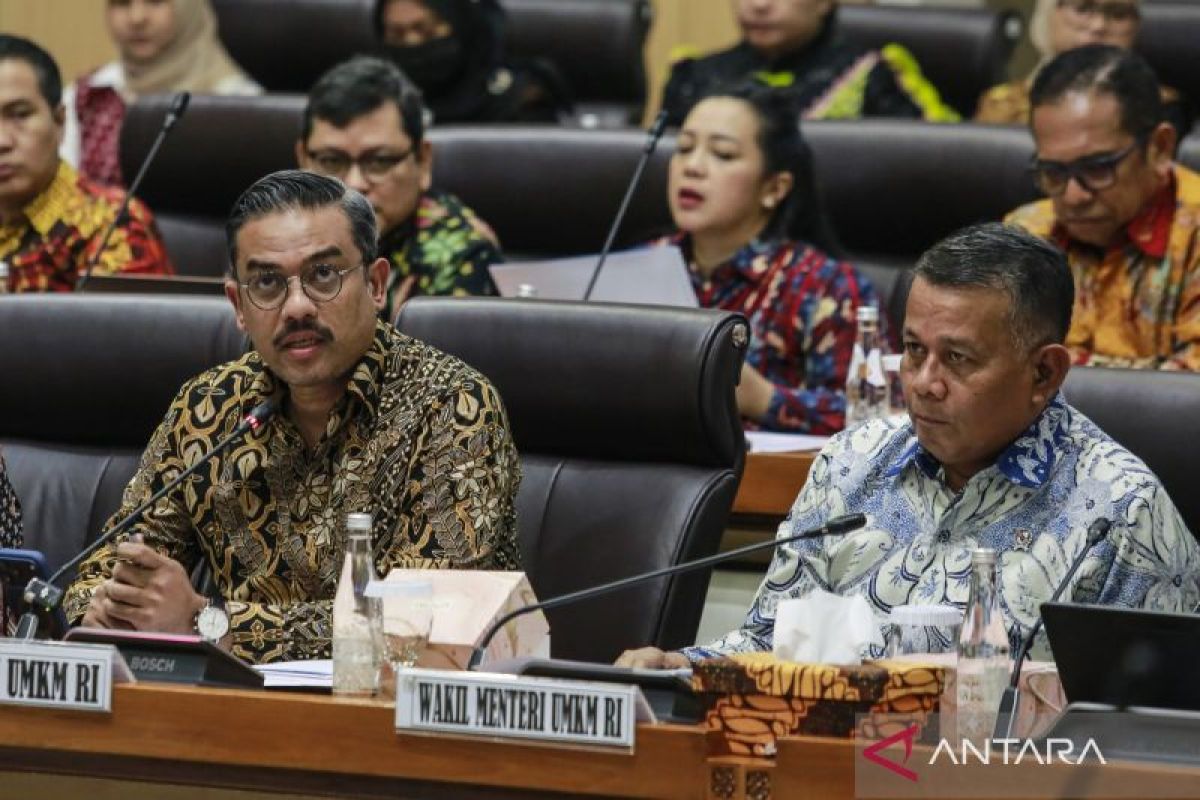
Jakarta (ANTARA) - The Ministry of Micro, Small, and Medium Enterprises (MSMEs) has recorded that the realisation of People’s Business Credit (KUR) disbursements up to 17 May 2026 has reached Rp105.8 trillion, or 35.8 per cent of this year’s target, distributed to 1.69 million debtors. Of this total, graduated debtors numbered 511,000, while new debtors reached 1.14 million, or approximately 83 per cent.
During a working meeting with Commission VII of the Indonesian House of Representatives (DPR RI) in Jakarta on Monday, MSME Minister Maman Abdurrahman stated that KUR distribution to the production sector is also showing a positive trend, achieving 63.5 per cent of the 65 per cent target. “This figure is an increase compared to last year, which was only 60 per cent,” said Maman.
Nevertheless, he assessed that the distribution of credit for MSMEs as a whole still needs to be increased. Maman explained that in 2025, the total credit distributed by the State-Owned Banks Association (Himbara) and private banks reached approximately Rp8,149 trillion. Based on the National Medium-Term Development Plan (RPJMN), 25 per cent of this total credit should be allocated to the MSME sector. However, the realisation has only reached 18.3 per cent, or approximately Rp1,500 trillion. Of that amount, around Rp270 trillion consists of KUR disbursements, while the remainder, approximately Rp1,200 trillion, is non-KUR MSME credit. “This is what we continue to push so that the proportion can increase in accordance with the target,” said Maman.
In addition to financing, the government is also strengthening market access and partnerships for MSMEs. In supply chain partnerships, the Ministry of MSMEs noted that potential transactions have reached Rp2.21 trillion, involving around 804 MSMEs. The involvement of MSMEs in the Free Nutritious Meal (MBG) programme is also steadily increasing. Maman reported that currently, around 51,600 MSMEs have been involved as suppliers in the programme.
On the other hand, the Ministry of MSMEs is also developing the SAPA UMKM programme, which aims to integrate data and services for business actors. Maman mentioned that this programme has entered the trial phase in Bandung, Makassar, and Bali, involving 1,000 micro-entrepreneurs. “The results are quite positive, although there are still several aspects that need to be refined. Evaluations will continue to be conducted so that the services provided become increasingly optimal for MSMEs,” said Maman.