
Kupang Regency Government optimises local potential to strengthen food security
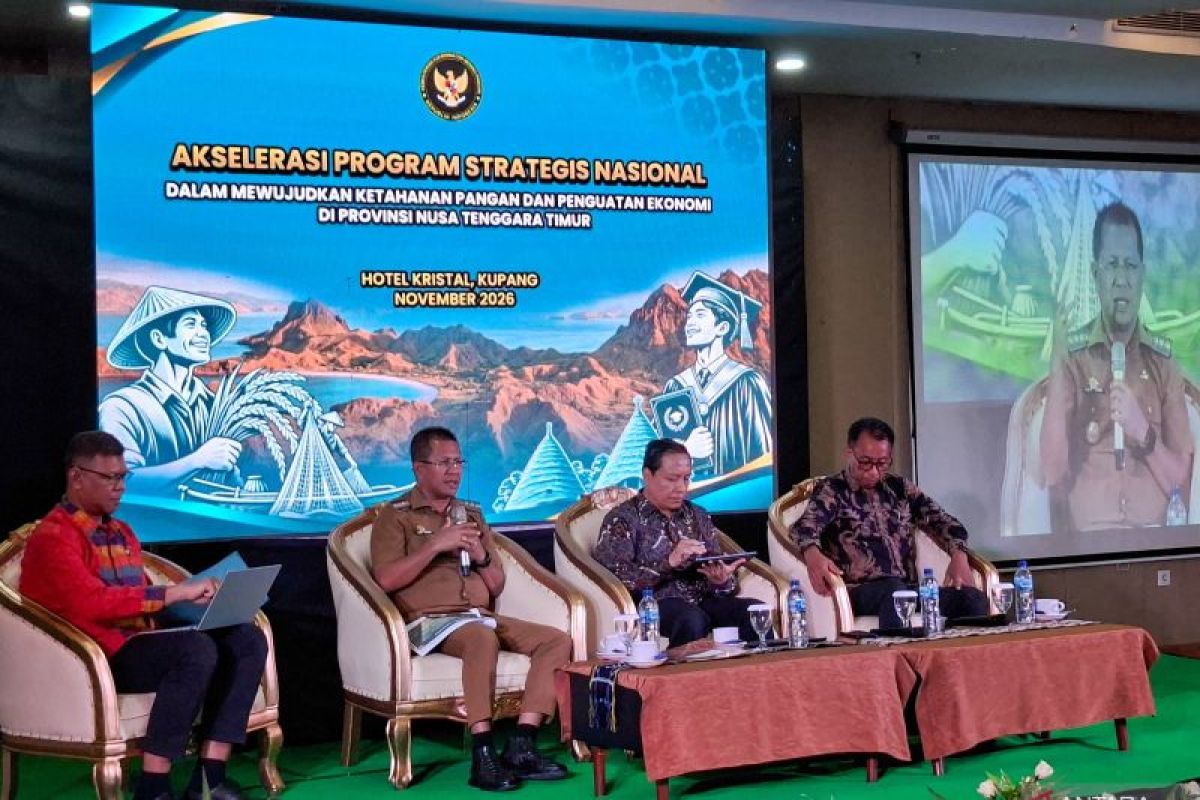
Kupang, East Nusa Tenggara (ANTARA) – The Kupang Regency Government is optimising the potential of its agriculture, livestock and fisheries sectors to strengthen food security and drive regional economic growth through cross-sector collaboration.
Kupang Regent Yosef Lede said in Kupang on Tuesday that the local government continued to develop leading sectors by harnessing the region’s potential and strengthening cooperation with the central government and universities.
“About 60 per cent of our region consists of agricultural and livestock land that can be developed to increase food production,” he said at a seminar on accelerating national strategic programmes in Kupang.
He explained that efforts to strengthen agriculture over the past two years had followed up on the President’s priority programmes by optimising land and boosting agricultural productivity.
Cooperation with the central government, including the Ministry of Agriculture and the Coordinating Ministry for Food Affairs, as well as with universities, had provided expertise and support in developing the region’s agricultural potential, he said.
Yosef said Kupang Regency achieved rice self-sufficiency in 2025. The achievement continued in 2026, and the regency had begun supplying rice to other areas after previously relying on supplies from outside the region.
In addition to agriculture, the Kupang Regency Government is strengthening livestock, which has long supported the regional economy.
Development in the sector is intended to maintain Kupang Regency’s position as a livestock hub and meet meat demand in East Nusa Tenggara and other areas, including Java and Kalimantan.
He also said fisheries had considerable development potential because the regency had extensive marine resources, particularly around Kupang Bay.
The local government is therefore encouraging greater salt production in the Kupang Bay area and the development of about 3,000 hectares for seaweed cultivation.
These resources are expected to help strengthen the economy of coastal communities while supporting regional food security.
Yosef said he hoped the seminar would give the central government first-hand information about local potential and needs, enabling national strategic programmes to be designed in line with conditions in the region.
Meanwhile, Sri Bimo Adhi Yudhono, head of the Protocol Section at the Coordinating Ministry for Food Affairs and chair of the seminar committee, said the event was intended to connect the central government’s food policies with local needs and potential.
“Through this seminar, local governments can present programmes they have implemented, while students and academics can offer ideas and stakeholders can explore opportunities for cooperation that benefit the people of East Nusa Tenggara,” he said.
He said strengthening food security in East Nusa Tenggara still required collective attention. National Food Agency data showed that the region’s food security index stood at 58.24 in 2025, placing it in the middle tier.
Meanwhile, Statistics Indonesia (BPS) data showed that paddy production in East Nusa Tenggara reached 668,200 tonnes of dry milled grain in 2025, up 36.81 per cent from 2024.
However, the increase in production needs to be sustained through adequate water and seed supplies, protection of agricultural land, distribution support and reliable markets to meet food needs over the long term.
Sri Bimo also said East Nusa Tenggara had several cross-sector strategic programmes, including 242 active Nutrition Fulfilment Service Units (SPPG), with more than 698,000 beneficiaries, and the construction of 68 Merah Putih Fishers’ Cooperatives, some of which are already operating.
Source: jawawa.id (https://jawawa.id/newsitem/kupang-regency-government-optimises-local-potential-to-strengthen-food-security-1794293487)
Originally published by Antara (Indonesian) (https://www.antaranews.com/berita/5843579/pemkab-kupang-optimalkan-potensi-daerah-untuk-perkuat-ketahanan-pangan), translated from Indonesian