
Kupang Customs Destroys Rp 1.5 Billion in Illegal Goods to Protect Domestic Industry
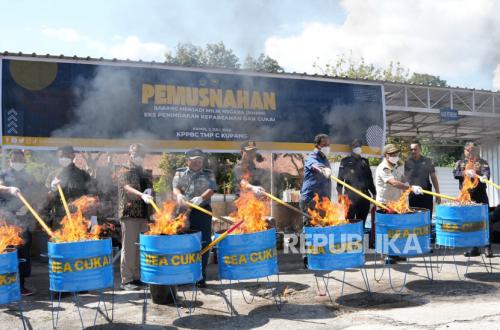
The Kupang Customs and Excise Office, together with the Regional Leadership Communication Forum (Forkopimda), has destroyed state-owned goods resulting from enforcement actions in the customs and excise sector. The destruction took place at the Kupang Customs Operations Base Office on Thursday, 2 July 2026.
‘This destruction is a manifestation of Customs’ commitment to protecting the public from the circulation of illegal goods while securing state revenue rights,’ said Head of the Kupang Customs Office, Machbum Dumron, in a statement on Tuesday, 7 July 2026.
The evidence destroyed was collected during enforcement operations from July 2025 to April 2026. The total estimated value of the illegal goods destroyed reached Rp 1,567,330,000. Through these enforcement operations, Kupang Customs successfully prevented potential state losses estimated at Rp 1,029,125,155. The commodities violating the law that were destroyed included 1,018,261 illegal cigarettes, 6.35 litres of alcoholic beverages, and 21 bales of used clothing (balepress).
The destruction process was carried out by burning and crushing. This method aims to damage and eliminate the original function and nature of the goods, ensuring they cannot be reused by any party.
The success of this enforcement action was attributed to strong collaboration and synergy between Customs, the Provincial Government of East Nusa Tenggara, municipal and regency governments within the Kupang Customs supervision and service area, courier service entrepreneurs in and around Kupang City, and support from the Indonesian National Armed Forces (TNI).
Machbum expressed deep appreciation for the full support from law enforcement ranks. ‘This destruction sends a firm message that the government provides no room for the circulation of illegal goods,’ he said.
He added that cross-agency synergy has proven highly effective in breaking the chain of illegal cigarette distribution and preventing the entry of prohibited goods, particularly used clothing, which is considered capable of killing the domestic textile industry. Machbum also urged all members of the public and business actors to always comply with the applicable customs and excise regulations in Indonesia.
Active support and participation from the public in reporting indications of illegal goods circulation are essential to creating a healthy business climate and protecting national economic stability. ‘Let us create a healthy business climate, fair competition, and a strong economy for a more advanced Indonesia,’ he concluded.