
Kuningan Regent Urges Schools to Adopt Zero Tolerance on Bullying and Hazing
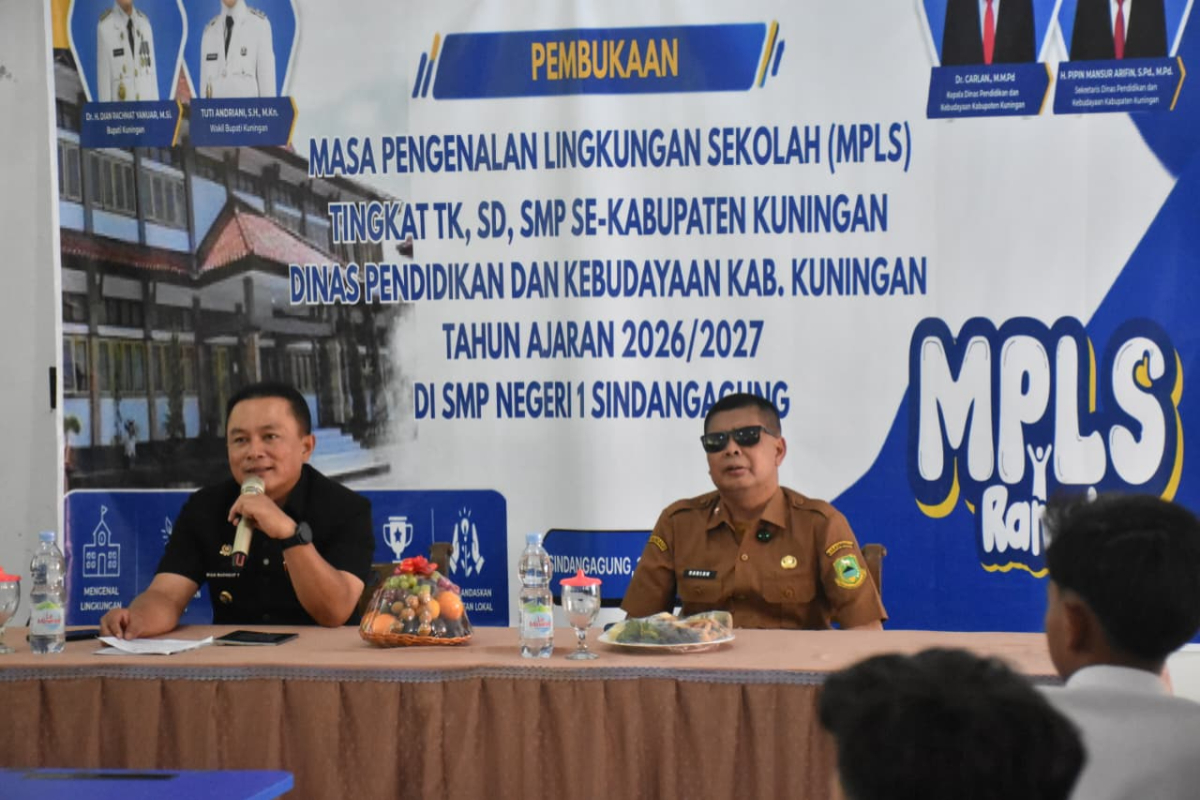
The School Environment Introduction Period (MPLS) must be a pleasant first experience for all new students, according to Kuningan Regent Dian Rachmat Yanuar. Speaking at the opening of MPLS for early childhood, primary, and junior secondary levels at SMP Negeri 1 Sindangagung on Monday, he stressed that practices of bullying, hazing, and all forms of violence are strictly prohibited in schools. The event was attended both in person and online by school principals, teachers, and new students from various educational units across Kuningan Regency. Dian urged all schools to implement a zero-tolerance policy towards bullying, violence, and hazing, and instructed principals to ensure schools become safe zones for students by strengthening the role of the Violence Prevention and Handling Team. He warned that the local government would not hesitate to take firm action if such incidents recur. The Regent also called for a pleasant transition period, especially for children entering primary school, advising against pressuring them with reading, writing, and arithmetic tests in the early days. Instead, he emphasised prioritising adaptation so students feel comfortable in their new environment. He further highlighted the need to strengthen digital literacy and character education, guiding students to use technology and social media wisely while instilling local cultural values. Head of the Kuningan Education and Culture Office, Elon Carlan, stated that MPLS is a mandatory activity held at the start of the academic year to introduce new students to the school environment, including teachers, peers, and the school culture. The programme for early childhood, primary, and junior secondary levels is being conducted simultaneously from 13 to 17 July 2026, with a child-friendly and environmentally conscious approach. Carlan added that the total capacity for new students across these levels this academic year is 63,686, comprising 24,162 early childhood, 23,752 primary, and 15,772 junior secondary students, with others continuing their education at madrasas or faith-based schools.