
Kumham Imipas strengthens legal coordination for Free Nutritious Meals programme
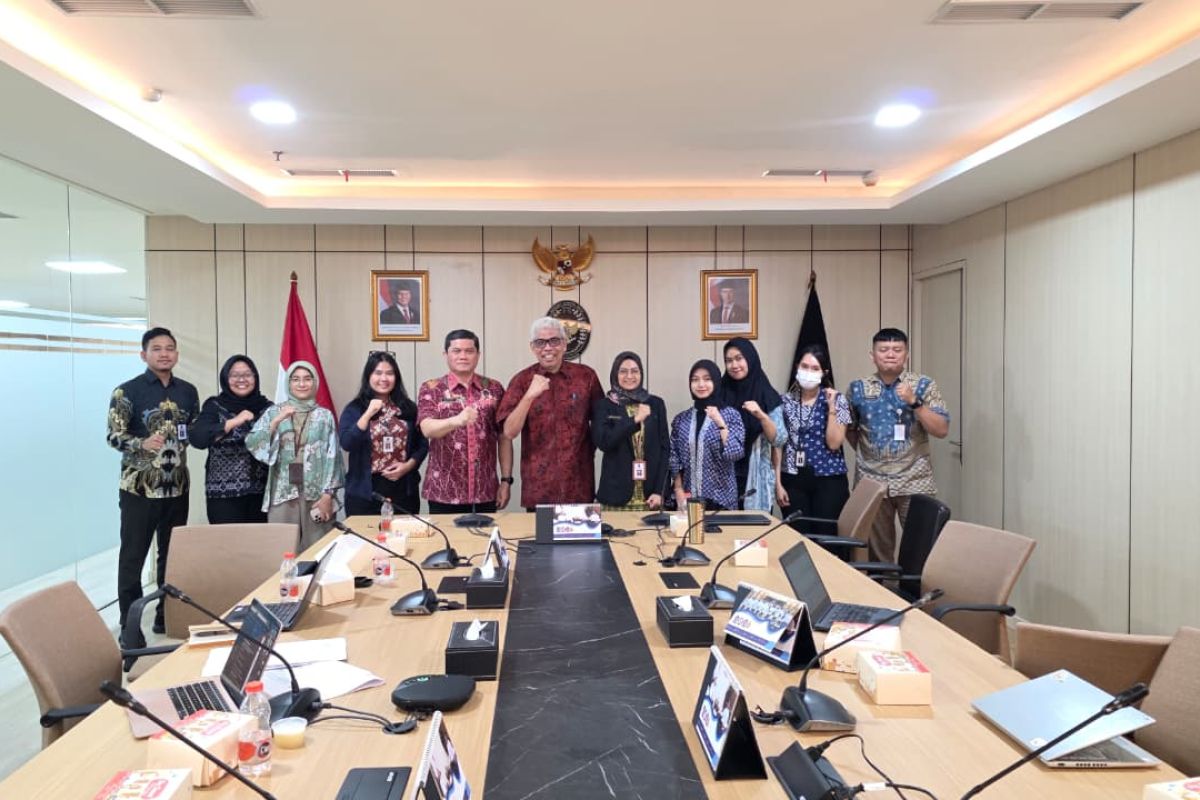
The Coordinating Ministry for Law, Human Rights, Immigration and Corrections (Kemenko Kumham Imipas) is strengthening legal coordination to support the implementation of the Free Nutritious Meals (MBG) programme.
This legal aspect particularly concerns the strengthening of cross-sector regulations and the relationship of authority between the central government and regional governments.
Assistant Deputy for Coordination of Intellectual Property Utilisation, Empowerment and Protection at Kemenko Kumham Imipas, Syarifuddin, said in a statement confirmed in Jakarta on Saturday that the successful implementation of MBG requires regulatory support capable of accommodating the involvement of various sectors.
“Currently there are still a number of needs for strengthening, including cross-sector rules regarding beneficiary data and health claims, licensing for the establishment of Nutrition Fulfilment Service Units (SPPG), certification of food handlers, and cross-ministry and agency oversight mechanisms,” said Syarifuddin.
He explained that the MBG programme is a priority policy of the President which in its implementation involves many sectors.
Therefore, he continued, the regulatory aspect and coordination of authority need to be strengthened so that the implementation of the programme at both central and regional levels has legal certainty and can run effectively.
According to him, this coordination is important given that there are still challenges in the implementation of standard operating procedures (SOPs) as well as the relationship between central and regional government affairs.
It was stated that strengthening synchronisation is necessary so that the MBG policy can be applied consistently while still paying attention to the authority of each agency.
For this reason, Kemenko Kumham Imipas has held a Synchronisation and Coordination Meeting for Support of Legal Material Aspects for the President’s Priority Policy of the Free Nutritious Meals Programme in Jakarta on Thursday (27/8).
In the meeting, University of Indonesia Faculty of Law lecturer Harsanto Nursadi said the National Nutrition Agency (BGN) has authority in the normative and operational aspects of MBG implementation, including the establishment of national nutrition quality norms, standards, procedures and criteria, guidelines for nutritional adequacy rates (AKG), technical standards for kitchen facilities and infrastructure, and supply chain governance.
On the operational side, he continued, BGN also has the authority to form task forces, distribute government assistance, conduct operational audits of SPPGs, and impose internal administrative sanctions.
However, he said the implementation of MBG in the regions also intersects with the authority of regional governments in a number of basic service affairs.
Harsanto emphasised that national strategic programmes still need to pay attention to regional authority, including in aspects of spatial planning, environmental health, public order and various permits that are the authority of regional governments.
In the implementation of MBG, he said there are two overlapping regimes of authority. BGN has functional authority related to nutritional fulfilment and intervention targets, while regional governments have attributive authority in basic service affairs.
“Therefore, the relationship between the two needs to be arranged so that there is no overlap of authority in implementation in the field,” he said.
Furthermore, he presented a number of operational aspects that require coordination with regional governments, including spatial planning conformity, building approval (PBG), hygiene and sanitation eligibility certificates (SLHS) as well as waste management and wastewater treatment installations (IPAL).
It was mentioned that these various aspects remain within the realm of regional government authority in accordance with the provisions of laws and regulations.
According to Harsanto, clarity of the division of authority becomes increasingly important when problems occur at the SPPG level, such as suspected food poisoning or waste pollution issues.
This condition, he said, requires a clear coordination mechanism between BGN, regional governments, health facilities, environmental agencies and law enforcement officials so that handling can be carried out quickly and appropriately.
The forum also highlighted the need to strengthen central and regional institutional relations through mechanisms that can provide clarity of assignment while supporting the effectiveness of MBG implementation.
One of the ideas put forward was strengthening the medebewind mechanism or assistance tasks, including the division of roles in supervision and logistics distribution to regional governments.
From a regulatory perspective, the discussion material also proposed strengthening the legal framework for MBG implementation, including through arrangements regarding assistance tasks, funding mechanisms, and arrangements at the regional level.
This step is expected to provide a clearer legal basis for programme implementation while strengthening synergy between BGN and regional governments.
Through the synchronisation and coordination meeting, Kemenko Kumham Imipas is encouraging the implementation of the MBG programme to not only be oriented towards accelerating service provision, but also to be supported by clear legal governance, a firm division of authority, and effective central and regional coordination.
Strengthening these aspects is expected to support the implementation of MBG that is orderly, accountable, and able to provide optimal benefits for the community.