
Kubu Raya Stunting Rate at 30.2 Percent, Prevention Efforts Strengthened
The prevalence of stunting among children under five in Kubu Raya Regency, West Kalimantan, still reaches 30.2 percent, higher than the West Kalimantan figure of 26.8 percent and the national average of 19.8 percent based on the 2024 Indonesian Nutrition Status Survey (SSGI). Amid these conditions, a number of villages in Kubu Raya have begun developing community-based prevention models, ranging from mentoring at-risk families and utilising local food to involving adolescents, which are expected to be replicated in other regions.
Kubu Raya Regent H. Sujiwo said strengthening interventions down to the village level is important so that proven effective practices do not stop in one area but can be expanded to other villages. “We hope that the impact produced by the PASTI Programme can later be replicated in other areas, so that it can further reduce stunting rates throughout Kubu Raya Regency,” said Sujiwo in Kubu Raya.
One approach being developed is the establishment of four model villages that combine nutrition education, mentoring for families at risk of stunting, strengthening of cadres, youth involvement, and utilisation of food sources available in the village. At the family level, interventions are carried out through DASHAT Nutrition Posts (PGD) in 20 villages and sub-districts. The programme targets infants under two years old and at-risk pregnant women through the provision of nutritious food, parenting education, and the use of local food ingredients.
In the first semester of 2026, DASHAT Nutrition Posts have involved 290 children under two and 159 pregnant women at risk of Chronic Energy Deficiency (CED). One participant of the DASHAT Nutrition Post in Kubu Raya, Susanti (24), said the changes in feeding patterns she learned during the activities had an impact on her child’s growth. “I am very happy to join PGD. After participating in this activity, my child’s weight increased by up to 800 grams. Previously, my child’s weight was difficult to increase because of poor appetite. After joining PGD and learning various menus, I tried to practise them at home and it turned out my child liked them. Now my child’s appetite has increased,” said Susanti.
In addition to direct mentoring for families, strengthening is carried out for Family Support Teams (TPK). A total of 67 TPK cadres were trained in 2025, then 52 cadres attended refresher training in the first semester of 2026. They are tasked with continuing mentoring and monitoring of families at risk of stunting.
The approach is part of the PASTI Programme (Partner for Accelerating Stunting Reduction in Indonesia), a partnership between the Ministry of Population and Family Development/BKKBN and the Tanoto Foundation, PT Amman Mineral Nusa Tenggara (AMMAN), and PT Bank Central Asia Tbk (BCA) through Bakti BCA, implemented by Wahana Visi Indonesia.
Based on programme monitoring throughout 2025 to the first semester of 2026, a total of 1,188 parents of children under two and pregnant women in Kubu Raya have participated in communication, information, and education for families at risk of stunting and families in the first 1,000 days of life (HPK) period. Of that number, 1,137 people or 95.7 percent were recorded as having a good understanding of stunting.
Head of Early Childhood Education and Development at Tanoto Foundation, Michael Susanto, assessed that prevention from the first 1,000 days of life period is crucial because that period determines a child’s long-term development. “A child’s future is determined in the first 1,000 days of life, when the brain forms more than one million neural connections every second as the foundation for learning ability, health, and productivity. Therefore, stunting must be prevented as early as possible,” said Michael.
He said the success of the four model villages in Kubu Raya is expected to open opportunities for replicating similar approaches to other areas. “If the four model villages in Kubu Raya succeed, we are optimistic that these good practices can be replicated, not only in the 27 PASTI Programme model villages, but also in more villages throughout Indonesia,” he said.
Prevention efforts are also being expanded to adolescent groups. A total of 33 Generation Planning Ambassadors (GenRe) at village and sub-district level received education on nutrition and anaemia prevention to carry out their role as peer educators. The campaigns they conducted then reached 460 adolescents aged 15-19 years.
Director of Field Line Development at the Ministry of Population and Family Development, Nurizky Permanajati, said the involvement of young people is important because stunting prevention needs to be carried out even before someone enters the phase of becoming a parent. “These young people will later become prospective parents for children, and their involvement ensures that the risk of stunting is not passed on to the next generation,” said Nurizky.
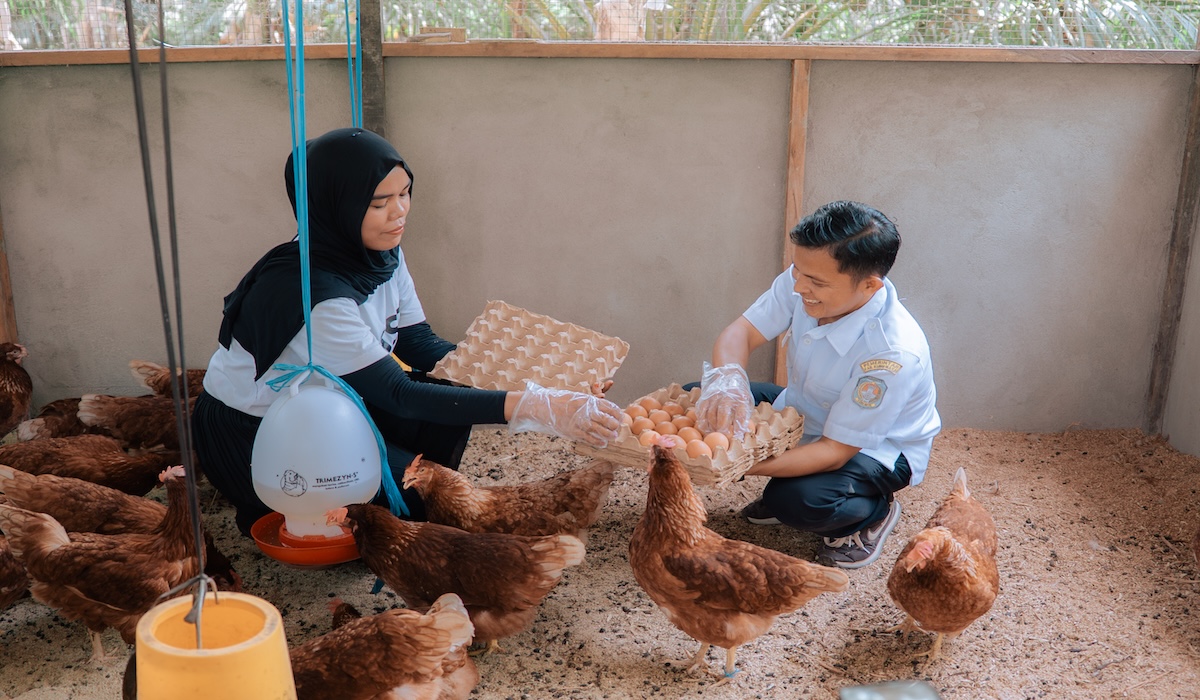
According to him, the ministry is also opening data access support to expand programme replication to other regions. At the village level, prevention approaches are also beginning to be directed at the issue of access to nutritious food sources. One of these is carried out by utilising yards for nutrition gardens and cultivating laying hens.
The gardens produce a number of food ingredients such as aubergine, water spinach, long beans, spinach, ridge gourd, and chillies. Meanwhile, laying hen cultivation produces an average of 17-20 eggs per day that can be used to support the fulfilment of nutrition for children and families.
PASTI Programme Manager Hotmianida Panjaitan said the problem of stunting cannot be seen only as a problem within the family because it is also influenced by conditions around the family. “Stunting alleviation is not merely an internal family problem. Besides economic and educational backgrounds, external factors also contribute to the causes of this child growth failure problem. Two of them are access to nutritious food ingredients and the issue of child marriage,” said Hotmianida.
Source: jawawa.id (https://jawawa.id/newsitem/kubu-raya-stunting-rate-at-30-2-percent-prevention-efforts-strengthened-1787057486)
Originally published by Media Indonesia (https://mediaindonesia.com/nusantara/923196/stunting-kubu-raya-302-persen-pencegahan-diperkuat), translated from Indonesian