
KTP2JB Recommends RI-US Trade Deal Safeguard Press Industry and Publisher Rights Regulation
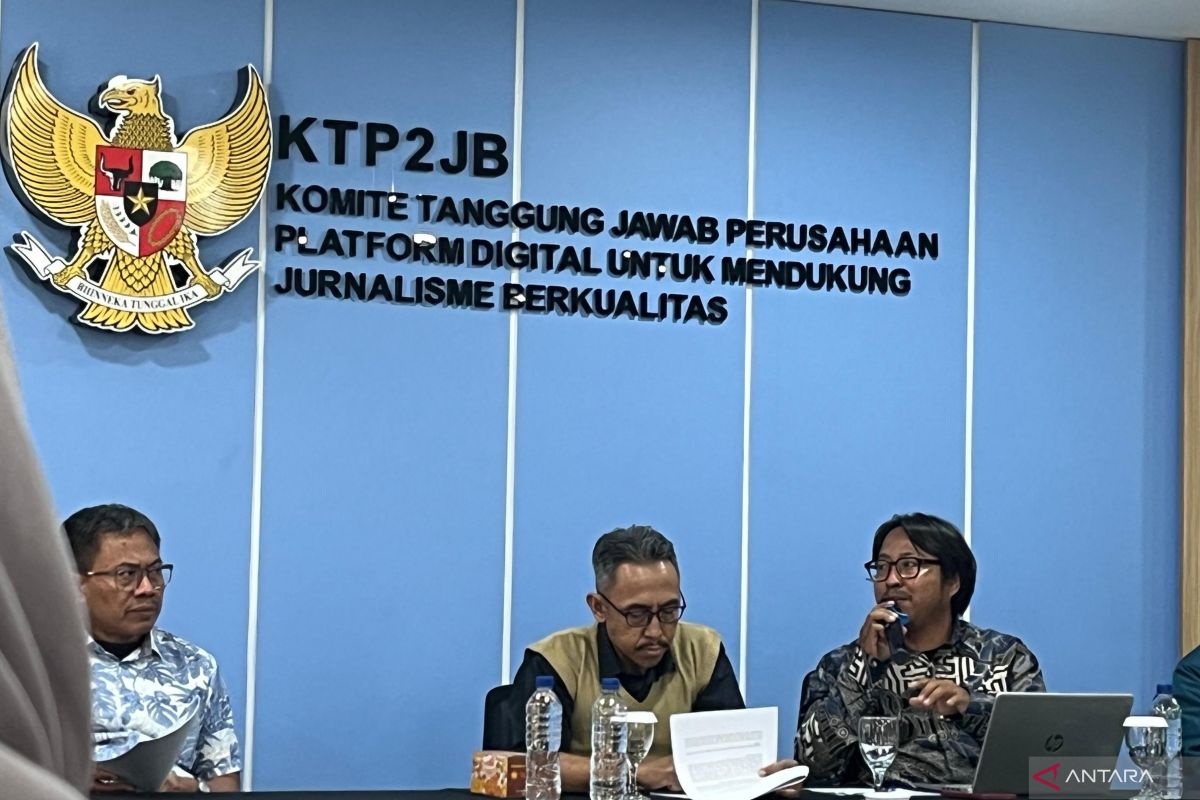
The Digital Platform Corporate Responsibility Committee for Quality Journalism (KTP2JB) has issued a series of recommendations to ensure the implementation of the Indonesia–United States Reciprocal Trade Agreement does not disrupt the sustainability of the press industry and the Presidential Regulation on Publisher Rights. In a policy brief presented in Jakarta on Monday, committee member Sasmito stated that the press community believes several provisions in the Agreement on Reciprocal Trade (ART) could potentially affect the government’s policy space in regulating digital platforms and maintaining the viability of the press industry. “Provisions in the ART that are detrimental to the press must be removed,” he said. The committee highlighted several articles deemed potentially impactful on national policy. One is Article 3.1 of the ART, which stipulates that Indonesia cannot impose a digital services tax or similar fiscal policies that are discriminatory against United States companies. This provision is seen as potentially narrowing the government’s ability to use fiscal instruments to correct imbalances in the digital market. Furthermore, Article 3.2 of the ART, which requires Indonesia to facilitate digital trade and cross-border data flows, is considered to potentially pose challenges to the implementation of domestic personal data protection regulations. KTP2JB also expressed concern over a provision in Annex III Article 3.3, which states that Indonesia must refrain from requiring United States digital service providers to support domestic news organisations through paid licensing mechanisms, user data sharing, or profit-sharing models. According to the committee, this provision could affect efforts to strengthen the bargaining position of press companies against digital platforms, which has been one of the main objectives of implementing the Publisher Rights Presidential Regulation. Additionally, Annex III Article 2.26(h)(i) concerning copyright limitations and exceptions, and Annex III Article 2.28 regarding foreign investment opportunities without ownership restrictions in the publishing and broadcasting sectors, were also deemed to require attention during the negotiation and implementation of the ART. As a mitigation measure, KTP2JB recommended that the government ensure the ART provisions do not diminish the state’s right to regulate sectors with public and democratic functions. The committee also urged the government to conduct a comprehensive evaluation of the ART provisions that could affect press industry policy and to guarantee the continued implementation of the Publisher Rights Presidential Regulation. Separately, Wahyu Triyogo, Deputy Chairman of the Indonesian Television Journalists Association (IJTI), stated that Law Number 27 of 2022 on Personal Data Protection (UU PDP) fundamentally requires the government to ensure that citizens’ personal data transferred abroad receives an adequate level of protection. “Therefore, the obligation to facilitate cross-border data flows can be seen as differing from the approach Indonesia has adopted so far,” he said. Meanwhile, Jufri Alkatiri, an executive of the Central Indonesian Journalists Association (PWI), stressed the importance of ensuring the continued implementation of the Publisher Rights Presidential Regulation as part of efforts to maintain the national press ecosystem.