
KSP Reports Strengthening Oversight of National Priority Programmes
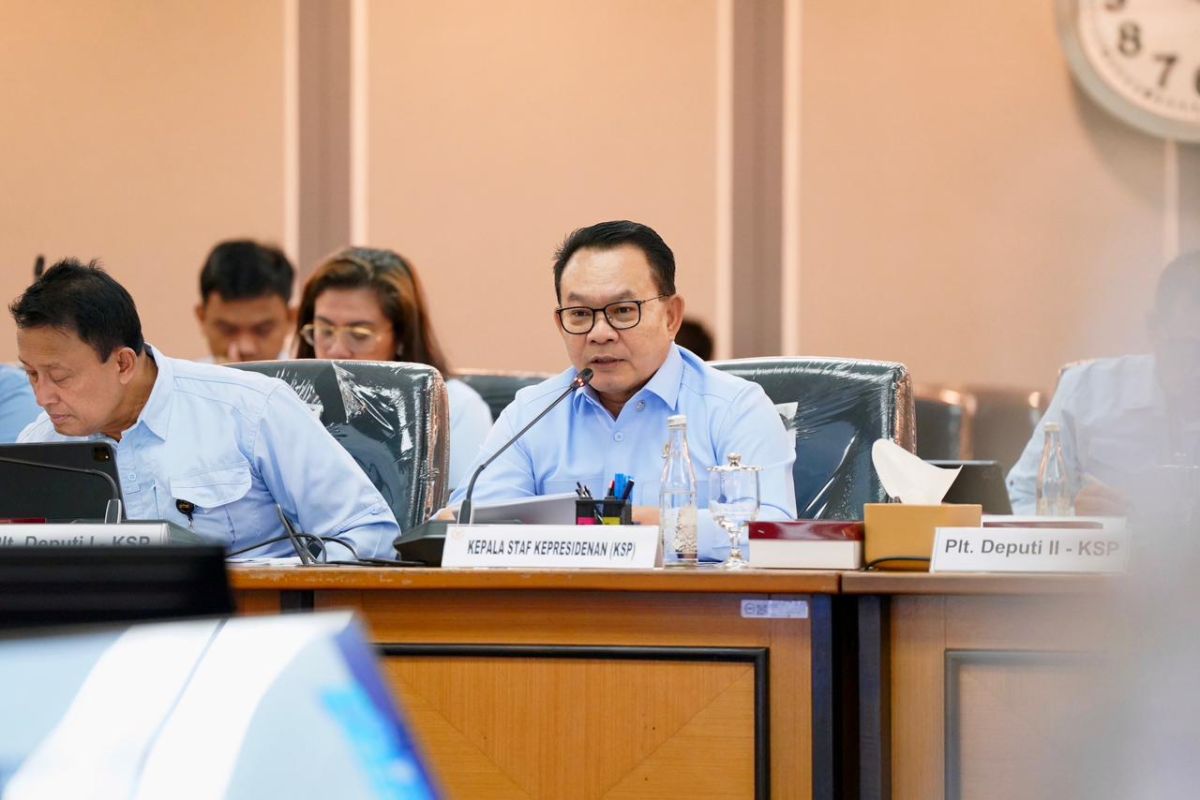
Jakarta (ANTARA) - The Chief of Staff to the President (KSP), Retired General TNI Dudung Abdurachman, presented the strengthening of institutional performance in overseeing national priority programmes during a Hearing (RDP) with Commission XIII of the Indonesian House of Representatives (DPR RI) at the Parliament Building, Jakarta, on Wednesday.
The hearing, led by the Vice Chairman of Commission XIII DPR RI Sugiat Santoso, discussed accelerating the KSP’s role in supporting the national development agenda, following up on a formal letter from the DPR RI.
“Today’s meeting is part of an effort to strengthen institutional coordination and synergy to support the acceleration of national priority programmes, resolve implementation obstacles in the field, and manage strategic issues in a more integrated and responsive manner,” said Dudlam.
During the meeting, Dudung presented the KSP’s 2025 budget realisation, which reached Rp87.52 billion, or 96.57 per cent of the ceiling after efficiencies, from an initial budget of Rp90.63 billion. Previously, the KSP’s budget ceiling was recorded at Rp108.28 billion before adjustments.
Dudung stated that this budget strengthening is directed towards supporting the KSP’s functions in overseeing national priority programmes, managing strategic issues, coordinating across ministries and agencies, and providing recommendations to the President.
He explained that between 6 January and 29 May 2026, the KSP had conducted approximately 800 coordination activities and 81 field verifications covering various priority programmes, including food, energy, and water self-sufficiency, political, legal, and bureaucratic reform, as well as the strengthening of education, technology, digitalisation, and poverty alleviation.
In overseeing national priority programmes, the KSP is focusing on eight development clusters: food sovereignty, energy and water independence, education, health, downstreaming and industrialisation, infrastructure and housing, community and village economy, and poverty reduction.
“We hope that the synergy and collaboration that has been established can continue to be strengthened to support the implementation of national priority programmes and the achievement of national development targets,” said Dudung.
Following the hearing, Dudung emphasised that the KSP serves as a strategic filter for the President through a proactive and responsive approach. The “KSP Mendekat” (KSP Approaches) programme is also being implemented to accelerate coordination and the resolution of complaints from the public, regional governments, as well as ministries and agencies.