
KSP-PB urges new Manpower Bill to protect non-conventional workers
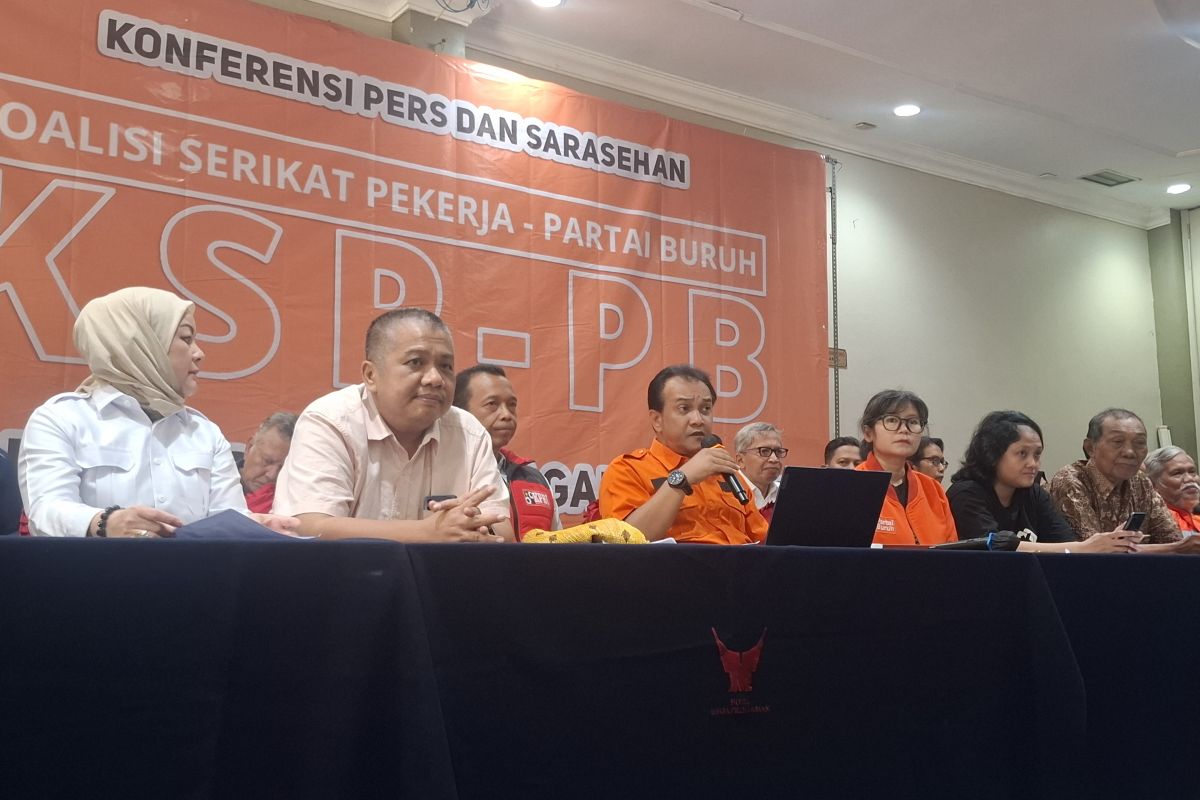
The Coalition of Labour Unions and the Labour Party (KSP-PB) believes the deliberation of the new Manpower Bill is a crucial moment to broaden protections for workers in various non-conventional sectors. The view was expressed during a KSP-PB press conference regarding the bill, which is targeted for completion by October 2026 in accordance with Constitutional Court Decision Number 168/PUU-XXI/2023. “We are putting forward the idea of not only protecting permanent workers, but also paying special attention to our freelance colleagues, whose numbers are growing,” said Ikhsan Raharjo, General Chair of the Media and Creative Industry Workers Union for Democracy (Sindikasi), a member of KSP-PB, in Jakarta on Monday. He noted that an increasing number of media and creative industry workers are now working on a freelance or project basis, necessitating legal certainty for their protection. According to him, changes in business models have led many in the sector to work on short-term projects, moving between jobs without adequate job security. Gede Sandra, General Chair of the Indonesian Creative Film Workers Union (SPKPFI), stated that the creative sector contributes significantly to the economy, absorbing around 27 million workers or 18 percent of the total workforce. “For exports alone, the creative sector has exported 2.6 billion US dollars. So the contribution of our creative workers is substantial,” Gede said. He argued that employment protection for creative workers is essential to ensure the sector’s sustainability and to provide workers with better social security. In the same forum, Roy Tanda Anugrah Sihotang, General Chair of the Indonesian Medical and Health Workers Federation (FSPMKI), highlighted that medical and health workers, including those in public service agencies, also require clearer protections. “There are still many layoffs without severance pay and wages below the minimum wage. This is still happening in the health industry sector,” Roy stated. Meanwhile, Sofyan, Chair of the Indonesian Ship Crew Union (SAKTI), explained that ship crews have specific job characteristics but still face employment issues ranging from severance pay and social security to employment status. “We want the new Manpower Law to clearly regulate protections for ship crews,” Sofyan said. The KSP-PB press conference also gathered input from various unions representing migrant workers, domestic workers, farmers, and campus sector workers, all of whom require clearer provisions in the new bill. Yosi, Secretary of the Labour Party, added that ensuring job security and a sustainable wage system in the bill is vital for maintaining public purchasing power, which is the main pillar of national economic growth. He noted that household consumption remains the largest contributor to the Indonesian economy, linking worker protection directly to the sustainability of economic activity. He said around 55 percent of national economic growth is supported by domestic consumption, largely from the middle and aspiring middle classes, who are predominantly workers. “If our purchasing power and job security are not maintained, it is not just the working class at stake, but the Indonesian economy as well,” Yosi said. The Ministry of Manpower’s 2026 Employment Outlook, released on 22 June 2026, maps out labour market challenges arising from digitalisation, automation, and the green economy. The study notes that around 58 percent of the Indonesian workforce is still employed in the informal sector. The government also projects that green jobs will reach 3.88 million by 2026, driven by the development of new renewable energy, the circular economy, transport electrification, and industrial modernisation. The Constitutional Court ruling mandated the creation of a new Manpower Law separate from Law Number 6 of 2023 on Job Creation. The court set a deadline of two years from the ruling, which was read on 31 October 2024, and stressed the importance of involving labour unions in the drafting process. Meanwhile, the drafting of the Manpower Bill is progressing in the House of Representatives (DPR). Deputy Chair of Commission IX of the DPR, Nihayatul Wafiroh, said deliberations are being pushed to finish before the Constitutional Court’s October 2026 deadline. She noted that Commission IX has scheduled discussions with various stakeholders, including business associations, labour unions, and academics, to gather input for the regulation from 12 May to 21 July 2026.