
KSP: Imipas food security programme to become pilot project
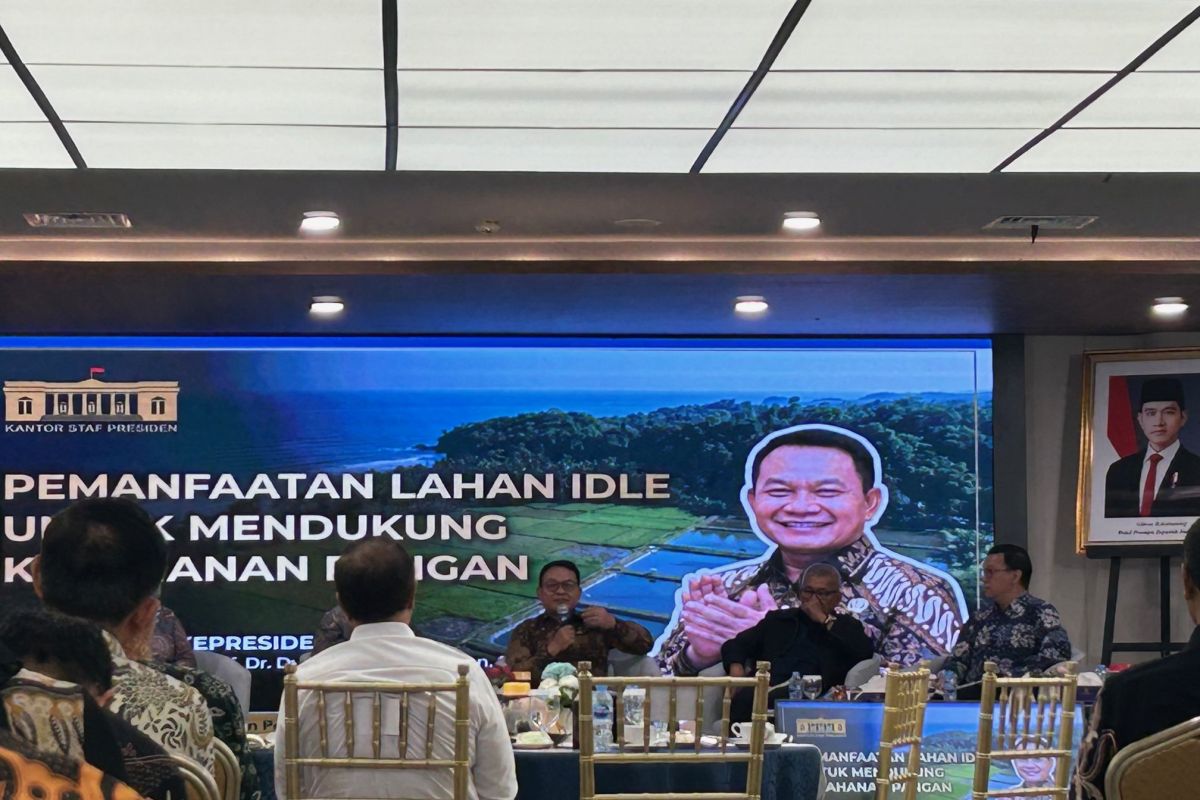
Jakarta (ANTARA) - Head of the Presidential Staff Office, General (Ret.) Dudung Abdurachman, has endorsed the food security programme run by the Ministry of Immigration and Corrections (Kemenimipas), which utilises idle land, so that it can become a pilot project for other ministries and agencies. He stated that the programme is crucial, particularly in facing the current global situation impacting the economy and food security. “Congratulations to the Ministry of Immigration and Corrections. Hopefully, this food security programme will become a pilot project for all other ministries, including existing units that can be utilised for the sustainability of food security itself,” Dudung said during a focus group discussion (FGD) titled “Utilisation of Idle Land to Support Food Security” at Kemenimipas, Jakarta, Tuesday. Dudung attended as a respondent in the FGD, which was a follow-up to research by the Demographic Institute of the Faculty of Economics and Business, University of Indonesia, on the implementation of the food security programme at Kemenimipas. The former Army Chief of Staff observed various challenges and obstacles faced in the sustainability of the food security programme, one of which is the utilisation of idle state land. “It was mentioned earlier that there are around 8.6 million hectares of idle land that can be utilised, and there are 25,000 inmates who can become a resource to manage the land,” he said. He emphasised that the use of idle land for food security must be supported because it concerns the interests of the wider community, not individuals or groups. “I will coordinate and communicate this later. Because these lands are also utilised for the benefit of the community, not for individuals, groups, or organisations,” he said. Dudung stressed that there must be flexibility in supporting the sustainability of the food security programme so that ministries and agencies can focus on building impactful food resilience. Minister of Immigration and Corrections Agus Andrianto said the research is very important to measure the extent to which the programme impacts not only correctional inmates but also the surrounding community. He noted that the research results provide an objective picture of achievements, potential challenges, and recommendations that need joint attention from his staff and relevant partners, including the House of Representatives and the government. “The results of this research show that the ongoing programme has the potential to be further developed, both in terms of productivity, human resource empowerment, and contribution to the local economy, and God willing, it will contribute nationally,” he said. Kemenimipas has utilised idle land within its work units, such as prisons and detention centres, to run a food self-sufficiency programme supporting President Prabowo Subianto’s food security agenda. Most prisons, detention centres, and immigration offices have implemented the food self-sufficiency programme. Besides meeting food needs within correctional facilities, the produce is also marketed to the public and has even penetrated export markets.