
KSP: Household Gas Network in Gresik Reaches 95.4 Per Cent, Ready for Operation
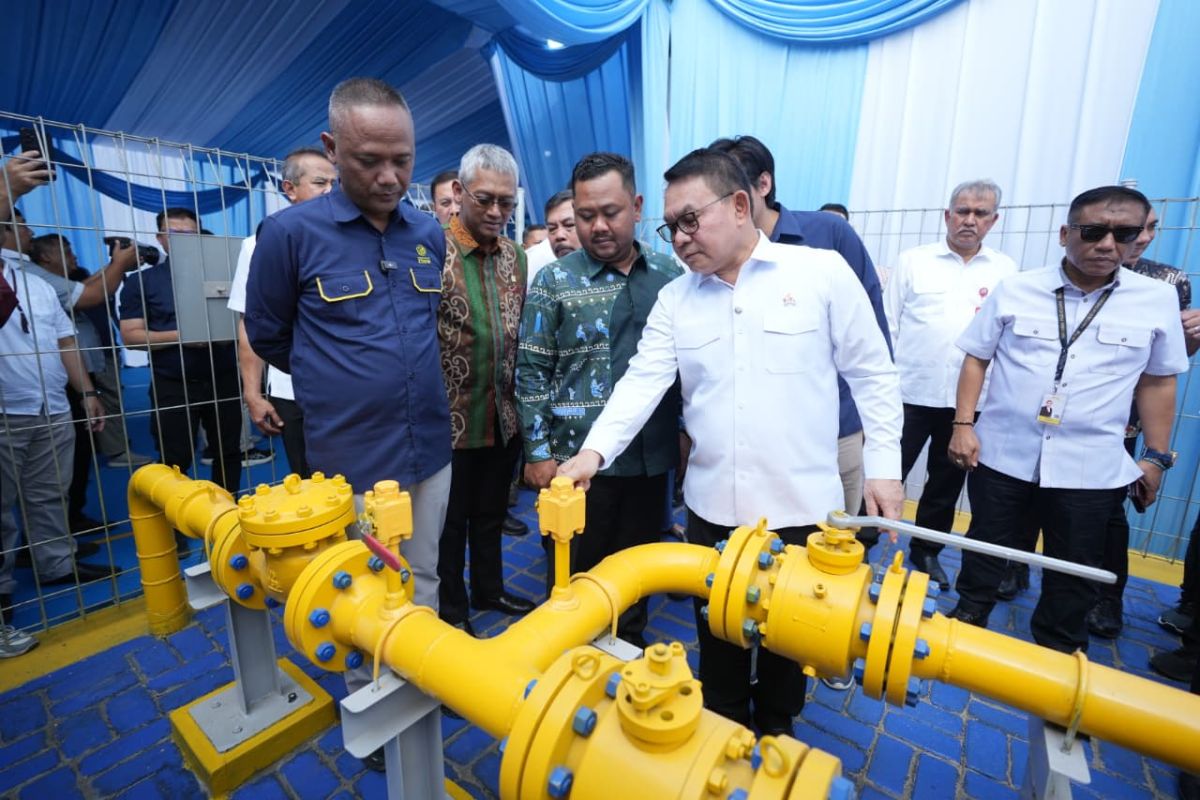
The construction of the household natural gas network (jargas) in Gresik Regency, East Java, has reached 95.4 per cent and is entering the final stage before being operational to serve the community’s energy needs.
Chief of Staff to the President (KSP), Dudung Abdurachman, while inspecting the readiness of the gas network operation in Gresik on Friday, stated that the progress indicates construction is running approximately 4.6 per cent faster than planned.
“Today, I am ensuring my presence to oversee the operational readiness of the jargas, or household natural gas network, which was built through the State Budget (APBN) in Gresik Regency,” he said.
The gas network, allocated for 7,363 household connections (SR) in Gresik Regency, is part of the 2025-2026 gas network development infrastructure.
Dudung noted that several licensing hurdles that previously delayed the operation of the gas network in Gresik have been resolved. Environmental approvals (UKL-UPL), technical recommendations for regency roads, and technical recommendations for river crossings have all been issued.
With physical progress reaching 95.4 per cent and licensing issues resolved, the government is now pushing for acceleration towards the operational phase.
“The licensing constraints that have been hindering operations until now have been resolved,” said Dudung.
The Regent of Gresik, Fandi Akhmad Yani, stated that the presence of the gas network will provide significant benefits, particularly for micro, small, and medium enterprises (MSMEs) that require regular gas supplies. He cited examples of business owners in several villages who use LPG daily for production activities, such as bean sprout processing and poultry slaughtering.
“Rather than using 3kg LPG cylinders, this is more effective, more efficient, and cheaper. They can use this gas network directly,” said Fandi.
He expressed hope that the gas network quota could be increased so that other areas with high MSME activity, including Sidowungu Village in Menganti District, can gain access to the network. Fandi also proposed that areas serving as MSME hubs requiring large amounts of energy could be used as pilot sites for converting 3kg LPG cylinder usage to the gas network.