
KRBNN accelerates economic integration across three provinces
Mataram (ANTARA) – The Bali, West Nusa Tenggara and East Nusa Tenggara Regional Cooperation (KRBNN) has been formally implemented through five action plans to integrate economic connectivity and strengthen the competitiveness of the Nusa Tenggara region.
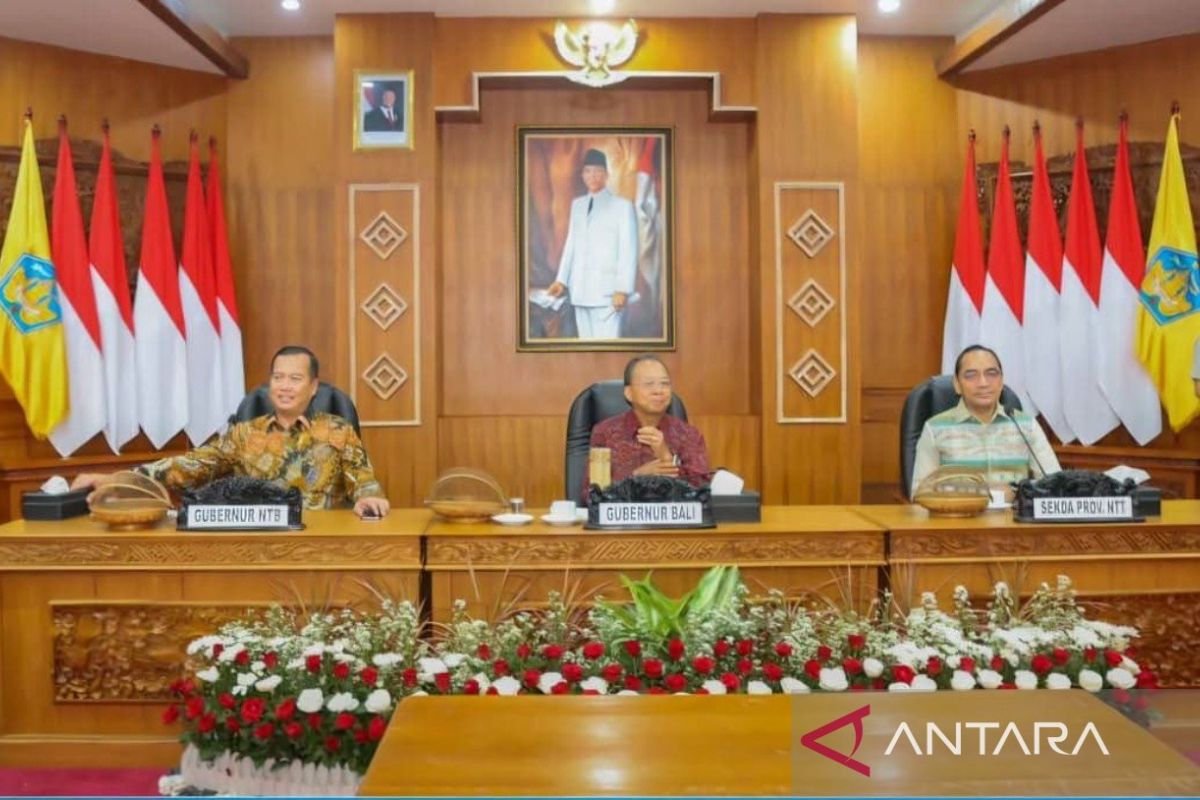
The five action plans were signed in Bali at an event attended by West Nusa Tenggara Governor Lalu Muhamad Iqbal, Bali Governor I Wayan Koster and East Nusa Tenggara Regional Secretary Fransiskus Sales Sodo, representing the governor, according to a statement received in Mataram on Saturday.
West Nusa Tenggara Governor Lalu Muhamad Iqbal said KRBNN had significant potential because Bali, West Nusa Tenggara and East Nusa Tenggara were not only geographically close, but also shared historical and cultural ties and similar economic potential.
He said regional cooperation should not stop at relations between governments. Private-sector and business involvement was key to ensuring that agreements generated economic activity and tangible benefits for the public.
“Good cooperation is not driven by the government alone. Good cooperation must be driven by the private sector,” he said.
A number of practical initiatives are being prepared. In banking, Bank NTB Syariah, Bank NTT and BPD Bali are exploring ways to strengthen service connectivity, including a proposed cross-region card that would allow people to make transactions and use ATMs in all three provinces.
In the energy sector, cooperation is focused on developing a supergrid linking Bali, West Nusa Tenggara and East Nusa Tenggara. A feasibility study for the project is being finalised ahead of a move towards commercial development with private-sector partners.
In tourism, links between leading destinations are being explored through the development of seaplane services to support higher-quality tourism.
Iqbal said KRBNN’s strength also lay in recognising that the sea was not a boundary separating the three regions, but a space connecting communities and economic potential across the islands.
He stressed that unity among Bali, West Nusa Tenggara and East Nusa Tenggara was not merely an aspiration for cooperation, but had deep historical and cultural roots.
“Unity between West Nusa Tenggara and East Nusa Tenggara is not an aspiration; it is our destiny. We are destined to be united because we have so many similarities and shared interests on which we can cooperate,” he said.
Iqbal added that solidarity between the regions had been demonstrated when an earthquake struck Flores, East Nusa Tenggara, in August. The governors made contact about an hour after the disaster, followed by aid from Bali and West Nusa Tenggara, which reached the affected area on the third day.
In addition to KRBNN’s five action plans, cooperation is also being strengthened through an agreement signed by PT Jamkrida Bali Mandara, PT Jamkrida NTB Syariah and PT Jamkrida Nusa Tenggara Timur. The collaboration between the three regional credit-guarantee companies is expected to broaden access to credit guarantees and improve the competitiveness of small and medium-sized enterprises in each province.
Bali Governor I Wayan Koster said the five action plans must be followed up promptly by the relevant regional government departments to ensure that cooperation is systematic, measurable and supported by a clear division of responsibilities.
“I hope the relevant departments in the three provinces will promptly follow up on these action plans in line with their respective duties and authority,” he said.
East Nusa Tenggara Regional Secretary Fransiskus Sales Sodo expressed his appreciation for the solidarity shown by Bali and West Nusa Tenggara after the earthquake struck Flores. He also affirmed the East Nusa Tenggara provincial government’s readiness to oversee every stage of the agreed regional cooperation.
The agreement covers development planning, transport, trade and industry, energy and tourism. The five action plans are designed to give interregional cooperation clear policy direction, measurable programmes, a division of responsibilities and sustainable follow-up.