
Krakatau Steel and China to Build Stainless Steel Plant in Morowali
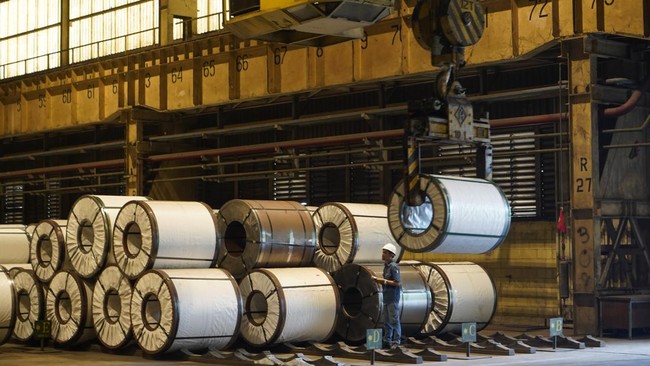
President of the Republic of Indonesia Prabowo Subianto has inaugurated the start of construction (groundbreaking) for a nickel stainless steel plant. The plant is located in the Indonesia Morowali Industrial Park (IMIP), Central Sulawesi.
President Prabowo Subianto explained that this groundbreaking is part of the second phase of downstreaming, which includes 13 downstreaming projects worth Rp116 trillion. Among them are five projects in the energy sector, five in minerals, and three in agriculture.
“The first phase of downstreaming already has 13 projects in 13 locations, and shortly this year we will add six more downstreaming projects, and we will continue to add them. There might be phases 4, 5, 6, God willing, this year as well,” Prabowo clarified during the inauguration in Cilacap, Central Java, quoted on Thursday (30/4/2026).
The stainless steel plant is owned by PT Krakatau Steel in partnership with a Chinese company, Tsingshan Group. Its production output is in the form of steel slabs with a capacity of 1.2 million tonnes per year.
This production utilises local nickel through modern smelting and refining processes.
“This initiative increases the value added of domestic minerals while promoting the creation of industrial jobs and sustainable economic growth in the industrial area,” stated Danantara in a written statement on Thursday (30/4/2026).
In addition to the stainless steel plant, the groundbreaking covers the energy sector, metals and minerals, construction materials, and agroindustry, aimed at reducing import dependency, strengthening the national industrial supply chain, increasing the value added of domestic resources, and creating broader job opportunities and economic activities for the community.
“Downstreaming is a strategic instrument in driving value creation domestically through the processing and industrialisation of natural resources,” added Danantara.
Besides increasing value added, downstreaming is seen as playing a role in strengthening economic independence by reducing dependence on global supply chains, which in certain conditions may face dynamics and uncertainties, including geopolitical factors.
Through the strengthening of domestic supply chains, downstreaming also ensures more reliable availability of national needs, while encouraging the transformation of the economic structure towards a high value-added industrial base.