
Krakatau Eruption Captured by Satellite, Suspected to Have Reached the Tropopause
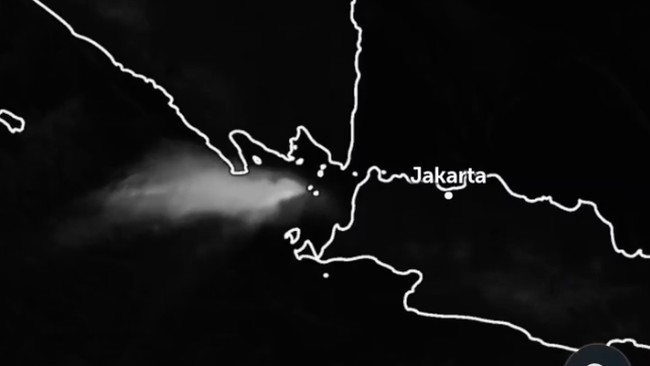
Professor Erma Yulihastin, a Research Professor at the National Research and Innovation Agency (BRIN) Centre for Climate and Atmosphere Research, has revealed an analysis regarding the explosive eruption activity of Anak Krakatau volcano, which triggered a massive distribution of volcanic ash.
For context, the eruption of Anak Krakatau took place from Friday (4/9) night at 23:07 WIB until Saturday (5/9) morning at 04:40 WIB. This activity occurred following an increase in the volcano’s status, which has been active again since July 2026.
In a post on her personal X account, Erma shared satellite imagery showing that the eruption materials from Anak Krakatau formed a thick cloud column moving westward, spanning 851 kilometres and reaching as far as Enggano Island. The large volume of material clearly visible indicates a highly significant scale of eruption.
Atmospheric simulations show that this eruption launched an extremely high eruption column, with estimates reaching 13 to 14 kilometres. This height even touches the tropopause, the upper boundary of the troposphere, which allows volcanic material to spread widely into higher layers of the atmosphere.
According to Erma, although the primary distribution is currently dominated towards the west, local weather dynamics must remain a concern. At certain times, the combination of low pressure in Banten and strong sea breezes could potentially pull the distribution of these pyroclastic clouds towards the Serang, Banten region and its surroundings.
The impact of this eruption led to the closure of Soekarno-Hatta International Airport until 09:30 WIB, affecting 22,798 passengers. Beyond the disruption to flight operations and air quality, this eruption also brings natural impacts to the global climate:
Trigger for Rain Condensation: Hot ash clouds containing sulphur oxides that form pyrocumulus clouds can act as aerosols and cloud condensation nuclei. If supported by an adequate supply of water vapour from the Indian Ocean (provided there is no positive IOD condition), this phenomenon has the potential to trigger rainfall.
Atmospheric Temperature Cooling: The massive release of sulphur into the atmosphere naturally serves to cool global temperatures. These sulphur aerosol particles are capable of reflecting solar radiation back into space, thereby playing a role in mitigating the rate of global warming.
Source: jawawa.id (https://jawawa.id/newsitem/krakatau-eruption-captured-by-satellite-suspected-to-have-reached-the-tropopause-1788659583)
Originally published by CNBC Indonesia (https://www.cnbcindonesia.com/tech/20260906075956-37-765400/krakatau-meletus-tertangkap-satelit-diduga-tembus-lapisan-tropopause), translated from Indonesian