
KPR 'Recycle' Scheme: A New Way to Maximise Subsidised Housing
The affordability of housing should not only be calculated based on monthly instalments or the house price, but also the transport costs incurred by residents.
Jakarta (ANTARA) - The provision of housing for low-income communities has long been associated with the construction of new houses. However, the challenge in the housing sector lies not only in increasing supply but also in ensuring that existing houses continue to provide benefits to the community.
In this context, the idea of a ‘recycle’ scheme for subsidised mortgage KPR (Kredit Pemilikan Rumah) is becoming relevant to develop.
As reported by ANTARA on 28 September, the Ministry of Housing and Residential Areas (PKP) is currently preparing regulations regarding the KPR recycle scheme.
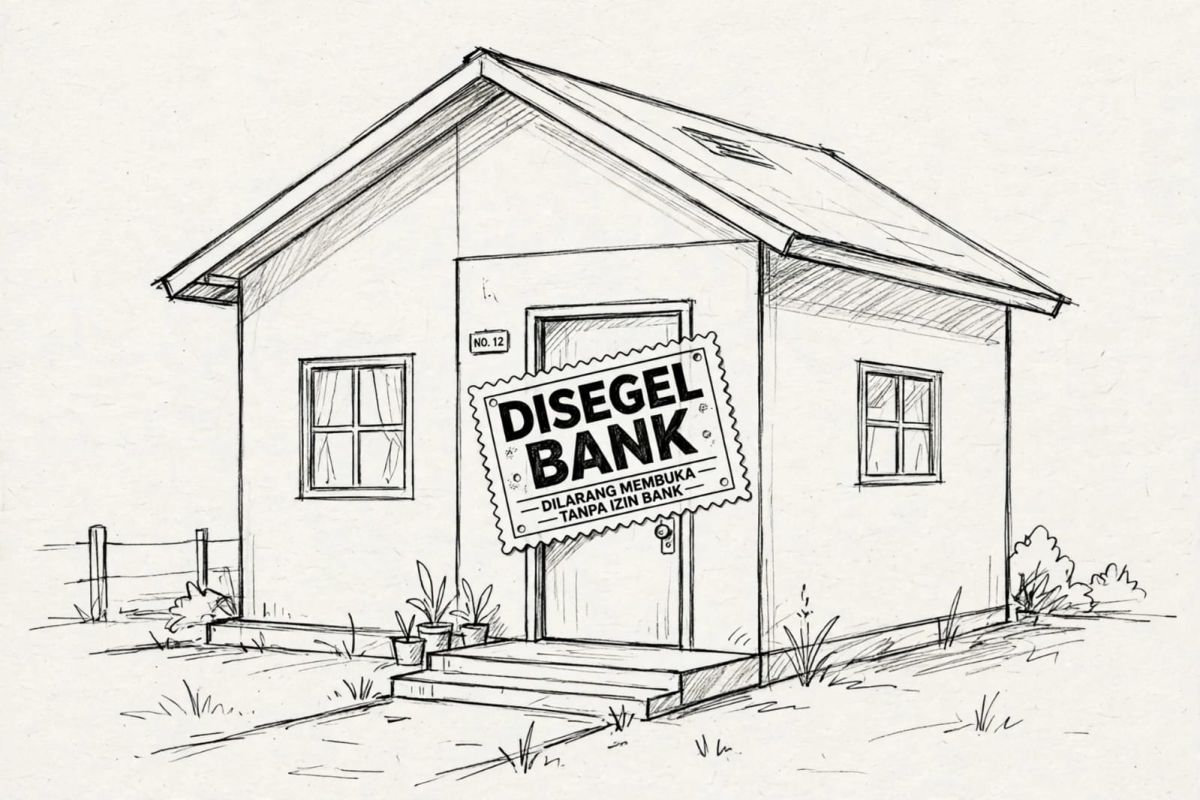
The Director General of Urban Housing at the Ministry of PKP, Sri Haryati, explained that subsidised houses that encounter distribution issues and are subsequently repossessed or withdrawn by banks due to debtors experiencing non-performing loans (NPL) can be repurposed for low-income communities through this scheme.
The drafting of these regulations involves various stakeholders, including the banking sector and developers.
BP Tapera Commissioner Heru Pudyo Nugroho also emphasised the importance of consumer protection. Houses intended for reuse must first undergo a physical condition assessment. If repairs are required, the condition and portfolio must be verified before being offered to new debtors.
This idea is compelling because KPR recycling should not merely be viewed as a solution for subsidised houses withdrawn by banks. Furthermore, this policy could be part of a shift in perspective regarding housing management—moving from simply building new houses to ensuring the entire lifecycle of a house continues to provide utility.
A house is not merely a commodity or a physical structure; it possesses a social function related to the lives of its inhabitants (John FC Turner in Housing by People, 1976). Therefore, when a house loses its occupant due to financing issues, its social function should not cease. With the right mechanism, the same house can once again become a home for another family.
From a development perspective, existing subsidised houses are assets that do not always require starting from scratch. Land, buildings, road networks, utilities, and parts of the environmental infrastructure are already available. Reusing these assets can complement the construction of new housing.
This concept aligns with the principles of the circular economy within the building sector. It is vital to maintain the value and function of resources within the built environment through a circular economy approach (Pomponi and Moncaster in the Journal of Cleaner Production).
Reusing buildings under certain conditions can also reduce resource requirements compared to new construction.
However, this principle does not mean that every house seized by banks is automatically better or cheaper than a new house. This is precisely why clear regulation is essential. Houses entering the KPR recycle scheme must meet requirements regarding physical feasibility, legality, price, location, and habitable housing standards.
Location aspects…
Source: jawawa.id (https://jawawa.id/newsitem/kpr-recycle-scheme-a-new-way-to-maximise-subsidised-housing-1790752031)
Originally published by Antara (Indonesian) (https://www.antaranews.com/berita/5764407/skema-recycle-kpr-jalan-baru-memaksimalkan-rumah-subsidi), translated from Indonesian