
KPPU and MUI Collaborate to Oversee MSME Partnerships in the Sharia Sector
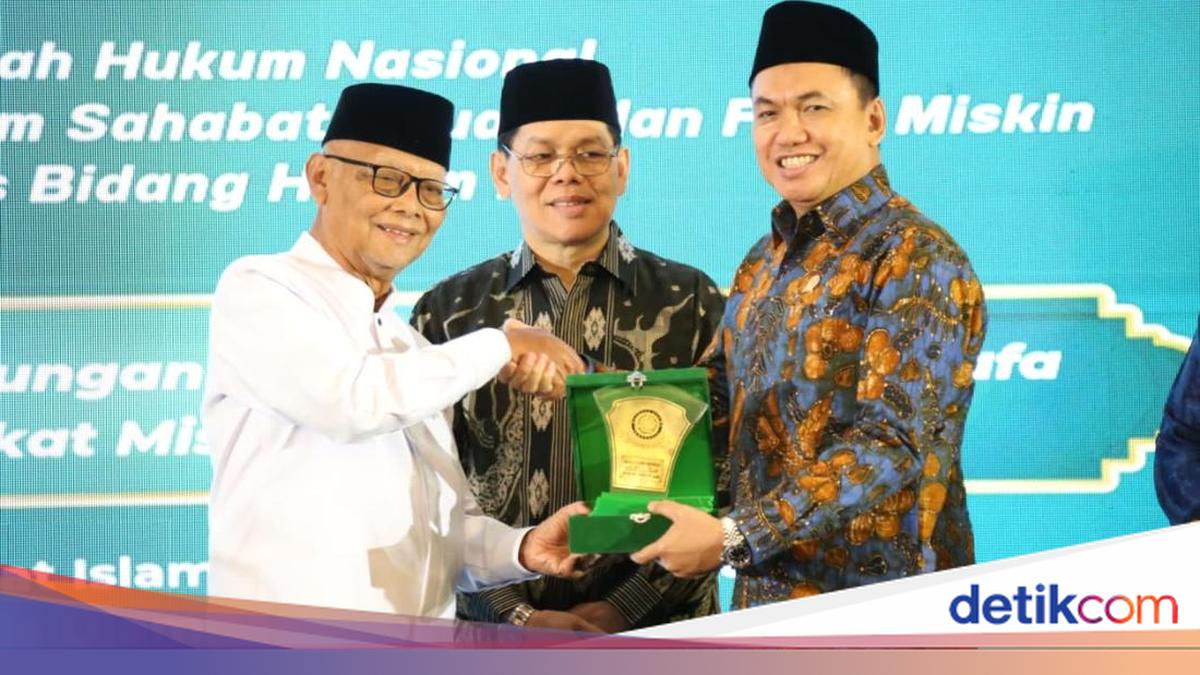
The Competition Supervisory Commission (KPPU) and the Indonesian Ulema Council (MUI) are strengthening their collaboration to oversee partnerships involving Micro, Small, and Medium Enterprises (MSMEs) and to promote fair business competition in the sharia sector. The cooperation focuses on enhancing education, advocacy, research, business actor protection, and the supervision of partnerships between MSMEs and large enterprises.
A Memorandum of Understanding was signed by KPPU Chairman M. Fanshurullah Asa and MUI Chairman Anwar Iskandar during the National Legal Mudzakarah and Law Enforcement Appreciation for Friends of the Dhuafa and the Poor Seeking Justice, organised by the MUI Legal Commission. The event, held on Thursday (2/7/2026), was attended by Judicial Commission Chairman Abdul Chair Ramadhan, government officials, academics, and MUI figures.
Through this partnership, the KPPU and MUI agreed to strengthen the internalisation of fair competition values through socialisation, education, advocacy, research, development, and the protection of MSME partnerships.
In his remarks, Fanshurullah stressed that refining competition regulations is necessary to respond to the dynamics of the national economy, including the development of the sharia-based economy. “There are still a number of challenges in the implementation of the Competition Law. Therefore, the ongoing revision process of the law in the House of Representatives is an important momentum to strengthen the effectiveness of competition law enforcement,” Fanshurullah stated in a written release on Saturday (4/7/2026).
According to him, competition issues also need attention in various legal study forums organised by the MUI. This aligns with the KPPU’s mandate to supervise the implementation of partnerships between large businesses and MSMEs to ensure they are fair and mutually beneficial.
Fanshurullah explained that the spirit of partnership supervision carried out by the KPPU is rooted in the ideas of National Economic Pioneer Soemitro Djojohadikoesoemo, who positioned partnerships as an instrument for empowering the people’s economy. According to this concept, the nucleus-plasma partnership model should ideally allocate around 70 percent of the benefits to the plasma, or the community and farmers, while the nucleus company receives 30 percent.
However, practice on the ground shows the opposite condition. The share of benefits is mostly enjoyed by the nucleus company, while small business actors and plasma farmers are in a weak position. This imbalance causes MSMEs to lose bargaining power in obtaining production inputs and determining the selling price of their products.
“When farmers and small business actors have no bargaining power, the prices of seeds, feed, land, and even their production outputs are highly dependent on the larger party. This is where the state must be present. The KPPU carries out its mandate as the sole institution overseeing the implementation of partnerships to ensure business relationships are fair and do not create detrimental dependencies for MSMEs,” he said.
On that basis, the KPPU is also pushing for stronger provisions regarding partnerships in the revision of Law Number 5 of 1999, so that protection for small business actors, including in the development of the sharia economy, has an increasingly robust legal foundation. For the KPPU, partnerships are not merely business relationships but strategic instruments to strengthen national economic resilience while maintaining social justice for the community.
In addition to strengthening collaboration at the national level, the KPPU is also encouraging the development of international discourse on business competition in the sharia-based economy. “The KPPU has discussed with several competition authorities in the Middle East, including Saudi Arabia and Egypt. They welcomed the idea of organising an international conference of Islamic countries to discuss competition issues,” he explained.
Meanwhile, Anwar Iskandar assessed that there is still an imbalance in the partnership relationship between MSMEs and large businesses, especially in the nucleus-plasma partnership model. According to him, this condition requires strengthened legal advocacy so that MSMEs obtain adequate legal protection and certainty.
He explained that the National Legal Mudzakarah aims to expand access to justice for the dhuafa and the poor while strengthening cross-sector synergy in formulating strategic policy recommendations. “The cooperation between MUI and KPPU is an initial step in building collaboration to realise a just and integrity-based legal system,” concluded Anwar Iskandar.
The National Legal Mudzakarah is part of the Pre-Congress of Indonesian Muslims (KUII) series, which carries the theme ‘Advocacy and Legal Protection for the Dhuafa and the Poor in Indonesia’. The forum brought together government elements, law enforcement agencies, academics, and community organisations to strengthen collaboration in realising an inclusive, just legal system that sides with the interests of the community.