
KPK's Warnings on Free Nutritious Meals Programme Were Ignored by Dadan and Team
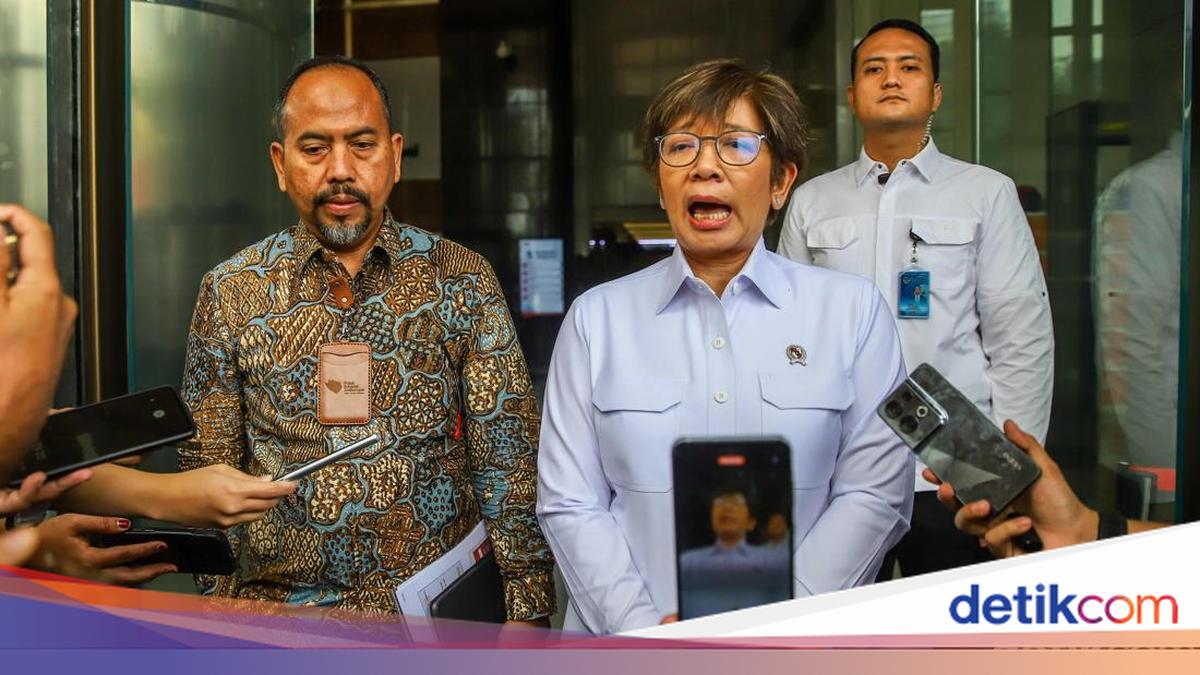
The Head of the National Nutrition Agency (BGN), Nanik S Deyang, along with two Deputy Heads, Agustina Arumsari and Trenggono, held an audience with the leadership of the Corruption Eradication Commission (KPK) and received a number of suggestions to make the Free Nutritious Meals (MBG) programme more targeted. During the meeting, it was revealed that the KPK had previously provided a review to the BGN under the leadership of Dadan Hindayana, but it was not followed up.
Deputy Head of BGN Agustina Arumsari stated that the review recommendations from the KPK had been received since 17 March 2026, when the Head of BGN was still Dadan Hindayana. However, according to her, during that era, the recommendations from the KPK review were not acted upon. “On 17 March 2026, the KPK had already provided the results of its review. At that time, it was still under the previous leadership, because it was 17 March 2026. When we arrived on 2 June 2026, we saw that the review results had not yet received a response,” Agustina told reporters at the KPK’s Merah Putih building in Kuningan, South Jakarta, on Tuesday (7/7/2026).
Agustina explained that the recommendations from the KPK review were finally followed up only after former BGN Head Dadan and his two deputies, Sony Sonjaya and Lodewyk Pusung, were named as corruption suspects in the MBG governance case by the Attorney General’s Office. She said this follow-up was carried out by forming an internal team at BGN for each improvement recommendation. “We studied all of them, there were 10 findings, we studied them one by one. Then, as it should be, if there are findings from the BPK, from the BPKP, every government agency that receives recommendations must prepare an action plan to follow up on those recommendations,” Agustina explained. “Therefore, we formed a team, then we discussed the 10 findings and we compiled the action plan,” she continued.
BGN stated it has made a number of improvements based on the KPK’s findings. During the audience with the KPK leadership, Agustina conveyed that her party also presented the follow-up steps for BGN’s improvement. She expressed confidence that the KPK would closely scrutinise the improvement measures taken by BGN. “Of course, we believe that the KPK will not simply be satisfied with the documents we submitted. But they want to see more concretely what we will do later. Not just what is written, but what we will actually do,” she said.
Agustina then detailed some of the improvement efforts that have been made, ranging from data to payment mechanisms. She discussed these together with the KPK leadership. “So among the 10, for example, regarding data, we are currently making improvements. Then also improvements to the payment mechanism. We happened to both be from STAN, so we had a warm discussion about that. How to improve it, how to prevent the leakages that have been occurring,” she said.
As information, the KPK conducted a review and monitoring of the Free Nutritious Meals (MBG) programme. The KPK found a number of crucial points that need to be addressed regarding MBG governance. The findings were detailed by the KPK’s Monitoring Directorate. The KPK explained that the large scale of the programme and its budget had not been matched by an adequate regulatory framework, governance, and oversight mechanism. “This creates risks of accountability, conflicts of interest, inefficiency, and the potential for corruption in its implementation,” the KPK’s Monitoring Directorate stated.
The KPK’s findings on MBG governance included: inadequate implementing regulations; the use of a Government Assistance mechanism that creates a long bureaucratic chain and potential for rent-seeking; a centralised approach that sidelines the role of local governments; a high potential for conflicts of interest in determining partners; weak transparency and accountability; many kitchens not meeting technical standards; suboptimal food safety supervision; and the absence of success indicators for the programme. The KPK then provided recommendations, including drafting comprehensive implementing regulations, reviewing the government assistance mechanism, strengthening the role of local governments, clarifying standard operating procedures for partner selection, and establishing programme success indicators.