
KPK's Solutions to Prevent Regional Heads from Recurring Corruption
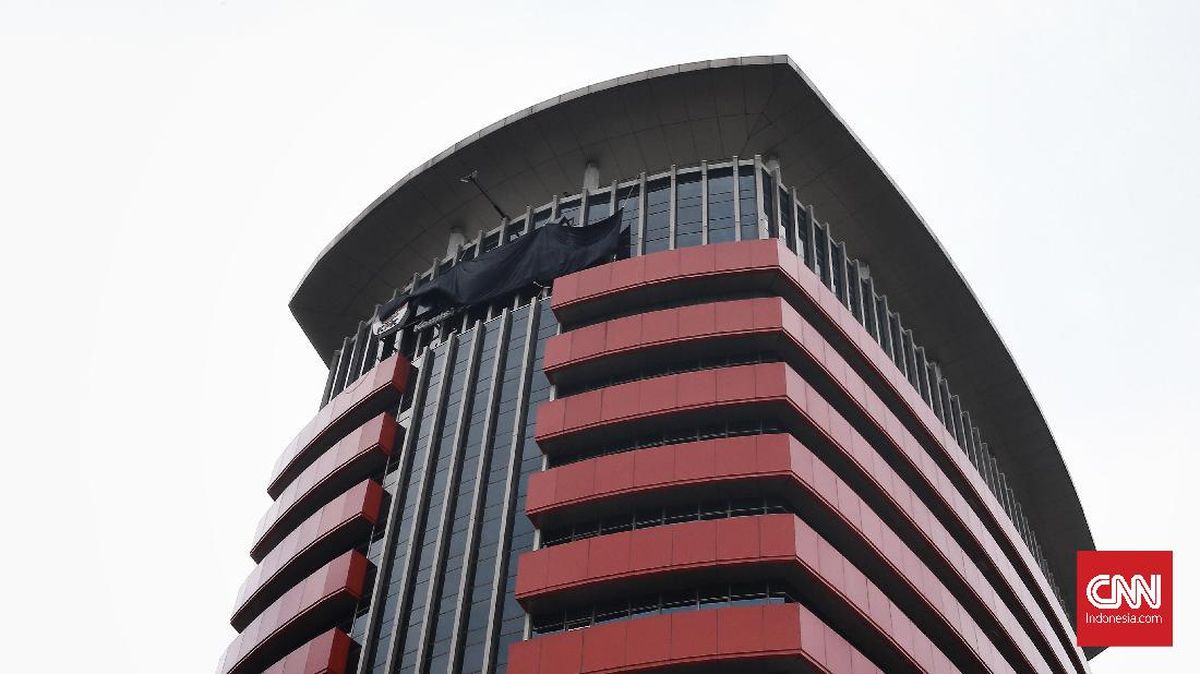
The Corruption Eradication Commission (KPK) has revealed a number of solutions that can be implemented to minimise corrupt practices by regional heads.
Between the start of the year and this July, at least ten regional heads have been caught in the KPK’s sting operations (OTT).
One solution is for the KPK to continue pushing for reform of political financing systems, to reduce the high cost of campaigning that has the potential to fuel corruption.
KPK spokesperson Budi Prasetyo said one proposed step is to expand the state’s role in campaign financing, particularly by providing campaign props (APK) for election contestants.
From the KPK’s perspective, Budi continued, such support could help reduce the cost burden shouldered by candidates.
“Beyond creating fairer competition, this policy is also expected to reduce election contestants’ dependence on funding sources that risk creating conflicts of interest,” Budi said in a written statement on Saturday (18 July).
In addition, the KPK is encouraging a transformation of campaign patterns towards simpler, more efficient models. The large-scale public rally model, which requires enormous spending, needs to be reviewed and replaced with more effective methods, such as the use of digital and social media.
In this way, political competition is expected to no longer be dominated by financial might, but rather by the quality of candidates’ ideas, programmes and integrity.
The KPK also emphasises the importance of strengthening transparency in political funding. To curb money politics, the KPK supports the enactment of the Cash Transaction Restriction Bill (PTUK) as well as enhanced oversight of political fund flows.
“The KPK is pushing for various reform measures, such as cutting campaign costs, strengthening transparency of political funding sources, limiting cash transactions, and promoting a simpler campaign model focused on ideas,” Budi said.
Earlier, Budi noted that the number of regional heads caught in sting operations illustrates that the problem and risk of corruption in regional governments remains complex and requires more serious and comprehensive handling.
He said corruption does not arise from a single factor, but is influenced by multiple aspects, including individual integrity and systemic weaknesses that open the door to irregularities.
In several cases, the KPK has found links between political funding support and efforts to gain benefits after a candidate is elected.
Budi said these findings align with the results of a corruption prevention study on election administration conducted by the KPK’s Monitoring Directorate.
The study shows that expensive campaign and political costs are one of the fundamental problems requiring serious attention. According to him, this situation is a risk factor that can drive corrupt practices, both before and after someone is elected to public office.
High campaign costs create economic-political pressure on election contestants. When candidates must spend heavily to gain political support, run campaigns and secure votes, there is a tendency to seek opaque funding sources that risk originating from corrupt practices.
“The KPK’s findings show that the enormous cost of winning elections drives candidates to commit corrupt acts both before and after taking office,” Budi said.
The study also revealed that the current campaign system leaves room for wasteful political spending, as campaigning still relies on installing large quantities of campaign props, public rallies, mass mobilisation and various high-cost campaign forms that make political competition increasingly expensive.
Furthermore, the KPK’s study also highlighted the use of large amounts of cash that is vulnerable to money politics.
Budi said the use of hard-to-trace cash opens the door for proceeds of crime to enter the political process, whether to buy political support, mobilise voters or for other election-winning activities. This situation not only damages electoral integrity but also serves as a gateway for broader corruption.
From a corruption prevention perspective, the KPK sees that high political investment during the campaign period has the potential to create pressure to recoup costs once the candidate assumes public office.
That risk can materialise in the form of abuse of authority, project arrangement, buying and selling of positions, and other corrupt practices that ultimately harm the public interest.