
KPK Warns NTB Local Government, Governance Remains Vulnerable to Corruption
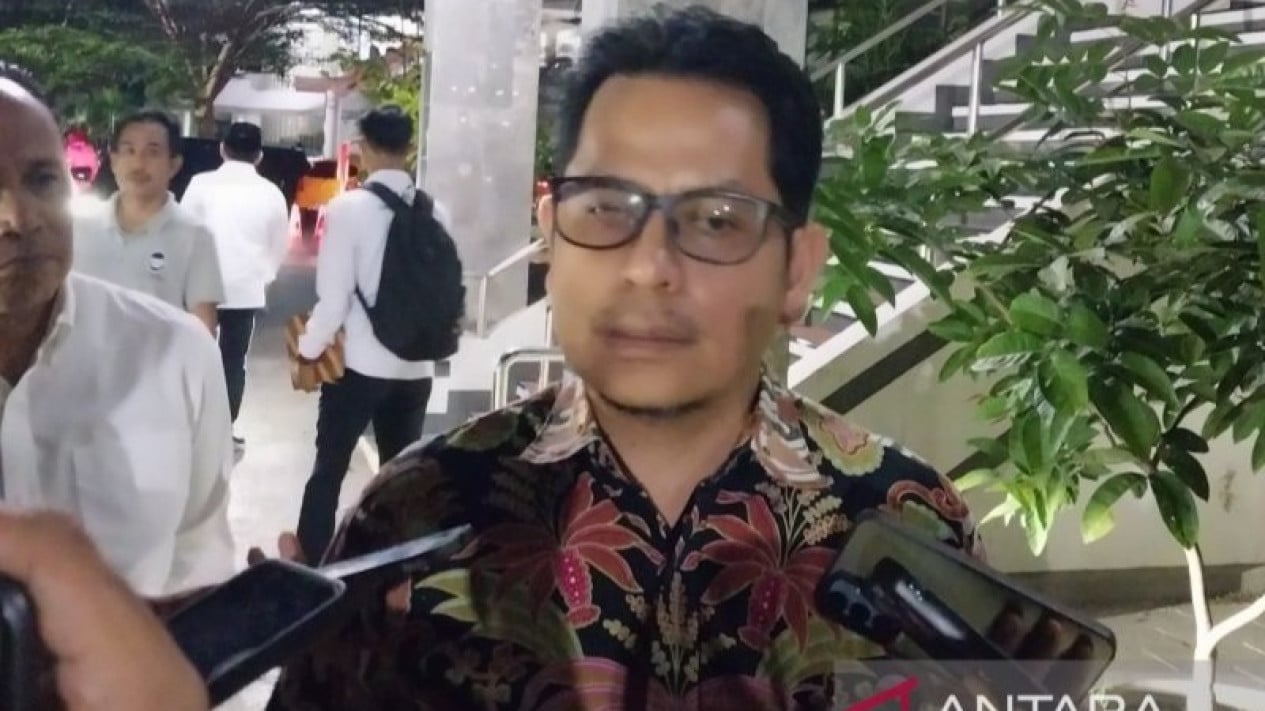
The Corruption Eradancy Commission (KPK) has highlighted the governance of West Nusa Tenggara (NTB), which is deemed still vulnerable to corrupt practices. This is evident from NTB’s Integrity Assessment Survey (SPI) score, which remains below the national minimum threshold.
Maruli Tua, Director of Regional Coordination and Supervision V at the KPK, stated that NTB’s SPI score was recorded at 64.93. This figure is below the national minimum threshold, which stands at 72.99.
“We cannot use other metrics; the KPK uses measurements from the results of the integrity assessment survey or the national integrity index,” he said on Thursday, 3 September 2026.
According to Maruli, the SPI, or National Integrity Index, serves as the official KPK parameter to map risks and the integrity conditions of local governments.
“The KPK uses measurements from the results of the integrity assessment survey or the national integrity index. Based on these assessment results, NTB still requires serious governance strengthening to prevent the occurrence of corrupt practices,” he added.
Maruli revealed that most local governments in NTB are currently classified as vulnerable. In a coordination meeting involving the KPK, the Ministry of Home Affairs, and the Financial and Development Supervisory Agency (BPKP), particular attention was directed towards the NTB Provincial Government and the Bima City Government.
The KPK also highlighted several sectors deemed prone to the abuse of authority. These include development planning, budget management, procurement of goods and services, the provision of grants, and human resource management.
Furthermore, the mechanism of the Regional House of Representatives’ (DPRD) Representative Thoughts (Pokir) has also become a focus for the KPK. Oversight is deemed necessary from the planning process through to realisation.
“Our focus is on planning, budgeting, procurement, and human resource management. The details can be accessed openly through SPI documents so that the public can study the sectors that need improvement,” Marural explained.
As a follow-up, the KPK, together with the Ministry of Home Affairs, BPKP, the National Public Procurement Agency (LKPP), and local governments, is currently drafting a Joint Circular Letter (SE Bersama). This circular is intended to strengthen integrated corruption prevention efforts in the region.
The results of this coordination and the commitment to evaluation will also be documented in an official minutes of meeting, which will serve as a reference for the periodic monitoring of governance improvements in NTB.