
KPK Supervisory Board Revises Ethics Rules, Proposes Heavier Salary Cuts for Violations
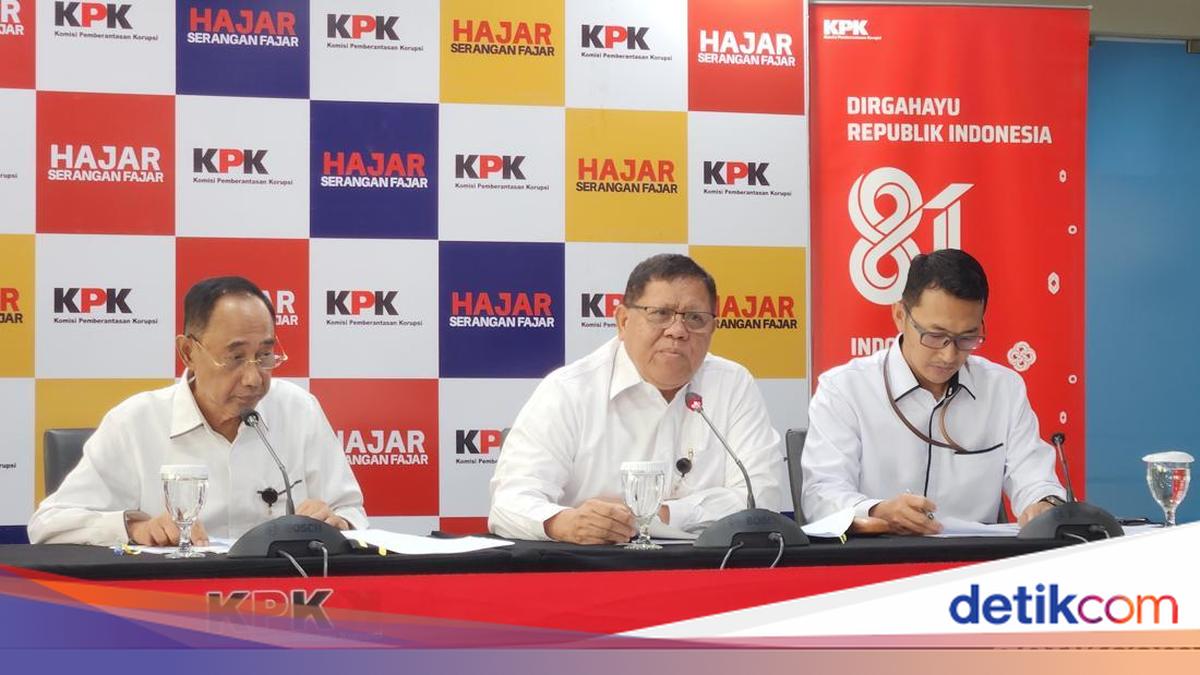
The Supervisory Board (Dewas) of the Corruption Eradication Commission (KPK) is currently refining its internal regulations, with the revision process now 80 percent complete. The draft of the revised Dewas regulation is under review by KPK leadership before finalisation.
“The activity of the Dewas involves the improvement of regulations related to ethics. The KPK Dewas has been refining the regulation concerning the code of ethics and code of conduct, and the progress of the discussion on the Daftar Inventaris Masalah (DIM) has reached 80 percent,” said Dewas member Sumpeno during a performance briefing for the first half of 2026 at the KPK ACLC building in South Jakarta on Monday (3/8/2026).
One of the primary drivers for the revision is to impose heavier sanctions for internal ethical violations, specifically through salary deductions. “We are trying to see if this improved regulation can accommodate a situation where, if a leader or member of the Supervisory Board violates ethics, the financial sanctions will be increased, unlike what is currently stipulated in the existing regulation,” he explained.
Under the current regulation, Dewas Regulation Number 3 of 2021, Article 10 stipulates that leaders and Dewas members proven to have committed ethical violations face a salary cut of 10 to 40 percent.
Beyond heavier sanctions, the revision also aims to enhance the transparency of ethical rulings to clarify publication and execution processes. It further seeks to clarify the status of KPK employees and streamline procedures for handling ethics cases. “We need to understand that the KPK consists of leaders, the Supervisory Board, and employees. Among these employees are those from the PNYD (Pegawai Negeri yang Dipekerjakan/seconded civil servants). This will be refined in the improvement of this regulation,” Sumpeno stated.
In a separate report on the first half of 2026, the board noted it had received 2,093 notifications from the KPK regarding enforcement actions. While all notifications for wiretapping were submitted on time, there were delays in reporting searches, seizures, and case closures (SP3).
Specifically, out of 762 wiretapping notifications, all were on time. For searches, 152 out of 232 notifications were on time, with 80 delayed. Regarding seizures, 893 out of 1,093 notifications were timely, while 200 were late. For SP3, four out of six notifications were on time, and two were delayed.
Dewas member Benny Mamoto issued a critical note regarding these delays to ensure legal certainty. “The Dewas has provided a critical note so that the Deputy for Enforcement and Execution improves the punctuality of delivering notifications for searches, seizures, and SP3 for the sake of legal certainty,” he said.
Benny also mentioned that the board has questioned the slow handling of several cases within the KPK. He noted that case building is often hampered because resources are diverted to hand-catch operations (OTT). “Case building is often delayed due to OTT activities because OTT involves several task forces, forcing ongoing case building to be postponed to resolve the OTT case due to detention time limits,” he explained.