
KPK States Corruption Practices Still Prone to Occur in Pati Regency Government
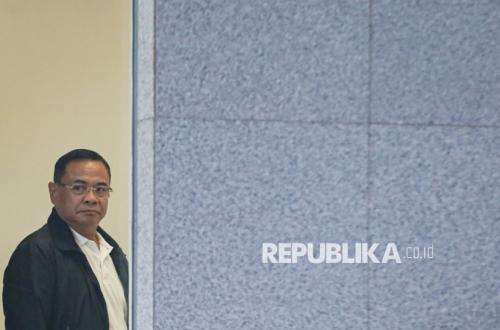
The Corruption Eradication Commission (KPK) has revealed that it continues to uncover various issues in the governance of Pati Regency. According to the KPK, Pati Regency Government remains highly susceptible to corruption practices.
In response to the sting operation (OTT) against Pati Regent Sudewo in January 2026, the KPK’s Directorate of Coordination and Supervision (Koorsup) has intensified efforts to prevent corruption in the region. This was carried out through the “Coordination for Corruption Prevention in Pati Regency Government” event held at the Pati Regency Pendopo in Central Java on Wednesday (15/4/2026).
“This activity is not an investigation, but a preventive effort to improve governance. We are focusing on prevention from APBD planning to procurement of goods and services,” said the Head of the Task Force (Kasatgas) of KPK Koorsup Region III, Azril Zah, as stated in a press release obtained by Republika on Sunday (19/4/2026).
The KPK noted that the trend of public complaints in Pati Regency has increased significantly. Over the past three years, the number of reports rose from 13 complaints in 2023 to 19 in 2024, and jumped to 64 complaints in 2025. Azril assessed that this increase is an important part of the check and balance mechanism. Nevertheless, every report must still be verified and validated.
Based on the mapping results, the KPK still found several fundamental issues in the governance of Pati Regency Government. These range from non-compliance with planning mechanisms, deviations in the core functions of DPRD legislative proposals (pokir), to mismatches in authority and budget standards.
In the grants sector, the KPK also recorded various vulnerabilities, such as the absence of a single recipient database, potential duplication of aid, and indications of budget politicisation through certain channels that risk conflicts of interest.