
KPK Reveals 2026 Education Integrity Survey Results: Adaptive Category
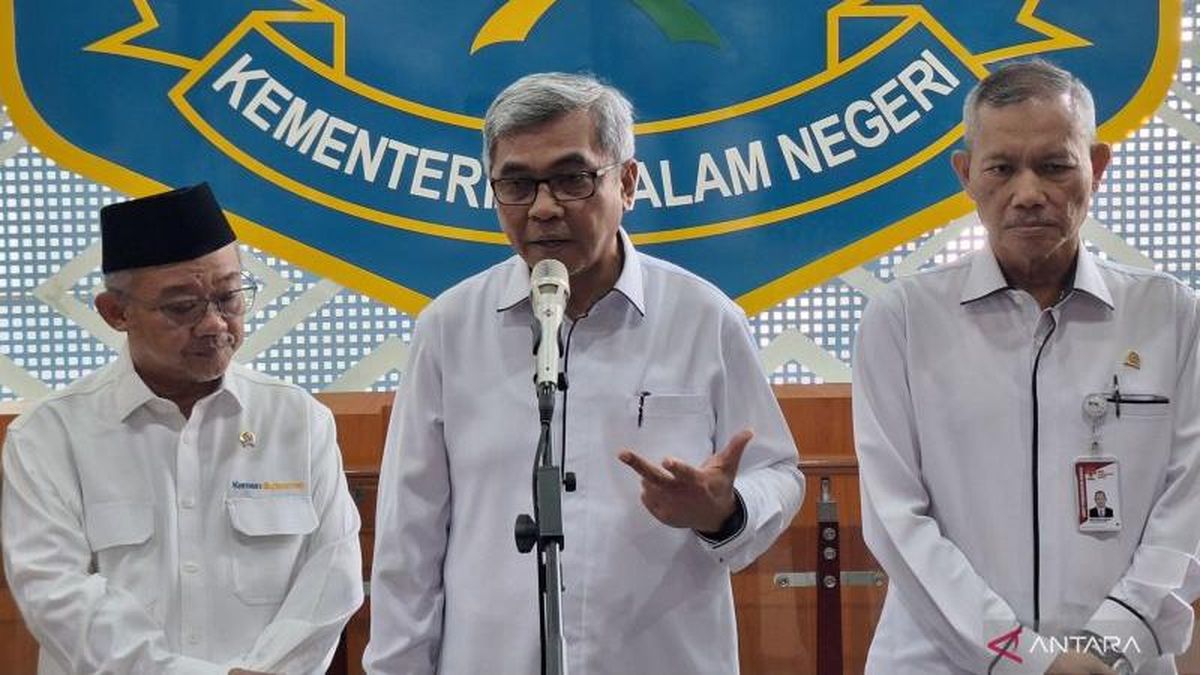
The Corruption Eradication Commission (KPK) has announced that the 2026 Education Integrity Assessment Survey (SPI) score has entered the ‘adaptive’ category with a score of 73.30. The SPI reflects the state of integrity within Indonesia’s educational landscape.
“Let us first give a round of applause for the SPI score; it is extraordinary. We are grateful that the score is sufficiently high, positioned in the adaptive category at 73 points, compared to 69.5 in the previous two years,” said KPK Chairman Setyo Budiyanto during the 2026 Education Integrity Index event in Jakarta on Tuesday (6/10).
Despite the increase in the Education SPI score from 2024, Setyo revealed that several regions still possess SPI values in the ‘corrective’ category, necessitating improvements. “I hope all parties do not become allergic when certain regions are deemed to be lacking. This is an opportunity for us to improve,” he said.
The retired three-star police general added that corruption prevention must begin in the classroom to prevent the occurrence of corrupt practices. He noted that while the KPK understands the government’s focus on extensive infrastructure development, the character building of the younger generation must remain a primary concern.
“If we implement this, hopefully, it can strengthen our culture and preserve it for future generations,” Setyo stated. “We are here because I am certain we all share the same conviction and belief that the future of Indonesia is built from the classroom; I believe everyone agrees,” he continued.
The Education SPI score was obtained from a survey involving 42,810 respondents, including pupils, students, and university undergraduates. For the primary school level, the survey involved Year 4 and 5 students, or those deemed capable of reading and comprehending questions. For junior high school and equivalent, it involved Year 7 and 8 students. Meanwhile, for senior high school, it included Year 10 and 11, as well as university students from the 3rd to 8th semesters. Additionally, the survey involved parents specifically for primary and secondary levels.
Furthermore, the survey included educators from selected educational institutions, as well as school principals and heads of higher education institutions. Data collection utilised three methods: online via questionnaire links sent through WhatsApp and email blasts; Computer Assisted Web Interviewing (CAWI) for educational units with limitations, such as lack of mobile phones, data privacy concerns, or boarding schools; and Computer Assisted Personal Interviewing (CAPI), which involves independent data entry via an application facilitated by survey teams directly in the field for units with limited internal access.
A total of 42,810 educational units participated as respondents, consisting of 41,720 primary and secondary schools and 1,090 universities. “We are grateful that the index score is already good; it is now a matter of how we improve the rest,” said Setyo.