
KPK on Study Results Regarding Parties: Political Parties Already Involved
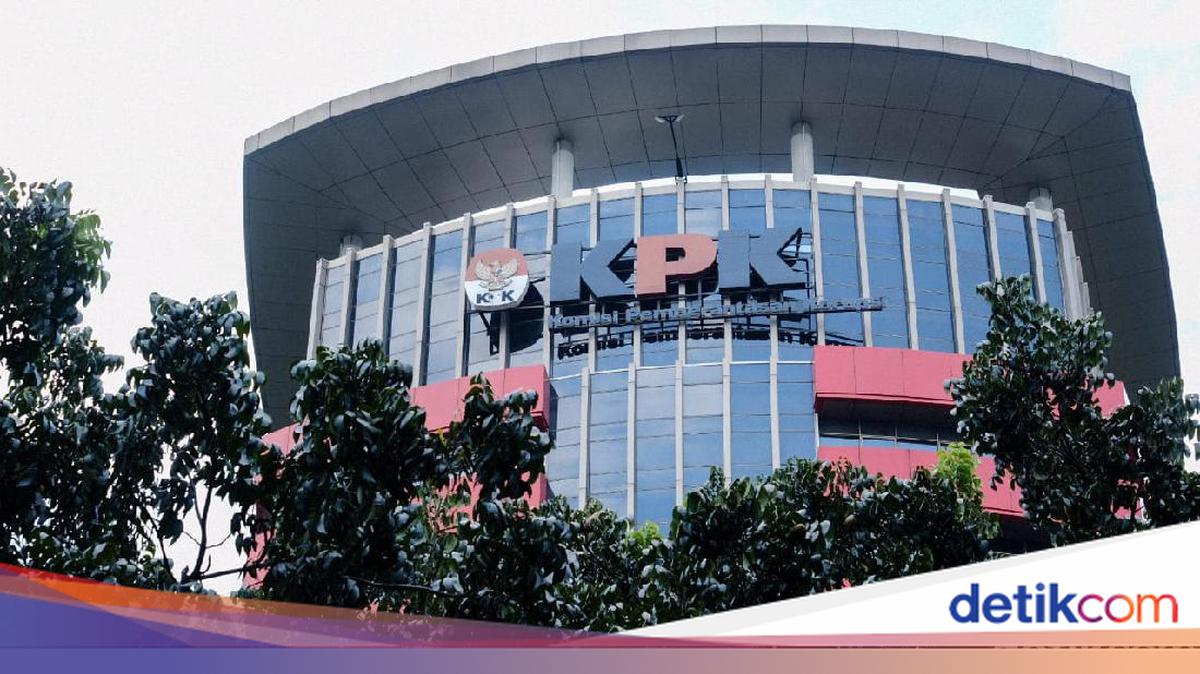
The KPK has conveyed several recommendations from a study on political party governance. The KPK states that the study process involved political parties.
“So in this study process, the KPK has also involved political parties to obtain views and objective facts from the perspective of colleagues in political parties,” said KPK spokesperson Budi Prasetyo to reporters on Thursday (23/4/2026).
Because it involves political parties, the study results encompass various perspectives. It is hoped that the recommendations provided by the KPK can serve as efforts for future improvements.
“That also does not come from just one or two perspectives, but in conducting the study, we have included parties from political parties so they can provide points that are objectively experienced and felt in the processes they go through in those political parties,” he stated.
Budi explained that in political matters, not only parties are involved, but also the public. In the aspect of political corruption, there are three aspects highlighted by the KPK.
“Those three aspects are what we approach: parties and their cadres as election participants, then the KPU and Bawaslu as election organisers, and the public as voters,” he said.
One of the KPK’s input points is limiting the general chair of political parties to two terms. The proposal in the study emerged from input from political parties.
“Of course, because the study involved many elements, including colleagues from political parties who also provided suggestions and input for improving the political system in Indonesia,” he said.
Here are the 16 recommendation points from the KPK’s study on political party governance.
The initiators of changes to Law No. 2 of 2011 (Ministry of Home Affairs and Ministry of Law and Human Rights) and the DPR (Commission II and Legislative Body) to complete Article 34 by adding a clause on the obligation to report political education activities, including activities, participants, objectives, and outputs, conducted by political parties funded by government financial assistance.
The Ministry of Home Affairs to revise Ministry of Home Affairs Regulation No. 36 of 2018 and No. 36 of 2010 to regulate the curriculum material for political education as a reference for political parties.
The Ministry of Home Affairs to compile an integrated reporting system regarding the implementation of political education conducted by the government or political parties. This is in accordance with the duties and functions of the Ministry of Home Affairs as general guidance in the field of domestic politics and democracy (Article 117 of Ministry of Home Affairs Regulation No. 9 of 2025).
The preparation of curriculum material and an integrated reporting system by the Ministry of Home Affairs becomes part of the Ministry of Home Affairs’ duties as a supervisor in accordance with the revision of Article 46 of Law No. 2 of 2008.
The need to add to the revision of Article 29 of Law No. 2 of 2011:
• Regarding political party membership in Article 29 paragraph (1) letter a, add that political party members consist of young, intermediate, and senior members.
• Requirements for cadres who become prospective DPR/DPRD candidates are clearly stated and tiered in the Law under Article 29 paragraph (1a). For example: prospective DPR candidates from senior cadres, prospective Provincial DPRD candidates from intermediate cadres.
• Requirements for prospective presidential/vice-presidential/regional head/deputy regional head candidates, in addition to being democratic and open, add a clause originating from the party cadre system.
• Add requirements for a minimum joining time in the party to be nominated by the party.
The Ministry of Home Affairs to prepare standardisation and an integrated reporting system for political party cadre development with banpol.
Encourage political parties to implement the Constitutional Court Decision No. 60/PUU-XXII/2024 on the minimum threshold for regional elections through candidate recruitment based on cadre development.
To ensure cadre development runs effectively, regulation is needed to limit the leadership of the general chair of the party to a maximum of two terms of office.
The initiators of changes to Law No. 2 of 2011 (Ministry of Home Affairs and Ministry of Law and Human Rights) and the DPR (Commission II and Legislative Body) to complete Article 34 paragraph (1) letter a by implementing member dues with amounts based on cadre tiers and recorded in the political party’s financial reporting.
Political parties to implement Article 34 paragraph (1) letter a by applying member dues with amounts based on cadre tiers and recorded in the political party’s financial reporting.
Political party financial reports to disclose individual donations consisting of donations from executive/legislative official party members, ordinary members, and non-party members.
Eliminate sources of donations from business entities/companies. Donations originating from business entities/companies to be recorded as donations from individuals (beneficial ownership of the business entity) (implication: deletion of Article 35 paragraph (1) letter c).
The Ministry of Home Affairs to create an integrated political party financial reporting system with the banpol reporting system that can be accessed by the public.
The need to add to Article 39 in the revision of Law 2 of 2011:
The management of Political Party finances as referred to in paragraph (1) is audited by a public accountant every 1 (one) year and integrated into the political party financial reporting system managed by the government (Ministry of Home Affairs) periodically every year.
The need to add provisions for sanctions in Article 47 of Law 2 of 2011 regarding non-compliance of political parties in implementing Article 39 of Law 2 of 2011.
Revision of Article 46 of Law No. 2 of 2011 to be completed with:
• The name of the institution granted authority to supervise political parties.
• The scope of supervision includes party finances, cadre development, and political education.