
KPK Flags Corruption Risks in Rp1.8 Trillion Fan Procurement for Village Cooperative Programme
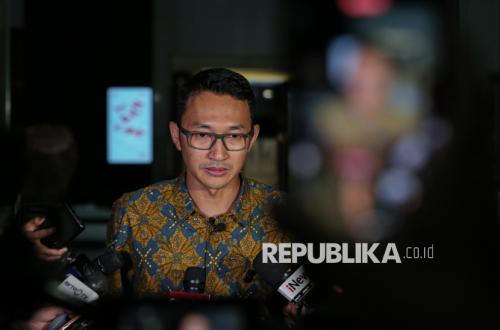
JAKARTA – The Corruption Eradication Commission (KPK) has reminded that the procurement of goods and services (PBJ) is among the sectors prone to giving rise to criminal acts of corruption. The KPK will keep a close watch on PBJ to prevent corruption.
The KPK made the statement in relation to the issue of a fan procurement worth Rp1.8 trillion for the Red and White Village/Kelurahan Cooperatives (KDKMP) programme.
“The procurement of goods and services is one of the areas vulnerable to corruption. This is confirmed not only by several cases handled by the KPK, but also by studies and monitoring carried out by the KPK, one of them through its coordination and supervision function,” KPK spokesperson Budi Prasetyo told reporters on Tuesday (21/7/2026).
Budi said the KPK has placed PBJ as one of eight focus areas under scrutiny. This is because the KPK is aware that this sector is frequently exploited by certain unscrupulous individuals to commit suspected acts of corruption.
“Therefore, in the process and mechanism of PBJ, from the very beginning the planning must really be ensured. Whether the goods or services being procured actually match the needs, what the order of priorities is, and then how the HPS or Own Estimate Price is drawn up,” said Budi.
The KPK also warned that the preparation of the HPS is an initial gateway for suspected corruption, for instance through price mark-ups. The KPK also highlighted the practice of arranging matters so that certain parties who were planned from the outset are assured of winning projects at a ministry, agency or regional government.
“So we often find, for instance, direct appointments being carried out, by splitting up several projects that should be large in value so that they fall within the criteria for direct appointment. In the end, vendors or providers of goods and services are set up from the start to win or to carry out projects at a ministry, agency or regional government,” said Budi.
For this reason, the KPK continues to urge the leadership of ministries to proactively monitor the PBJ process from the outset. This is so that, even before planning begins, it is clearly known how to prioritise the goods to be procured according to the needs of the programme.
“Starting from the planning process, then the preparation of the HPS, then the procurement method, and so on. Then the implementation must also be carried out carefully and monitored continuously. We must not allow vendors to deliver or supply goods that have been ordered, for example, at a down-spec level,” said Budi.