
KPK Finds Widespread Cheating in Universities; Minister of Religious Affairs: This is an Alarm for Improvement
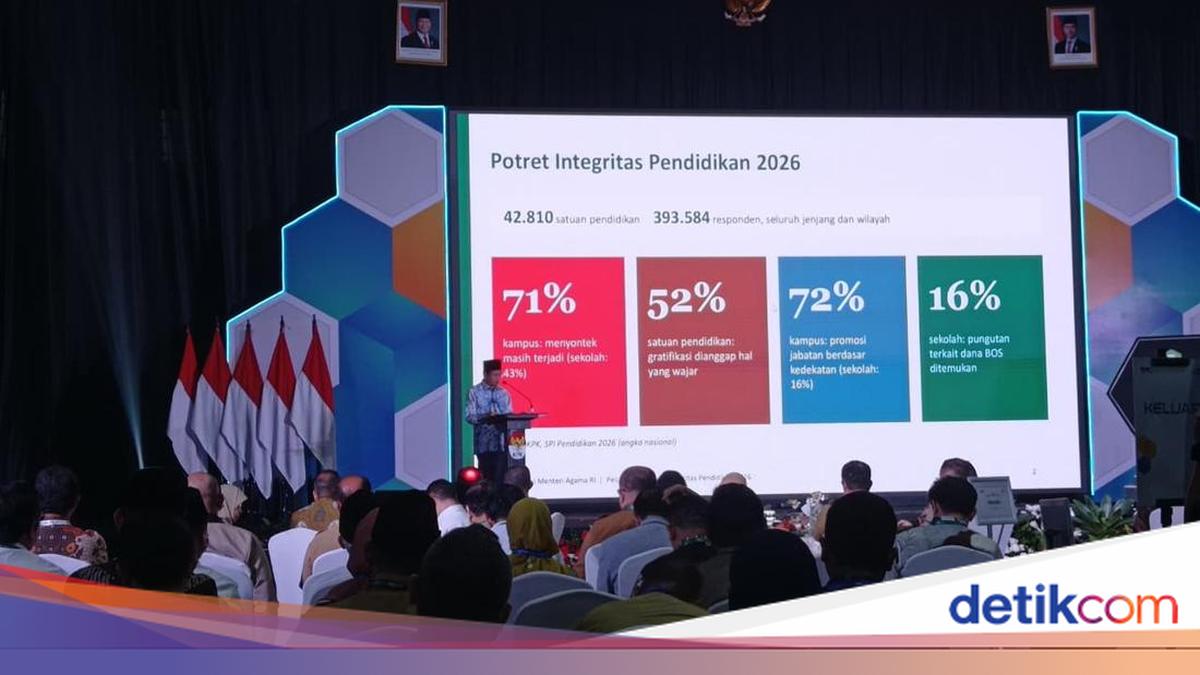
The Minister of Religious Affairs, Nasarlan Umar, has highlighted findings from the Corruption Eradication Commission (KPK) regarding cheating practices, which were identified in 71 per cent of respondents in an educational integrity survey at the higher education or university level. He stated that this must serve as an alarm for improvement.
Nasaruddin made these remarks during his opening speech at the launch of the Education Integrity Index at the KPK building, South Jakarta, on Tuesday (6/10/2026). He emphasised that integrity must be established from the very beginning of education.
“The most important foundation we must build strongly is education. If cheating and similar practices begin at the start of education, it becomes an entry point for justifying any means to an end in the future,” said Nasaruddin.
Nasaruddin noted that cheating practices still occur in many universities, including religious institutions under the auspices of the Ministry of Religious Affairs.
“This year, the survey covered 42,810 educational units with 393,584 respondents across various levels and regions. Cheating was still found in 43 per cent of schools and 71 per cent of universities, including Islamic religious universities,” he stated.
He also mentioned that gratification in educational units is still considered a normal occurrence. Nasaruddin noted that promotions based on personal connections and plagiarism also continue to occur in universities and schools.
“In 52 per cent of educational units, gratification is still viewed as something normal. Job promotions based on proximity were reported in 72 per cent of universities. Furthermore, student plagiarism was reported in 93 per cent of universities,” he said.
He stated that these KPK findings represent an integrity challenge within the education sector. He argued that there must be a strengthening of anti-corruption attitudes within educational institutions.
“These figures are a national portrait of various integrity challenges in the education sector. For the Ministry of Religious Affairs, these findings serve as both material for reflection and a reminder to continue strengthening anti-corruption education within madrasas and religious higher education institutions,” he said.
He warned that these findings should not be viewed merely as statistics. He stated that the KPK’s findings serve as an alarm to reform the education sector.
“We do not need to view these findings solely as numbers, but as an alarm, a signal to implement improvements. Because anti-corruption education must not stop at knowing what is right and wrong. It must grow into character, culture, and daily practice. On average, corruptors know the law,” he remarked.
Nasaruddin stated that large-scale corruption can originate from small habits, such as cheating. He emphasised that integrity must be built from an early age.
“Large-scale corruption can begin from small habits: cheating, plagiarism, allowing violations, or choosing to remain silent when witnessing dishonesty. Therefore, anti-corruption education must build the courage to speak the truth and act correctly,” he concluded.
Source: jawawa.id (https://jawawa.id/newsitem/kpk-finds-widespread-cheating-in-universities-minister-of-religious-affairs-this-is-an-alarm-for-improvement-1791273555)
Originally published by detikcom (https://news.detik.com/berita/d-8694684/kpk-temukan-banyak-praktik-nyontek-di-kampus-menag-ini-alarm-untuk-perbaikan), translated from Indonesian