
KPK Deputy Chair Agrees with Mahfud MD: Issues in the Transfer of Febrie's Case to the AGO
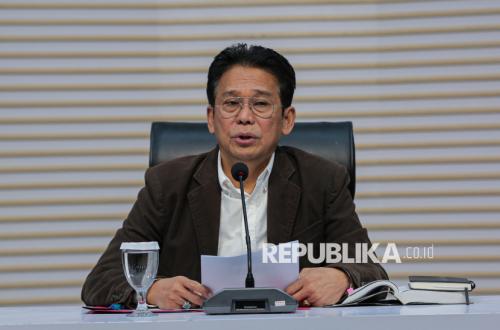
Deputy Chair of the Corruption Eradication Commission (KPK), Johanis Tanak, has criticised the handling of the case involving former Junior Attorney General for Special Crimes (Jampidsus), Febrie Ardiansyah. The case was transferred by the National Police to the Attorney General’s Office (Kejagung). Tanak reminded that all law enforcement processes must be based on the Criminal Procedure Code (KUHAP). According to Tanak, the KUHAP is the reference for handling corruption cases. ‘If we want to be consistent and consequent in enforcing criminal law, then the handling of criminal cases, including corruption, must be carried out in accordance with the KUHAP,’ Tanak told reporters on Wednesday. Therefore, Tanak agreed with former Coordinating Minister for Political, Legal, and Security Affairs, Mahfud MD. The constitutional law expert considers the current mechanism for handing over the continuation of Febrie’s case to be unrecognised by the KUHAP. ‘Yes, that is correct (I agree with Mahfud MD’s statement),’ said Tanak. The transfer of the case of former Jampidsus Febrie Andriansah to the Attorney General’s Office is considered peculiar. Many legal observers are suspicious as to why the handover was so swift. Even a legal expert like Mahfud MD admitted to being deceived by the case transfer. ‘Many were deceived by the transfer or handover of the Jampidsus investigation from the Police to the Prosecutor’s Office,’ Mahfud MD said via his YouTube channel on Sunday. The former Coordinating Minister for Political, Legal, and Security Affairs said some claimed the transfer was a step forward because it shortened the time for the judicial process to run efficiently. Typically, after an investigation is complete and a suspect is named, the case is transferred to the prosecutor’s office to reach P21, after which the public prosecutor drafts an indictment to be submitted to court. However, in Febrie’s case, this cannot be called a standard transfer. What happened last week, according to Mahfud, is not the transfer referred to in the Criminal Code. Why? Because the suspect Febrie, Mahfud said, had not been examined by the police. Based on criminal provisions, besides requiring two pieces of evidence, a transfer requires that the suspect must have been examined first. ‘I am among those deceived because from the news I caught and heard from the prosecutor’s office on Saturday 12 July at 4pm, it was a case transfer from the police to the prosecutor’s office. I assumed that if it had been transferred, the suspect had already been examined by National Police investigators and was P21, so I thought the transfer was good and efficient.’ Mahfud stressed that the mechanism for handing over cases between investigators from the Police to the Prosecutor’s Office or vice versa is not regulated in the Criminal Procedure Code and has never happened before. ‘There is indeed a possibility of a transfer, but a takeover can only be done by the KPK,’ he said. Tanak explained that the KPK has the authority to take over investigations and prosecutions of corruption cases being handled by the police or the prosecutor’s office. This mechanism is regulated in Article 10A of Law Number 19 of 2019 concerning the KPK.