
KPK assesses local government governance in NTB as vulnerable to corruption
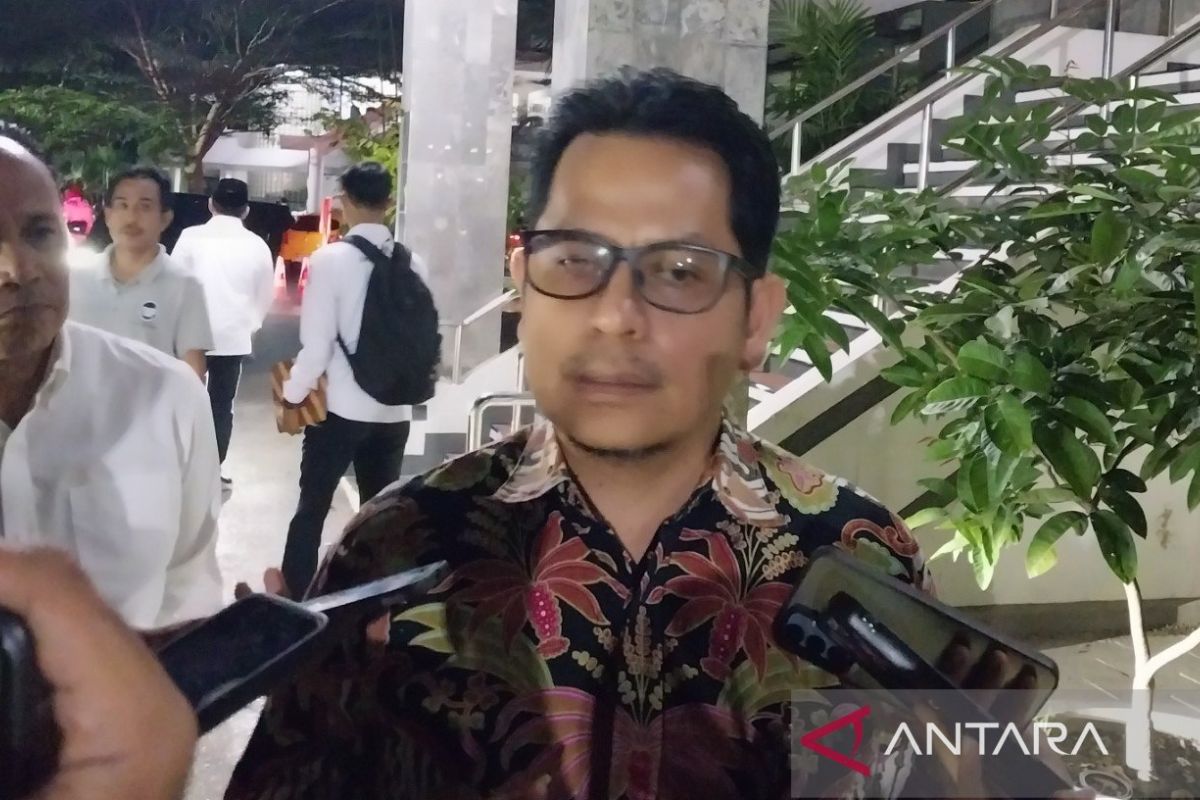
The Corruption Eradication Commission (KPK) assesses that government governance in the West Nusa Tenggara (NTB) region is still in a condition vulnerable to corrupt practices.
Maruli Tua, the KPK Director of Coordination and Supervision for Region V, emphasised that this assessment refers to the results of the NTB Integrity Assessment Survey (SPI), which stands at 64.93, remaining below the national minimum threshold of 72.99.
“We cannot use other measures; the KPK uses measurements from the results of the integrity assessment survey or the national integrity index,” Maruli Tua told journalists following a coordination meeting for the Monitoring and Evaluation of Local Government Governance Improvement alongside the KPK at the Graha Bhakti Praja, NTB Governor’s Office Complex in Mataram, on Wednesday.
“The KPK uses measurements from the results of the integrity assessment survey or the national integrity index. Based on those results, NTB still requires serious governance strengthening to prevent the occurrence of corruption practices,” he said.
Maruli revealed that most local governments in NTB are currently classified as vulnerable. In a coordination agenda involving the KPK, the Ministry of Home Affairs (Kemendagri), and the Financial and Development Supervisory Agency (BPKP), special attention is being directed towards the NTB Provincial Government and the Bima City Government.
Several crucial sectors assessed to have a high level of risk regarding the abuse of authority include the development planning process, budget management, Goods and Services Procurement (PBJ), the provision of grants, and human resource (HR) management. Additionally, the KPK highlighted the importance of supervising the Regional House of Representatives’ (DPRD) Main Thoughts (Pokir) mechanism from the planning stage through to realisation.
“Our focus is on planning, budgeting, procurement, and HR management. Details can be accessed openly through SPI documents so that the public can study the sectors that need improvement,” Maramin explained.
As a follow-up measure, the KPK, together with the Ministry of Home Affairs, BPKP, LKPP, and local governments, are currently drafting a Joint Circular Letter (SE) to strengthen integrated corruption prevention efforts.
The KPK, according to Maruli, has provided several recommendations to the Governor of NTB, Lalu Muhamad Iqbal, the NTB Regional Secretary, and the leadership of the DPRD. The results of this evaluation have been formalised in minutes that have been signed.
This document will serve as the basis for KPK monitoring to observe follow-up improvements over the next month.
“The document will subsequently serve as the basis for conducting monitoring and evaluation of the follow-up improvements in local government governance,” he said.
Maruli expressed hope that with the SPI score remaining below the national average, his agency would encourage local governments in NTB—both provincial and regency/city levels—to strengthen governance, particularly in the aspects of development planning, budgeting, procurement of goods and services, grants, and human resource management.
The KPK coordination meeting was attended by the Governor of NTB, Lalu Muhamad Iqbal, and included all levels of regional apparatus organisations (OPD) within the NTB Provincial Government, as well as the leadership and members of the NTB DPRD, lasting from Wednesday morning until Wednesday evening.