
KPBB Urges Revision of Jakarta Air Pollution Control Regulation
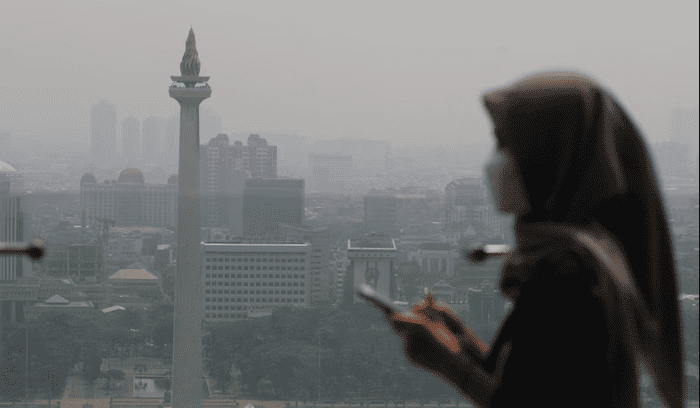
The Committee for the Phasing Out of Leaded Petrol (KPBB) is urging a revision of Regional Regulation Number 2 of 2005 on Air Pollution Control. The regulation, now more than two decades old, is considered to need adjustment in line with Jakarta’s development and the emergence of new emission sources.
KPBB Executive Director Ahmad Safrudin said changes in transport, industrial, construction and community activities have affected Jakarta’s air quality. “This bylaw needs to be adjusted to current conditions because there are many developments and new emission sources that have not yet been accommodated,” Ahmad said after an audience with the Jakarta Provincial Government at City Hall on Wednesday (19/8).
Ahmad said air pollution control from 2005 to 2009 had shown positive results. A number of policies were implemented, ranging from the use of gas fuel, industrial supervision, emissions testing, a ban on open waste burning, to the phasing out of leaded petrol.
However, Jakarta’s air quality has once again become a concern. PM2.5 concentrations from 2006 to 2009 were in the range of 18-19 micrograms per cubic metre. In recent years, the figure is said to have exceeded 45 micrograms per cubic metre.
For this reason, KPBB is urging the revision of the bylaw to strengthen emission and air quality standards. The government is also considered to need a more measurable emissions inventory to identify pollution sources. “Emission data from various sectors need to be combined with wind direction and speed data so that pollutant sources can be identified more accurately,” he said.
KPBB is also urging emission control at source through the use of emission control technology, clean energy, improved fuel oil quality, and strengthening public transport.
Ahmad hopes the Jakarta Regional House of Representatives will include the revision of Regional Regulation Number 2 of 2005 in the 2027 Regional Regulation Formation Programme. “Revising this regulation is important so that Jakarta’s air pollution control policy is in line with current conditions and able to protect public health,” he stressed.