
KPAI Urges Government to Take Child Protection More Seriously Amid Forest and Land Fires
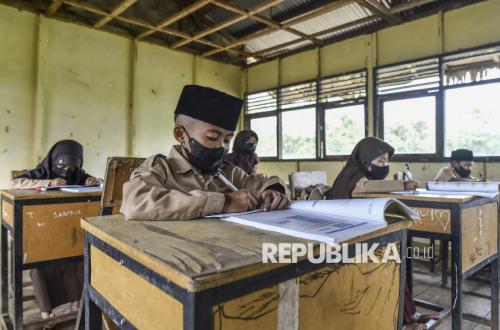
The Indonesian Child Protection Commission (KPAI) is urging central and regional governments to strengthen child protection amid the resurgence of forest and land fires (karhutla) in several parts of Indonesia. KPAI Deputy Chairman Jasra Putra said the fluctuating nature of karhutla and the highly dynamic movement of smoke mean the government cannot simply respond once air quality has already deteriorated.
“Karhutla cannot be treated as an event that is only handled once the smoke has thickened. Uncertainty should make regional governments even more prepared. Children must not be left waiting until the situation worsens before they are protected,” Jasra Putra said in a written statement quoted on Thursday (27/8/2026).
KPAI said the impact of karhutla is beginning to enter various spheres of children’s lives, from health to education. In Pontianak, for example, based on a report from the Pontianak City Child Protection Commission (KPAD) received by KPAI, online learning was implemented from 12 to 29 August 2026 and will be evaluated based on developments in the field.
The impact of the smoke is also being felt even though the source of the fires is in surrounding districts, including Kubu Raya and Mempawah. KPAD is also coordinating with the Health Office to monitor the development of acute respiratory infection (ISPA) cases among children. The government has prepared masks and issued advisories limiting outdoor activities.
In Pekanbaru, deteriorating air quality prompted the city government to extend distance learning for early childhood education through junior secondary school students until 28 August. In Palembang, education units have also begun making adjustments to reduce students’ exposure to smoke. The city government has prepared 24-hour posts and is distributing masks to the public.
“This shows that karhutla has directly intersected with children’s rights, especially the rights to health, education, a healthy environment and public services,” Jasra said.
KPAI believes regional governments need to have child protection protocols in place for karhutla situations, especially in areas that have the potential to experience forest and land fires every year. Jasra asked regional governments not to wait until air quality reaches extreme conditions before making decisions.
According to him, the government must have several scenarios that can be activated immediately based on developments in air quality, wind direction, hotspots, visibility, health reports and field conditions. “We must shift from a reactive pattern to an anticipatory pattern. Do not wait until many children begin experiencing respiratory problems before we act. Do not wait until schools are no longer viable before thinking about alternative learning,” Jasra said.
KPAI is encouraging regional governments to take at least several steps. First, build an integrated early warning system. Data from BMKG, BPBD, the Health Office, the Education Office, education units and village/sub-district governments must be connected so that child protection decisions can be made based on actual conditions.
Second, ensure the readiness of child health services. Community health centres and health facilities must be prepared to handle an increase in respiratory complaints, including the availability of medicines, health workers, service rooms and referral mechanisms.
Source: jawawa.id (https://jawawa.id/newsitem/kpai-urges-government-to-take-child-protection-more-seriously-amid-forest-and-land-fires-1787892693)
Originally published by Republika (https://ameera.republika.co.id/berita/tkgo92425/kpai-desak-pemerintah-lebih-serius-lindungi-anak-dari-karhutla), translated from Indonesian