
KPAI Highlights Child Protection Issues in Border Areas; BNPPDT Pledges Follow-up
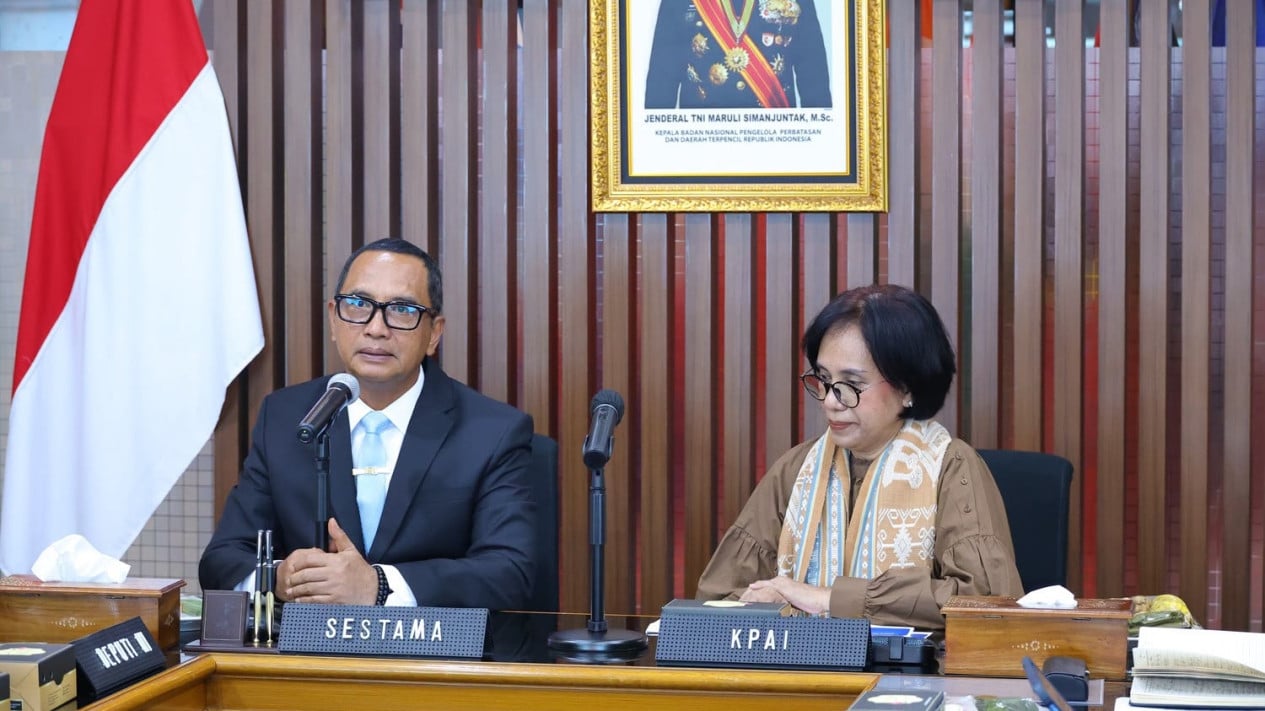
Jakarta – The National Agency for Border and Remote Areas Management (BNPPDT) says it will follow up proposals to strengthen child protection and fulfil children’s rights in border areas. This will include exploring a programme to address child custody issues in 2028.
“We will try to develop a programme on child custody issues in border areas. Hopefully, we can establish one at BNPP for 2028,” BNPPDT Secretary Makhruzi Rahman said during a meeting with the Indonesian Child Protection Commission (KPAI) at BNPPDT’s permanent secretariat in Jakarta on Wednesday (21 October 2026).
He said a proposal to hold a limited cabinet meeting to discuss the fulfilment of children’s rights in border areas would be submitted to the head of BNPPDT.
Basic infrastructure development, including clean water, electricity, roads and bridges, remains the current priority, while other development needs are being considered for future programmes.
Makhruzi also highlighted children’s right to civil identity, particularly access to birth certificates. He said this must be given attention as part of efforts to fulfil children’s rights in border areas.
KPAI Commissioner Sylvana Maria Apituley said the commission had identified 11 forms of violence, abuse and discrimination against children in border and remote areas. Seven of these issues were found specifically among children in border areas.
One fundamental concern is the unequal availability of birth certificates. Sylvana stressed that the document is not merely an administrative record but proof of identity linked to the fulfilment of a child’s rights from birth.
“A birth certificate is a child’s right to identity and the first right they have when they are born,” Sylvana said.
Alongside identity issues, KPAI flagged bullying, neglect, low school participation and the risk of dropping out, particularly in Papua.
Sylvana said violence prevention should be strengthened by adopting positive discipline in place of physical punishment. Although the government has promoted this approach for 10–15 years, changes to parenting practices and non-violent ways of resolving problems are still needed.
KPAI also raised concerns about sexual violence against children involving people close to the victims, including parents and stepfathers.
Source: jawawa.id (https://jawawa.id/newsitem/kpai-highlights-child-protection-issues-in-border-areas-bnppdt-pledges-follow-up-1792605017)
Originally published by VIVA.co.id (https://www.viva.co.id/berita/nasional/1937667-kpai-sorot-masalah-perlindungan-anak-di-perbatasan-bnppdt-pastikan-tindak-lanjut), translated from Indonesian