
KPAI: Free Nutritious Meal Programme Must Not Fall into Child Safety and Law Enforcement Crisis
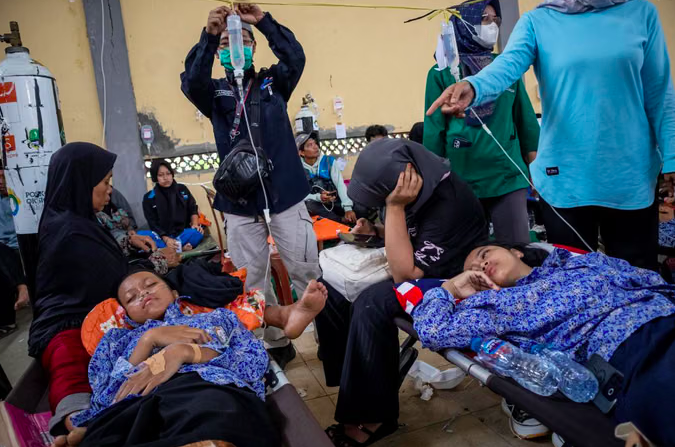
The Indonesian Commission for Child Protection (KPAI) has requested the government to conduct a thorough evaluation and immediately improve the governance of the Free Nutritious Meal (MBG) programme, following repeated incidents of alleged food poisoning affecting children, students, religious school students (santri), teachers, and other beneficiaries in various regions.
In recent days, similar incidents have been reported in several areas. The National Commission on Human Rights (Komnas HAM) noted that MBG-related incidents occurred in Sidoarjo, Rembang, Jombang, and Solo City in September 2024, following previous cases in Jayapura and Semarang.
In Sidoarjo, at least 512 students were reported to be affected by alleged MBG poisoning, leading to the temporary suspension of the related Food Service Production Unit (SPPG). The National Nutrition Agency (BGN) also admitted to negligence in managing the timing of food production and consumption. KPAI Vice Chairman Jasra Putra stated that these incidents should no longer be viewed merely as technical issues regarding kitchens, food, or distribution.
“We are facing issues of child safety, state governance, supervision, financing, and law enforcement. When incidents continue to recur, the question is not just who is at fault, but why the system is unable to prevent the same events from happening again,” he stated on Friday (11/9).
KPAI emphasised that MBG is a strategic programme because its beneficiaries include children and other vulnerable groups. Therefore, the programme’s success should not be measured solely by the amount of food produced and distributed. The primary indicator is whether the food received by children is safe, nutritious, fit for consumption, and does not endanger their health or safety.
“We must not allow successful distribution to be paid for by increased risks to children. The state exists to fulfil children’s rights, not to transfer risks onto them,” said Jasra.
According to KPAI, the current issues must be read as a comprehensive child protection issue, as the impact does not end when a child suffers poisoning.
KPAI highlighted reports that some kitchens or SPPGs do not yet possess a Hygiene and Sanitation Suitability Certificate (SLHS), yet are still permitted to operate and distribute food. If the SLHS is an instrument to ensure hygiene and sanitation standards are met, the government needs to transparently explain the basis and mechanism that allows kitchens failing to meet these requirements to continue serving children.
“If many kitchens do not have an SLHS but continue to operate and receive funding, there is a governance issue that must be explained. Why is funding still provided, why is cooperation continued, and on what basis is that kitchen declared fit to serve children?” he continued.
KPAI requested that the BGN and relevant government agencies disclose data regarding the number of kitchens without SLHS, the reasons for their continued operation, the policy basis used, and the deadline for meeting all requirements.
KPAability also urged that budget disbursements and the continuation of cooperation with SPPGs be strictly linked to compliance with food safety standards, legality, kitchen capacity, and verifiable inspection results. “Public funds must follow compliance with safety standards, rather than proceeding first while safety requirements follow later,” he said.
KPAI also assessed the importance of ensuring no conflict of interest occurs in the implementation or supervision of MBG. Large-scale programmes like MBG involve many actors, ranging from programme managers, food providers, local governments, health offices, schools, supervisory bodies, to law enforcement agencies. Each must perform their functions independently and without overlap.
KPAI encouraged an audit of the ownership structures and institutional relationships of SPPGs or implementing foundations, including any links to public officials, law enforcement, members of the legislature, civil servants, TNI, Polri, or other parties with supervisory authority.
“This is not an accusation against any specific party. However, in a programme as large as MBG, the potential for conflict of interest must be prevented from the start. The public must be confident that supervision and law enforcement operate based on rules and evidence, not based on the strength or weakness of someone’s network,” he explained.
Jasra also reminded that the handling of alleged legal violations in MBG cases must be conducted professionally, independently, transparently, and based on evidence. “We must not enter a situation where whoever has the strongest lobby wins. The law must stand above human safety. If child safety loses to interests, then we are facing a problem far greater than just a food issue,” Jasra added.
KPAI noted that the BGN has stated that any alleged criminal acts in MBG cases have been referred to law enforcement to be determined based on investigation results.
Should the legal process uncover elements of violations that cause loss to victims, KPAI requested that mechanisms for accountability and victim recovery, including potential compensation in accordance with regulations, be fully implemented.
The impact in Karo demonstrates that victims should not be abandoned after leaving the hospital. KPAI is paying special attention to the impact of the MBG incidents in Karo Regency, North Sumatra.
In discussions with local governments, it was revealed that the impact does not end when a child receives medical treatment. Some children who have been discharged from the hospital still experience recurring health effects and require further care.