
KP2MI ready to boost migrant worker competence through SMK Go Global
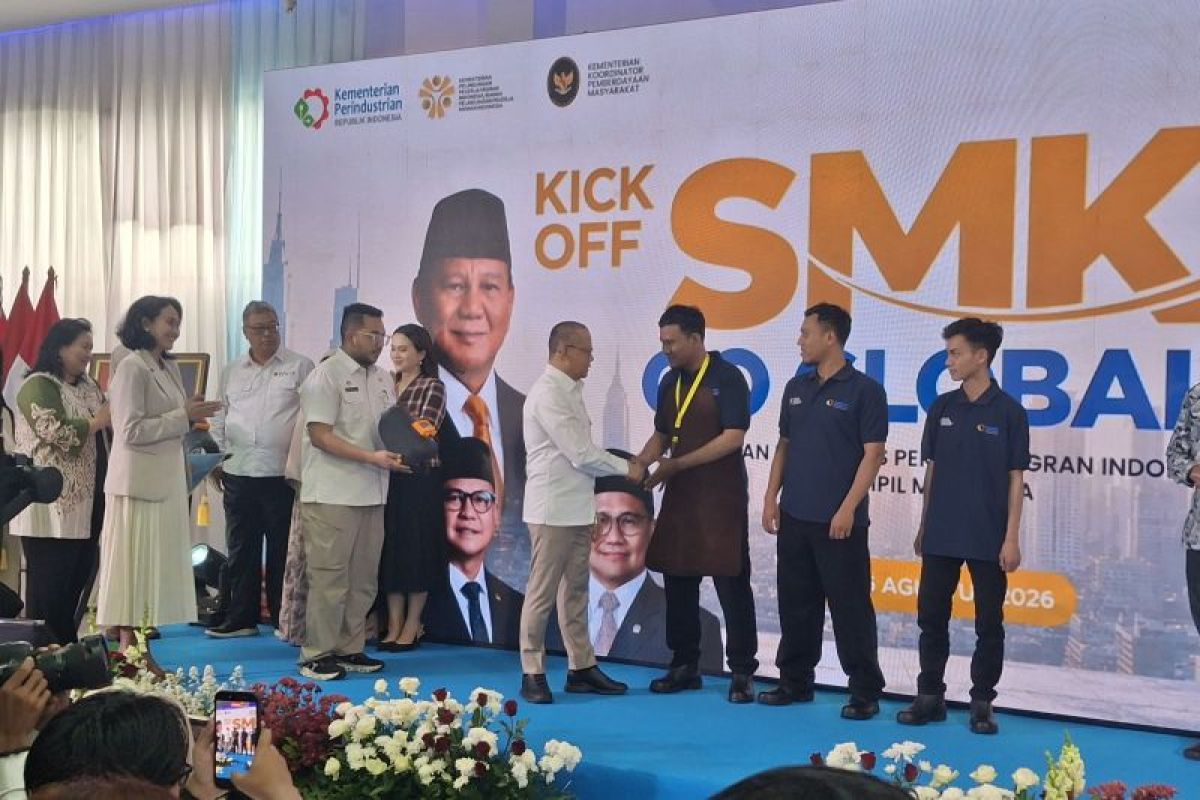
Jakarta (ANTARA) - Minister for the Protection of Indonesian Migrant Workers (KP2MI) Mukhtarudin has affirmed the government’s readiness to improve the competence of prospective Indonesian migrant workers (PMI) through the SMK Go Global programme.
“SMK Go Global is not merely a training programme. It is the government’s effort to prepare Indonesia’s young generation to have globally recognised competencies and certifications,” Mukhtarudin said at the launch of the SMK Go Global programme at the Industrial Training Centre (BDI) in East Jakarta on Wednesday (26/8).
Through this improvement in competence, prospective migrant workers are expected to be able to compete and secure decent employment in the international labour market, he added.
The P2MI Minister said the SMK Go Global programme is not limited to vocational school (SMK) graduates but is also open to senior high school (SMA) graduates and general graduates (including bachelor’s and master’s degree holders), who may also become training participants.
The programme provides up-skilling training for prospective migrant workers with the aim of preparing participants to be ready to work abroad.
The SMK Go Global programme is part of the President’s directive to prepare 500,000 workers, comprising 300,000 prospective migrant workers who are SMK graduates and 200,000 prospective migrant workers who are general graduates.
They are projected to fill various job sectors with labour demand in the international market, including caregiver, welder, hospitality, nurse, truck driver, manufacturing, transportation, agriculture, construction, and the maritime sector.
Destination countries projected under the programme include Japan, South Korea, Germany, Australia, Malaysia, Singapore, the European region, Turkey, Taiwan, and several other countries.
Placement will be carried out in stages, taking into account labour market demand and global geopolitical conditions.
The SMK Go Global programme has been designed comprehensively based on mapping of sectors, positions, destination countries, qualifications, and actual competency needs in the overseas labour market, so that prospective migrant workers can be provided with integrated training covering strengthening of technical competencies, certification, and language training according to the standards of each destination country.
The training ecosystem also covers technical and language competencies. For certain positions, participants receive technical training and competency certification, as well as language training according to the destination country.
“The global labour market has increasingly high standards. Therefore, the curriculum and training must follow industry needs. We must not prepare workers based on mere assumptions, but must be based on labour market demand data,” Mukhtarudin said.