
KP2MI Partners with Riau Islands Provincial Government for Migrant Worker Protection and Placement
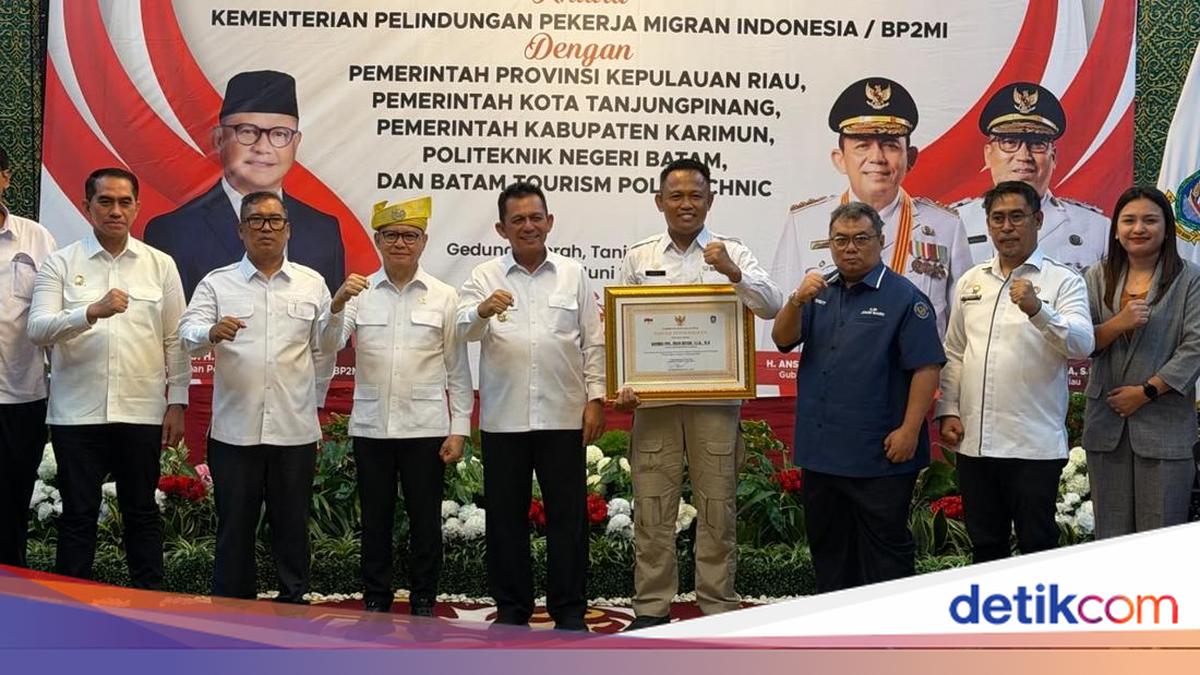
The government is accelerating the development of a safe, professional, and integrated migration ecosystem from upstream to downstream. This is evidenced by the signing of a Memorandum of Understanding and Cooperation Agreement between the Ministry for the Protection of Indonesian Migrant Workers (KP2MI) and five strategic partners in the Riau Islands (Kepri) region.
The five strategic partners include the Riau Islands Provincial Government, the Tanjungpinang City Government, the Karimun Regency Government, Batam State Polytechnic, and Batam Tourism Polytechnic.
In his address, the Minister for Migrant Worker Protection, Mukhtarudin, explained that under President Prabowo’s leadership, BP2MI has been transformed into KP2MI. This transition from an operating agency to a ministry with dual functions as both an operator and a regulator is governed by Presidential Regulations (Perpres) Number 139 of 2024 and Number 90 of 2019.
“The President has given firm direction to the Ministry of P2MI to increase the quality of protection before, during, and after employment, as well as to optimise the placement of skilled Indonesian Migrant Workers from medium-to-high skill categories,” Mukhtarudin stated in a briefing on Tuesday.
He emphasised that the involvement of local governments and educational institutions is the fundamental foundation for addressing Indonesia’s demographic bonus. He noted that the abundance of the domestic productive-age population coincides with the phenomenon of an ageing population in many developed nations, which is triggering a global labour deficit.
According to SISKOP2MI data from January 2025 to 4 June 2026, the government has facilitated 424,367 placement services nationally, with the five primary destination countries being Taiwan, Hong Kong, Malaysia, Japan, and Singapore. The potential remains vast; SIP2MI data as of 5 June 20ly recorded 312,797 overseas job opportunities, but only 24.41% (75,378 positions) have been filled, leaving 233,401 vacancies.
For the Riau Islands, this potential is significant. Between 2025 and 4 June 2026, placement services from the Riau Islands region reached 2,479. Furthermore, the estimated average remittance of Rp5 million per month from each migrant worker is believed to create a strong multiplier effect for MSMEs and community purchasing power in their home regions.
However, Mukhtarudin admitted that despite the economic potential, the Riau Islands’ geographical position as a border region makes it vulnerable to non-procedural placement practices and Human Trafficking (TPPO). Between 1 January and 31 May 2026, BP3MI Kepri conducted 122 prevention activities and successfully rescued 479 prospective migrant workers from illegal departures in the Tanjungpinang and Karimun areas.
To combat illegal syndicates and improve the quality of Indonesian Migrant Workers (PMI), the agreement focuses on two main pillars of synergy. The first pillar involves synergy with local governments, covering the dissemination of job opportunities, the provision of education and training, health check-up services, placement, protection, and data exchange. Through this collaboration, KP2MI also aims to accelerate the ‘Golden Migrant Village’ programme to ensure villages in Riau Islands become the frontline of protection and centres for economic independence for returned workers and their families.
The second pillar focuses on strengthening protection through the implementation of the ‘Tridharma’ of Higher Education alongside Batam State Polytechnic and Batam Tourism Polytechnic. Concrete steps include the establishment of ‘Migrant Centres’ on vocational campuses to serve as integrated service hubs, the alignment of curricula with global standards, and conducting research on overseas job placements to meet global market needs.
This move strengthens the national vocational ecosystem, joining 21 other higher education institutions and one training institute in Indonesia that have committed to establishing Migrant Centres. This initiative aligns with the President’s directives to launch the ‘SMK Go Global’ quick-win programme, which includes a roadmap to place 500,000 skilled workers between 2026 and 2029 in strategic sectors such as caregiving, welding, hospitality, nursing, and truck driving, aiming to position Indonesia as a ‘Global Talent Supplier’.
Mukhtarudin emphasised that all programmes culminate in the ‘Brain Circulation’ vision: “We are designing a system where our nation’s youth depart as professional global talents, gaining knowledge, technology, and work ethics in developed countries, only to return to the Motherland. The experience and capital they bring back must be transformed to build productive businesses, innovate, and accelerate regional development.”
He concluded by urging all parties to remain fully committed to ensuring this cooperation does not remain a mere administrative formality, but results in tangible field implementation to provide dignified governance and protection for the economic warriors of Indonesian families.