
KP2MI Partners with 8 South Kalimantan Universities to Boost Migrant Worker Competence
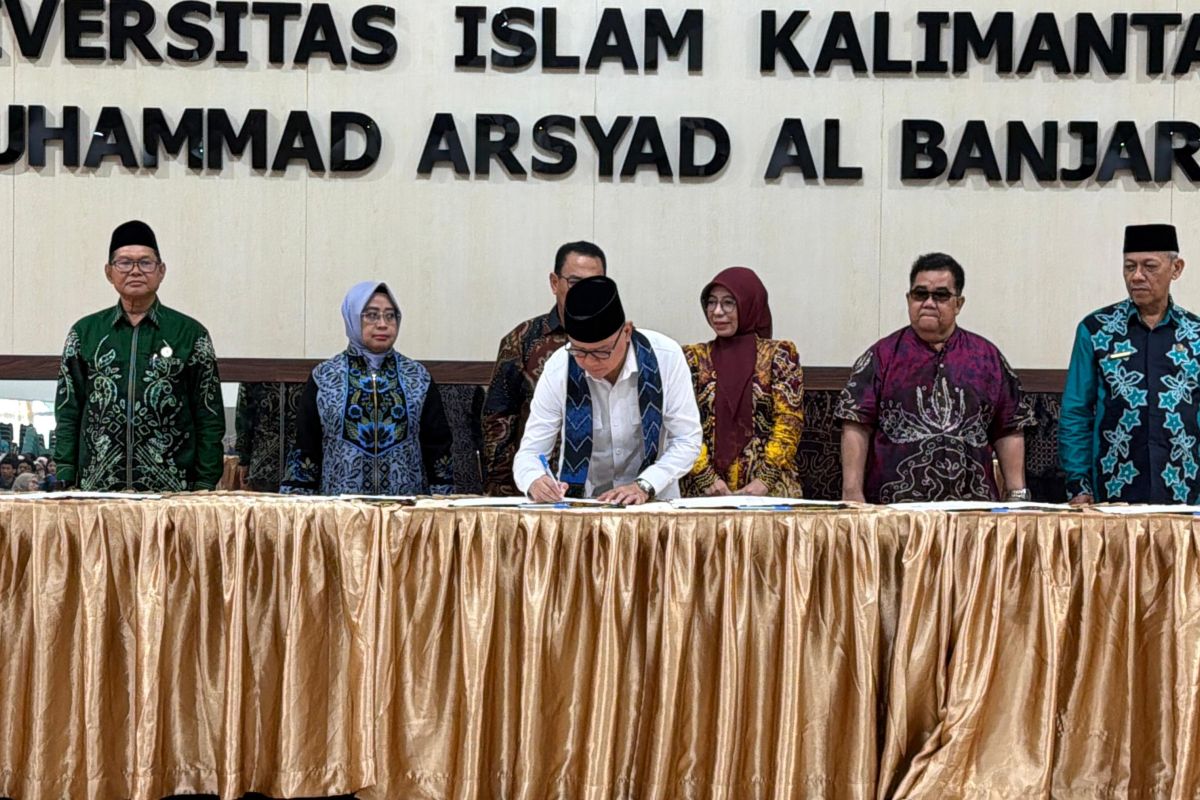
The Ministry of Protection of Indonesian Migrant Workers (KP2MI) is partnering with eight universities in South Kalimantan to improve the competence of Indonesian migrant workers (PMI). “This MoU is intended to create an integrated ecosystem from upstream to downstream,” said Minister of P2MI Mukhtarudin, according to a KP2MI statement on Wednesday. The cooperation was marked by the signing of a Memorandum of Understanding (MoU) and a Cooperation Agreement at the Islamic University of Kalimantan Muhammad Arsyad Al Banjari (UNISKA MAB) in Banjarmasin, South Kalimantan, on Tuesday (23/6). Mukhtarudin stressed that collaboration with higher education institutions is the main foundation for creating an integrated placement and protection ecosystem for migrant workers. “This entire series of competency preparation leads to one major vision for the future, namely the creation of a Brain Circulation ecosystem,” he said. The Brain Circulation concept promoted by the government is designed so that prospective migrant workers are not merely labourers abroad, but also professional talents with global competitiveness. “We are designing it so that the nation’s children depart as professional global talents, gaining knowledge, technology, and work ethic in developed countries, and then bring home their best competencies to build the homeland,” said Mukhtarudin. Mukhtarudin also urged that the cooperation not stop at a ceremonial level, but be implemented concretely in the field to deliver dignified governance and protection for migrant workers, whom he called “family economic heroes”. In front of students, Mukhtarudin openly addressed the stigma that has shadowed the profession of Indonesian migrant workers. He invited the entire academic community to change this misguided perspective. “So far, some of our society still looks down on the migrant worker profession, as if working abroad is synonymous with rough labour, without a future, and is even often stigmatised in a degrading manner. This perspective must be corrected together, starting from this room,” said Mukhtarudin. Besides this issue, Mukhtarudin also highlighted the challenges that students must prepare for early on to penetrate the international job market for medium-to-high skill positions, including the need for language competence and official certification. “No matter how great your technical skills are, without adequate language ability, the opportunity to move up to medium-high skill positions will be closed,” Mukhtarudin explained. To address this challenge, through the agreed cooperation, campuses will establish Migrant Centres. These facilities will function as centres for language training (Mandarin, Japanese, Korean, English), technical competency testing, certification, and international career information. Rector of the Islamic University of Kalimantan Muhammad Arsyad Al Banjari (UNISKA MAB) Mohammad Zainul welcomed and appreciated the strategic cooperation between the two parties. Zainul asserted that as a higher education institution, UNISKA MAB has a moral and academic responsibility to improve the quality of human resources so they can compete in the international job market. “This cooperation greatly supports how UNISKA can build skills and competencies in the future, and of course in accordance with the needs of the job market abroad,” said Zainul after the signing ceremony.