
KP2MI Opens Registration for Asta Mandala SMK Go Global Training
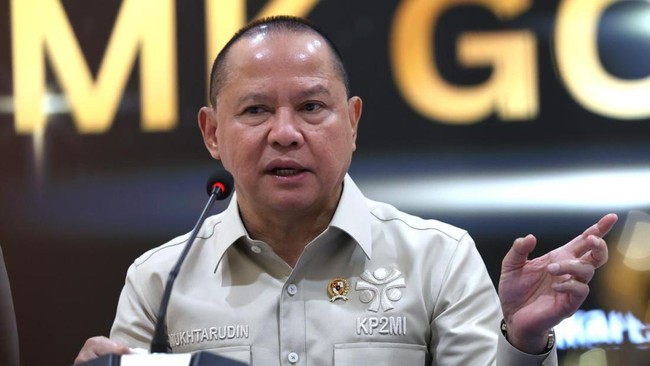
The government is opening a new pathway for young Indonesians to enter the international job market through the Asta Mandala SMK Go Global programme. The Ministry of Protection of Indonesian Migrant Workers (KP2MI) has officially opened the first phase of registration for the SMK Go Global capacity-building training from 12 to 16 August 2026. This strategic move is part of the government’s programme to prepare Indonesian human resources who are not only ready to work domestically but also possess the competence and competitiveness to meet labour demands in various countries. Minister of Protection of Indonesian Migrant Workers Mukhtarudin stated that SMK Go Global is the implementation of President Prabowo Subianto’s directive to strengthen the quality of human resources while expanding access to international job opportunities. Through this programme, the government targets 500,000 prospective Indonesian migrant workers, comprising 300,000 vocational school graduates and 200,000 participants from the general public. The figure is not merely a numerical target but part of a broader strategy to build a workforce preparation ecosystem directly linked to the needs of overseas job markets. The Asta Mandala SMK Go Global programme is designed with a market-demand approach. Participants will receive not only technical skills training but also language instruction, cultural understanding, work discipline, and knowledge of their rights and obligations as migrant workers. The programme covers several priority sectors, including healthcare, hospitality, manufacturing, transportation, construction, agriculture, sea-based work, and foreign languages. Healthcare competencies include caregiver, caretaker, elderly caretaker, and nursing home roles, while hospitality covers spa therapist, housekeeping, cleaner, waiter, barista, and cook. Manufacturing offers welding, moulding, and operation production, and transportation includes driver, bus driver, and truck driver roles. Other sectors feature construction worker, plantation worker for oil palm, livestock, aquaculture, forestry, and farming, as well as fisherman and commercial ship crew, plus language training in English, Japanese, German, Mandarin, and Korean. The government has mapped competencies according to the needs of destination countries. The hospitality sector is a major contributor, with a target placement of 14,040 people to countries such as Turkey, Malaysia, the Maldives, Kuwait, Saudi Arabia, the United Arab Emirates, and Eastern Europe. The healthcare sector targets 12,780 placements to Japan, the Netherlands, Singapore, Taiwan, and Germany. Other sectors include manufacturing with 6,400 placements to South Korea, Qatar, and Taiwan; agriculture with 4,300 placements to Malaysia, Taiwan, and Japan; language training for 1,700 people; construction for 400; sea-based for 220; and transportation for 60. The minister emphasised that the mapping is based on foreign labour market demands to ensure participants gain relevant competencies. He stressed that the government’s paradigm for placing Indonesian migrant workers goes beyond mere departure, focusing instead on ensuring every candidate possesses competence, readiness, protection, and access to decent work. The training materials are tailored to placement needs and may include job skills, foreign languages, and understanding of the work environment and culture in destination countries. This approach is expected to transform the placement pattern from mere job seekers to skilled workers with competitive value in the global market. Registration for the first phase of the SMK Go Global capacity-building training is open from 12 to 16 August 2026. Prospective participants can obtain information on requirements, types of training, schedules, registration mechanisms, and programme provisions through official KP2MI channels and 23 Indonesian Migrant Worker Protection Centres across Indonesia. Requirements include a minimum age of 18 years and submission of a family card and identity card photocopies.