
KP2MI: Indonesian Migrant Workers Can Leverage Global Experience to Develop Villages
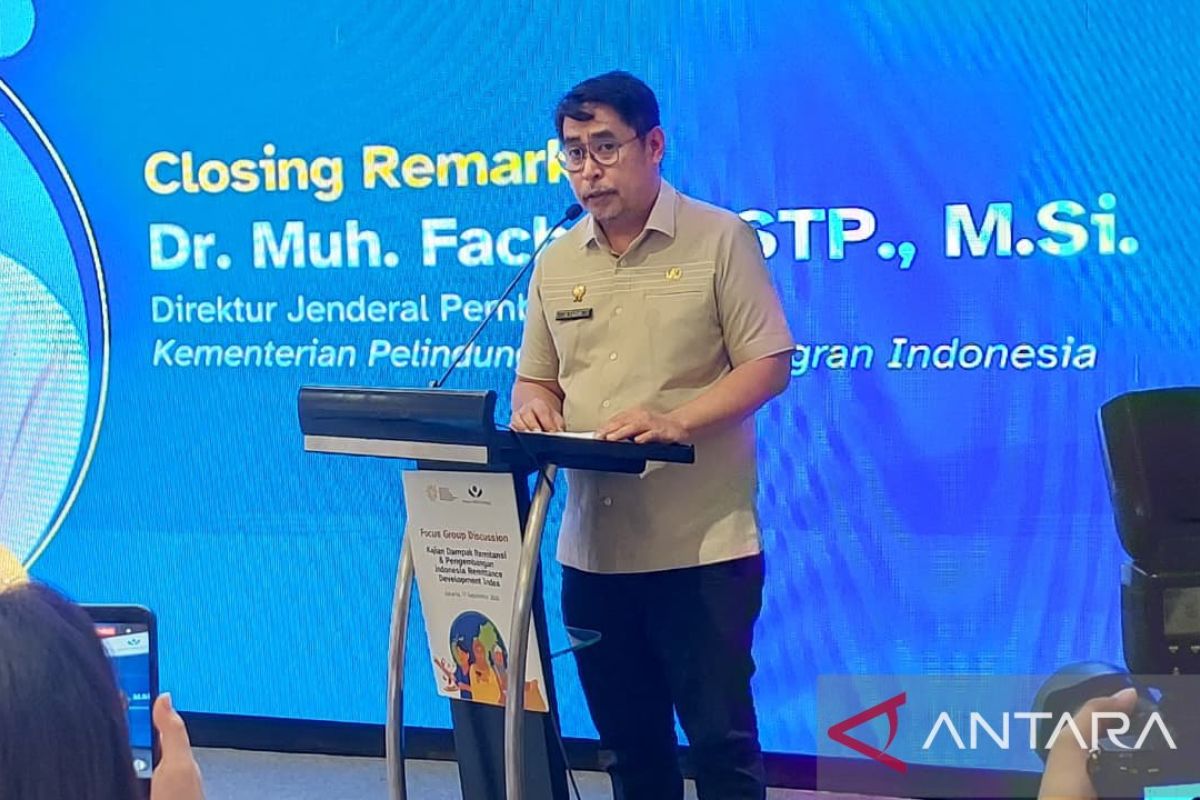
Jakarta (ANTARA) - The Director General of Empowerment at the Ministry for the Protection of Indonesian Migrant Workers (KP2MI), Muh Fachri, stated that Indonesian Migrant Workers (PMI) returning to the country have the opportunity to bring more than just remittances; they can also bring global skills and experience to bolster the economies of their home regions.
Under the concept of “brain circulation”, KP2lar targets returning migrants to become drivers of regional economic growth, including through the emergence of new entrepreneurs capable of creating jobs in their areas of origin.
“Upon their return, their experience abroad becomes global expertise that can serve as a modality for development in their home villages,” said Fachri during a discussion and signing ceremony regarding the impact of migrant remittances in Jakarta on Thursday.
Fachri noted that migrant workers abroad have the opportunity to gain work experience, skills, and an understanding of work patterns and business environments in their host countries. This capital is expected to be utilised when they return to Indonesia.
Consequently, the benefits of labour migration should not end with receiving remittances to meet family needs, but should extend to productive activities such as investment, entrepreneurship, and the creation of new employment opportunities.
“The money can be used for business or investment. Not all our migrant workers are naturally good entrepreneurs, so it will be a choice for the workers themselves,” he added.
To support this, the government is also encouraging increased financial literacy among migrant workers so that the income earned abroad can be managed more productively.
However, financial literacy remains a challenge in optimising the use of remittances; therefore, the empowerment of migrant workers and their families must be implemented at the village level.
One such effort is the Educative, Advanced, Safe, and Prosperous Migrant Village programme (Desa Migran Emas). This programme involves various stakeholders to provide education, protection, and empowerment for migrant workers from before their departure until after their return to their home regions.
He assessed that a village-based approach is essential because the protection of migrant workers cannot be handled by a single sector alone. Protection aspects encompass legal, economic, and social dimensions, requiring collaboration between central government, regional governments, village governments, and other stakeholders.
In an economic context, the presence of migrant workers has impacted the welfare of several regions that serve as migrant worker hubs.
In several villages in Ponorogo, for instance, he observed that the condition of community housing in migrant worker hubs is relatively different compared to villages that are not migrant hubs.
“In simple terms, what we can see is that when people decide to become Indonesian migrant workers, there is a leap in welfare,” he stated.
This condition is one of the reasons why KP2MI is pushing for the contribution of migrant workers to poverty alleviation and welfare improvement to be measured more accurately through data.
Data regarding the number of migrant workers, remittances, family conditions, and the economic development of former migrant workers can assist the government, including the Central Bureau of Statistics (BPS) and the Ministry of National Development Planning/Bappenas, in designing more targeted policies.
He hopes this approach can create a more productive cycle, where migrant workers depart with better skills and readiness, acquire global experience while working, and return to their regions with the financial capital and knowledge that can be developed into new businesses or economic activities.