
KP2MI: East Java Has Over 2,000 Vocational Schools, Prepared as Centre for Migrant Workers
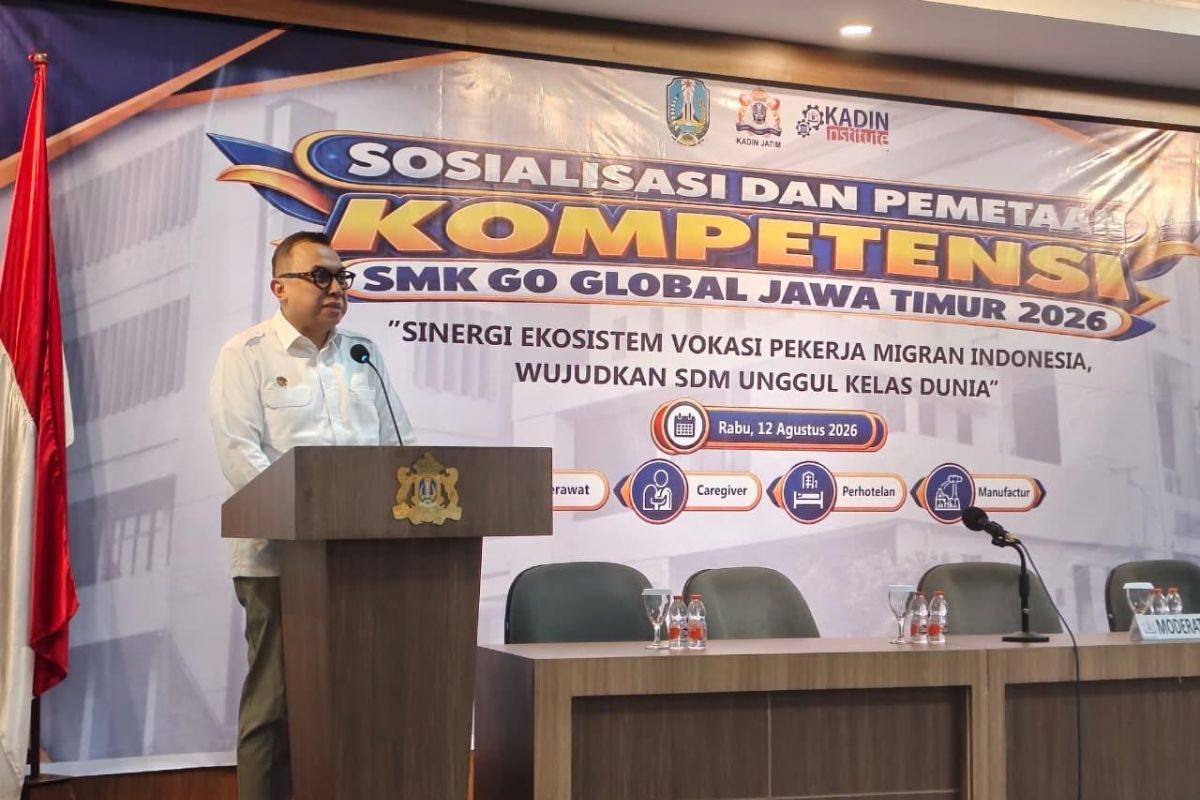
The Director of Vocational Institutional Development for Indonesian Migrant Workers at the Ministry for the Protection of Indonesian Migrant Workers (KP2MI), Abri Danar Prabawa, stated that East Java possesses significant potential to become a centre for preparing high-quality Indonesian migrant workers (PMI) through the SMK Go Global programme. He noted that the province’s large number of vocational institutions and secondary vocational schools, totalling more than 2,000, must be optimised to develop highly skilled migrant workers.
Abri explained that the SMK Go Global programme is part of the government’s effort to improve the quality of human resources so they can compete and be absorbed in the international job market. He stressed that the programme cannot operate in isolation, requiring synergy between the central government, regional governments, village administrations, vocational institutions, secondary vocational schools, and job training centres to build an integrated ecosystem. This ecosystem would cover the mapping of potential candidates, training, and certification.
For East Java specifically, he mentioned that several aspects still need strengthening, particularly specific competencies, certification, and foreign language skills. These improvements are intended to help migrant workers advance to become professional workers with competencies recognised in destination countries. “We must build a unified ecosystem. We cannot work separately. We need to work together to prepare human resources whose competencies match the needs of the global job market,” he said.
Consequently, Abri added that competency mapping will be directed at determining the number of people interested in working abroad, the job sectors in demand, and the competencies they already possess. This data will then serve as the basis for developing training and competency improvement programmes. Through SMK Go Global, East Java is expected not only to be a supplier region for migrant workers but also to develop into a centre for preparing skilled workers capable of meeting the needs of international industry. “The synergy of vocational education, training institutions, certification, government, and the business world is the foundation to ensure that the workers sent are truly competent, legal, and ready to compete in the global market,” Abri concluded.