
KP2MI and BPJS Kesehatan Strengthen JKN Ecosystem to Protect Migrant Workers
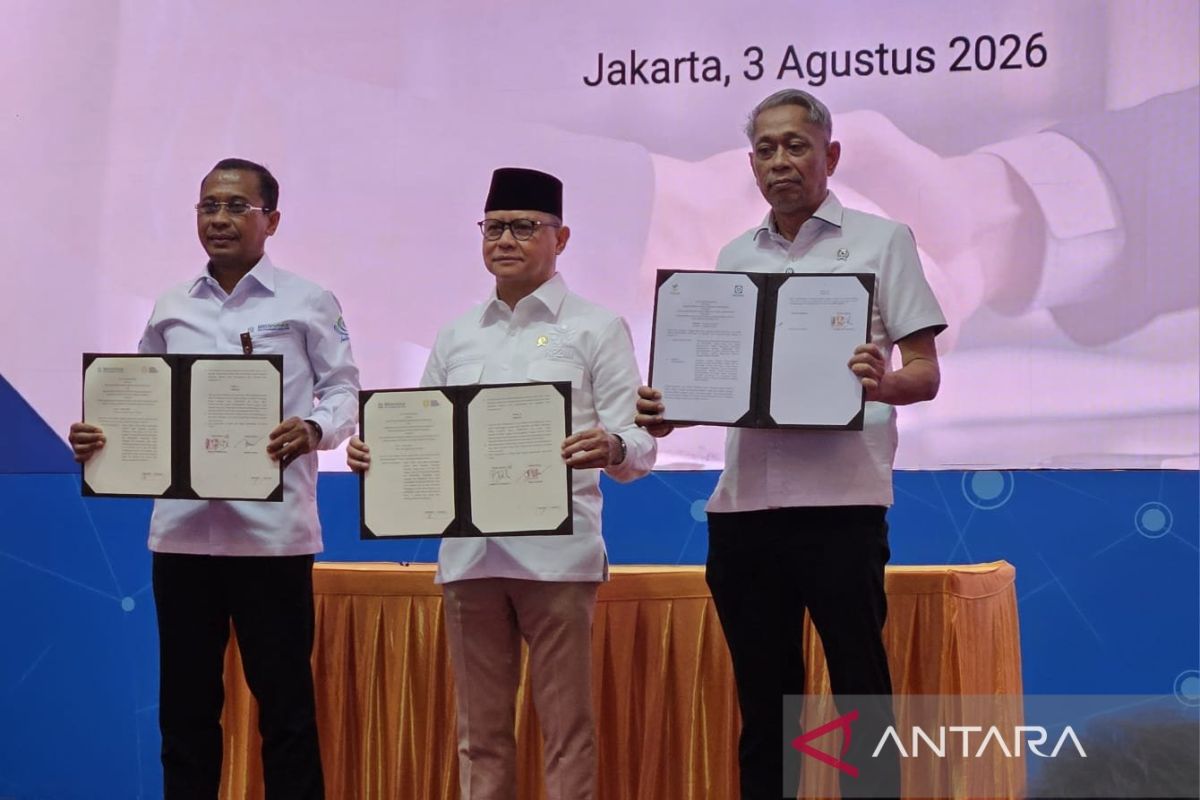
Jakarta (ANTARA) - The Ministry of Protection of Indonesian Migrant Workers (KP2MI) said it has established a collaboration with BPJS Kesehatan to strengthen data for the National Health Insurance (JKN) programme, in order to improve the social security ecosystem and protection for Indonesian migrant workers (PMI).
Minister of Protection of Indonesian Migrant Workers Mukhtarudin said in Jakarta on Monday that the government pays great attention to the safety and health of migrant workers, as they are economic champions for their families and the country. In 2025, he said, 11 per cent of national foreign exchange reserves, or roughly Rp288 trillion, came from remittances sent by migrant workers.
“The scope of this memorandum of understanding covers the promotion of the national health insurance programme, as well as synergy in health coverage through active JKN membership for prospective Indonesian migrant workers (CPMI) and Indonesian migrant workers,” said Mukhtarudin.
In addition, he said, the cooperation also includes recording active memberships or the temporary deactivation of prospective migrant workers from the national health insurance scheme.
It further covers the provision of health service guarantees for Indonesian migrant workers during the pre-departure period and upon their return, in accordance with prevailing laws and regulations.
“There will also be coordination in information and complaint management to support the implementation of the national health insurance programme in line with the regulations,” he said.
The two sides will also share data and information through the use of information technology to support the administration of national social health insurance and the protection of migrant workers.
He expressed hope that the cooperation would further strengthen protection for migrant workers by optimising the implementation of JKN.
“We hope that all migrant workers will receive continuous health coverage. Not only when they are in Indonesia as prospective migrant workers, but also when they depart and eventually return. We want to optimise this, at the very least to reduce the 54 million inactive memberships,” he said.
He said that, as part of efforts to strengthen the protection ecosystem for Indonesian migrant workers in a comprehensive manner, his ministry continues to expand collaboration with various ministries and agencies according to their respective duties and authorities, so that every aspect of protection can complement one another and run in an integrated way.
Mukhtarudin cited, as examples, cooperation with the Ministry of Social Affairs to integrate Sekolah Rakyat (People’s Schools) with vocational schools for migrant workers, as well as collaboration with the Statistics Indonesia (BPS) on the provision, utilisation and development of statistical data and information for the placement and protection of migrant workers.