
Kowani Promotes Tempe to UNESCO Through Fun Walk and Nusantara Food Festival
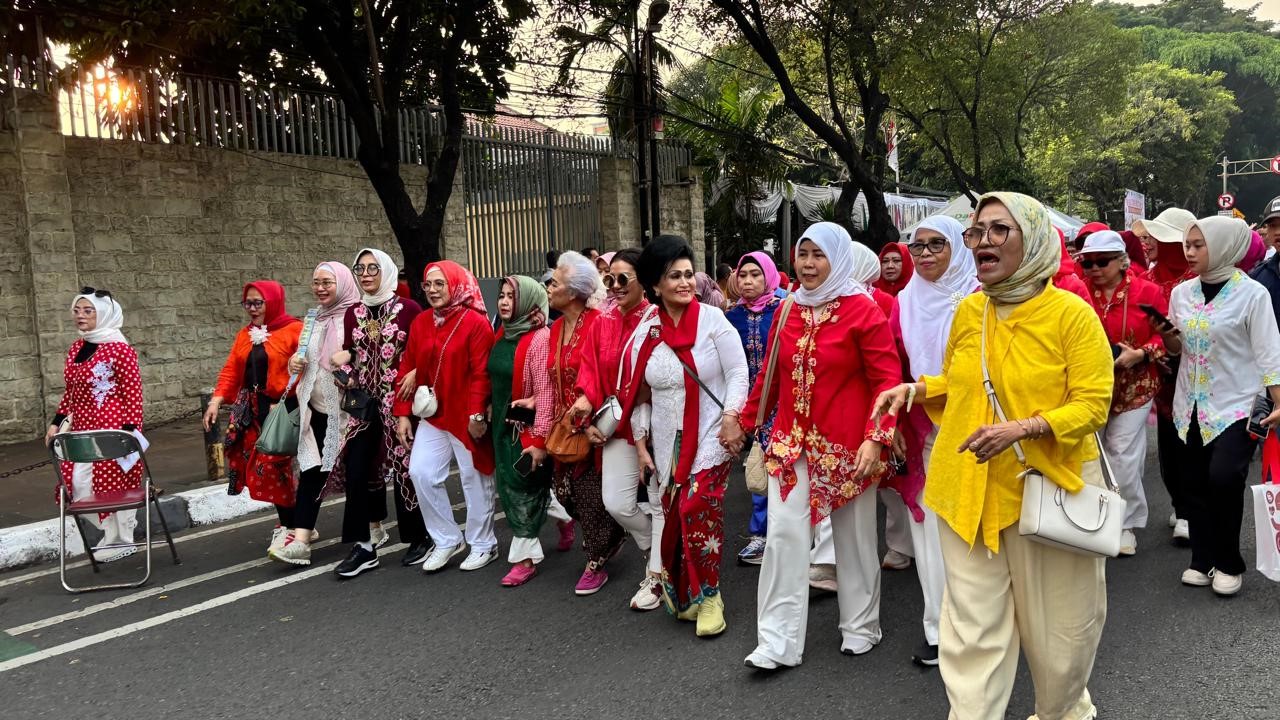
The Indonesian Women’s Congress (Kowani) is strengthening the ‘Tempe Indonesia Goes to UNESCO’ movement through a series of activities combining sport, cultural preservation, food security, economic empowerment and public health education. The event, held in the grounds of the Kowani office on Jalan Imam Bonjol No. 58, Central Jakarta, on Sunday (9/8/2026), was attended by more than 1,000 participants.
The programme formed part of the ‘Kowani Goes to UNESCO – Memory of the World’ initiative, with the main agenda being a 10,000 Healthy Steps Fun Walk. The route ran from the Kowani office grounds to the Hotel Indonesia roundabout area and back to the Kowani office as the finish line.
Kowani chairwoman Nannie Hadi Tjahjanto said tempe has significant potential to be developed not only as a traditional food but also as part of food security and a source of economic opportunity for the community, particularly women.
According to Nannie, tempe development can be pursued through various innovations using local food ingredients, not only soybeans but also sorghum and various legumes. This diversification is considered capable of producing a range of processed products while opening new business opportunities for women. “Tempe is not just food; it also has the potential to be developed into a source of family livelihood,” said Nannie.
Nannie believes that strengthening women’s economic position is an important part of building family resilience. Through skills, training, courses and certification, women are expected to have the ability to work or develop businesses independently.
In addition to the Fun Walk, the event featured the National Declaration of Tempe Indonesia Goes to UNESCO, a Tempe Festival, the Nusantara Sorghum Festival, the Nusantara Cassava Festival, a Nusantara Cooking Experience, an exhibition of cooperatives and MSMEs, and Tai Chi exercises.
The programme also included free health checks, nutrition education and stunting prevention, business matching, interactive activities, door prizes for participants and the distribution of productive tree seedlings.
One of the main agendas was the National Declaration of Tempe Indonesia Goes to UNESCO. Kowani is pushing for tempe to be further strengthened as part of Indonesia’s cultural wealth, with historical, social, economic and food value.
Nannie Hadi Tjahjanto said the growing recognition of tempe in various countries is a momentum for Indonesia to strengthen the preservation and recognition of traditions related to tempe.
According to her, the movement towards UNESCO is not merely about pursuing international recognition, but also about ensuring that the knowledge, skills and traditions of tempe-making remain alive and are passed on to the next generation.
Tempe has a broad ecosystem, from farmers and raw material suppliers to artisans, MSME players, processing industries and consumers. Strengthening tempe can therefore also deliver a wider economic impact. “If we do not move quickly, while tempe is increasingly recognised in various countries, we could be left behind. That is why tempe needs our continued support towards UNESCO,” said Nannie.
The event also highlighted a number of local food commodities through the Nusantara Sorghum Festival and the Nusantara Cassava Festival. The presence of these two festivals demonstrated Kowani’s efforts to encourage food diversification while increasing the economic value of local commodities.
According to Nannie, developing local foods such as sorghum can be one way to add value for farmers while expanding food choices for the public. Cassava also has the potential to be processed into various economically valuable food products. Through the Nusantara Cooking Experience, the public was invited to see how local food ingredients can be developed into more diverse and attractive food products.
Kowani believes that local food development must go hand in hand with community empowerment, particularly for women and MSME players. With innovation and wider market access, local foods can develop from consumption products into new sources of income.
As part of the programme, Kowani also presented a Cheap Food Movement to support the stabilisation of food supply and prices. The public could obtain a number of staple goods at relatively affordable prices, including SPHP rice at around Rp12,000 per kilogram, premium rice at Rp14,900 per kilogram, granulated sugar at Rp17,000 per kilogram, Minyakita cooking oil at Rp15,500 per litre, garlic at Rp30,000 per kilogram, shallots at Rp40,000 per kilogram, curly red chillies at Rp40,000 per kilogram, red bird’s eye chillies at Rp45,000 per kilogram, chicken meat at Rp36,000 per kilogram, beef at Rp114,000 per kilogram, chicken eggs at Rp24,000 per kilogram, and wheat flour at around Rp12,000 per kilogram.
These prices applied during the Cheap Food Movement and may change at any time.
The presence of the Cheap Food Movement reinforced the message that food security is not only about production but also about food affordability for the public and the stability of supply and prices.
Beyond food, Kowani is also continuing to promote the preservation of the kebaya as part of Indonesia’s cultural identity. The kebaya, which has been recognised by UNESCO as intangible cultural heritage, is considered to have significant potential to drive the creative economy.
Nannie believes the kebaya ecosystem can involve various MSME players, from fashion, accessories and make-up to crafts and other supporting products. Cultural preservation is also directed at engaging the younger generation so that the kebaya remains alive and develops amid changing times.
The Kowani programme also paid attention to public health through free health checks and nutrition education and stunting prevention. This agenda complemented Kowani’s message that family resilience is built not only through economic independence and food availability but also through knowledge of health and nutrition.
The implementation of the programme was supported by the Coordinating Ministry for Food of the Republic of Indonesia, the Ministry of Community Empowerment, Kowani and the National Food Agency.
Kowani also involved women’s organisations, communities, MSME players, businesses and various stakeholders to strengthen the movement for food security and the preservation of Indonesian culture.
Through this event, Kowani wanted to show that tempe and various Indonesian local foods not only have cultural value but can also be part of strengthening the community’s economy and family resilience.
With around 1,000 participants taking part in the Fun Walk and various supporting agendas, the event served as a space for collaboration between the government, women’s organisations, communities, business players and the public.
For Kowani, Tempe Indonesia Goes to UNESCO is more than just a cultural preservation movement. The initiative is expected to open opportunities for local food development, women’s empowerment, MSME strengthening, improved farmer welfare, and the introduction of Indonesia’s wealth to the global stage.
Source: jawawa.id (https://jawawa.id/newsitem/kowani-promotes-tempe-to-unesco-through-fun-walk-and-nusantara-food-festival-1786251026)
Originally published by Media Indonesia (https://mediaindonesia.com/otomotif/919827/kowani-gaungkan-tempe-menuju-unesco-pada-fun-walk-dan-festival-pangan-nusantara-), translated from Indonesian