
Koster stresses Bali pursues energy independence, not just zero emissions
Bali is not only pursuing Net Zero Emission; its main agenda is for Bali to be energy independent, with clean, new and renewable energy sources.
Denpasar (ANTARA) - Bali Governor Wayan Koster has affirmed that the Province of Bali is pursuing not only zero or clean emissions but also energy independence in order to maintain the quality and sustainability of the environmental ecosystem on the Island of the Gods.
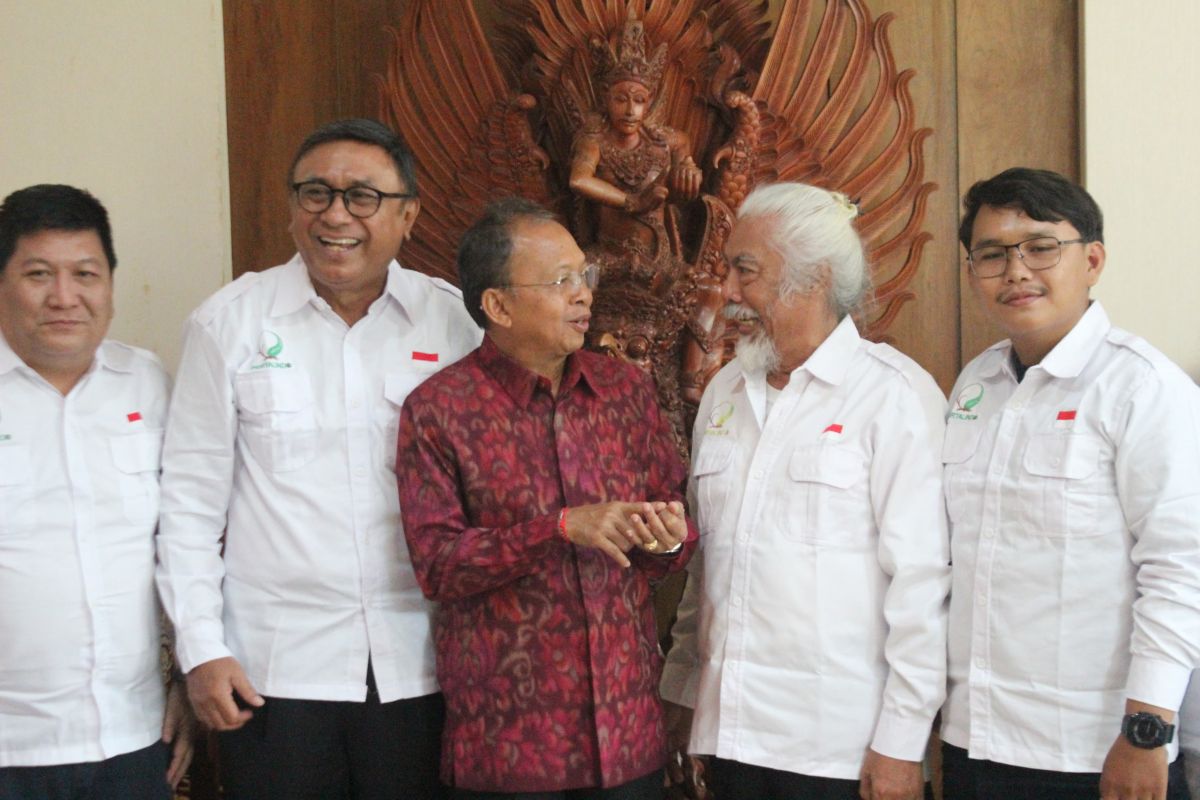
“Bali is not only pursuing Net Zero Emission; its main agenda is for Bali to be energy independent, with clean, new and renewable energy sources,” said Wayan Koster when receiving an audience with the Bali Provincial Board (DPP) of the Indonesian Association of Environmental Experts (Pertalindo).
Koster, in a statement in Denpasar on Saturday, explained that this clean energy policy stems from a fundamental desire to build a Bali that has a clean and high-quality environment, not merely to fulfil a global agenda.
The main focus of the policy is to ensure that the air breathed by the public is of good quality, the environment remains clean, pollution can be reduced, people live healthily, and the food consumed is of high quality.
To strengthen environmental management, the Bali Governor emphasised that the clean energy policy must go hand in hand with forest expansion and rehabilitation, as well as increased tree planting to add to the natural oxygen supply.
Bali’s future development is being strictly directed so that the environment is not polluted again.
The Bali Provincial Government is also encouraging the transformation of Bali’s energy system by gradually reducing dependence on fossil-fuel power plants, including the electricity supply of around 35 MW from Paiton which still uses coal.
This transformation has been included in PLN’s electricity system plan and the process is underway.
Going forward, the Bali Provincial Government is directing an increase in the use of clean energy from various local natural potentials, such as solar power, gas power, wave energy, and wind energy.
One of its main strategies is accelerating the development of Solar Power Plants (PLTS) in offices, shopping centres, schools and other public facilities through a governor’s circular.
This effort has received support from the Central Government through the Ministry of Energy and Mineral Resources with an allocation of PLTS capacity in Bali of up to 1,500 MW.
“In this way, air quality is good, pollution falls, and disease also decreases. That is my target,” said Koster.
According to him, the success of reducing fossil energy will have a direct impact on improving the quality of life of the community.
Bali’s concrete steps in promoting this clean energy policy have also received international appreciation, with Governor Koster being invited to London to discuss the implementation of the global energy transition policy.
Regarding the target of clean energy as well as independence, the Chairman of the Bali DPP Pertalindo, I Ketut Gede Dharma Putra, expressed his commitment to supporting the Bali Provincial Government through the use of expert competence, certification bodies, and accredited laboratories in the environmental field.
Pertalindo Bali also invited Governor Koster to open the Regional Working Meeting (Rakerda) and International Conference with the theme Utilisation of Clean Energy in Bali Towards Net Zero Emission 2045 on 22 September 2026.
Source: jawawa.id (https://jawawa.id/newsitem/koster-stresses-bali-pursues-energy-independence-not-just-zero-emissions-1787997123)
Originally published by Antara (Indonesian) (https://www.antaranews.com/berita/5716741/koster-tegaskan-bali-kejar-mandiri-energi-bukan-hanya-nol-emisi), translated from Indonesian