
Korlantas Strengthens ETLE System to Ensure Transparent, Accountable, and Monitorable Enforcement
The Indonesian National Police Traffic Corps (Korlantas) is strengthening the Electronic Traffic Law Enforcement (ETLE) system by building an integrated traffic law enforcement framework within a single Criminal Justice System (CJS) ecosystem.
This system connects the enforcement process by the Police, the resolution of cases in the Courts, and the payment and recording of fines through the Attorney General’s Office. The strengthening of this integration is intended to make the electronic traffic fine enforcement process faster, more transparent, accountable, and easier to monitor, while providing service certainty to the public.
One of the developments encouraged by Korlantas is a shared dashboard that allows relevant agencies to monitor enforcement data, court decisions, and fine payments within a single system. With this dashboard, each institution can obtain the same information based on integrated data. Monitoring the progress of a case can be conducted more rapidly without the need to wait for manual data exchanges.
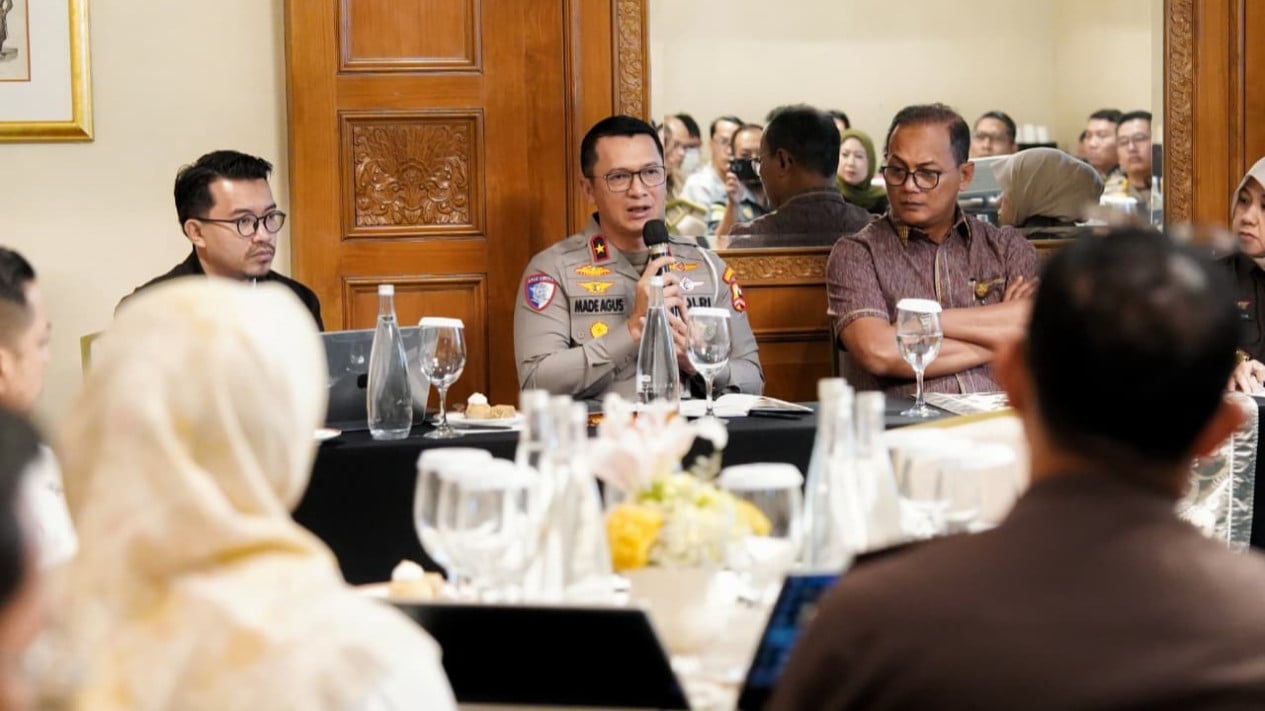
Brigadier General Pol I Made Agus Prasatya, Director of Law Enforcement at Korlantas Polri, stated that system integration requires the collaboration of all agencies involved in the traffic fine enforcement process. “We cannot work alone; we need the support of the Attorney General’s Office and the Supreme Court,” said Made Agus.
He noted that inter-agency connectivity is the key to building an integrated law enforcement ecosystem. “So, starting from enforcement, then the case resolution process, fine payments, up to the recording, everything can be connected within one system,” he added.
Further strengthening is being implemented in the electronic traffic fine payment system. Public payments are being directed to connect directly with state revenue mechanisms through official banking systems. This integration is expected to make the payment process and revenue recording faster and more measurable, ensuring that no funds remain unallocated due to separate administrative processes.
Every transaction is recorded electronically so that it can be traced and monitored by the relevant agencies. This mechanism also provides certainty to the public regarding the status of fines that have been paid. The digitalisation of payments also strengthens transparency, as transactions are conducted through official channels and recorded in the system, ensuring that reconciliation no longer relies on physical documents.