
Korlantas Deploys Advanced Technology to Tackle Over Dimension and Over Loading Vehicles
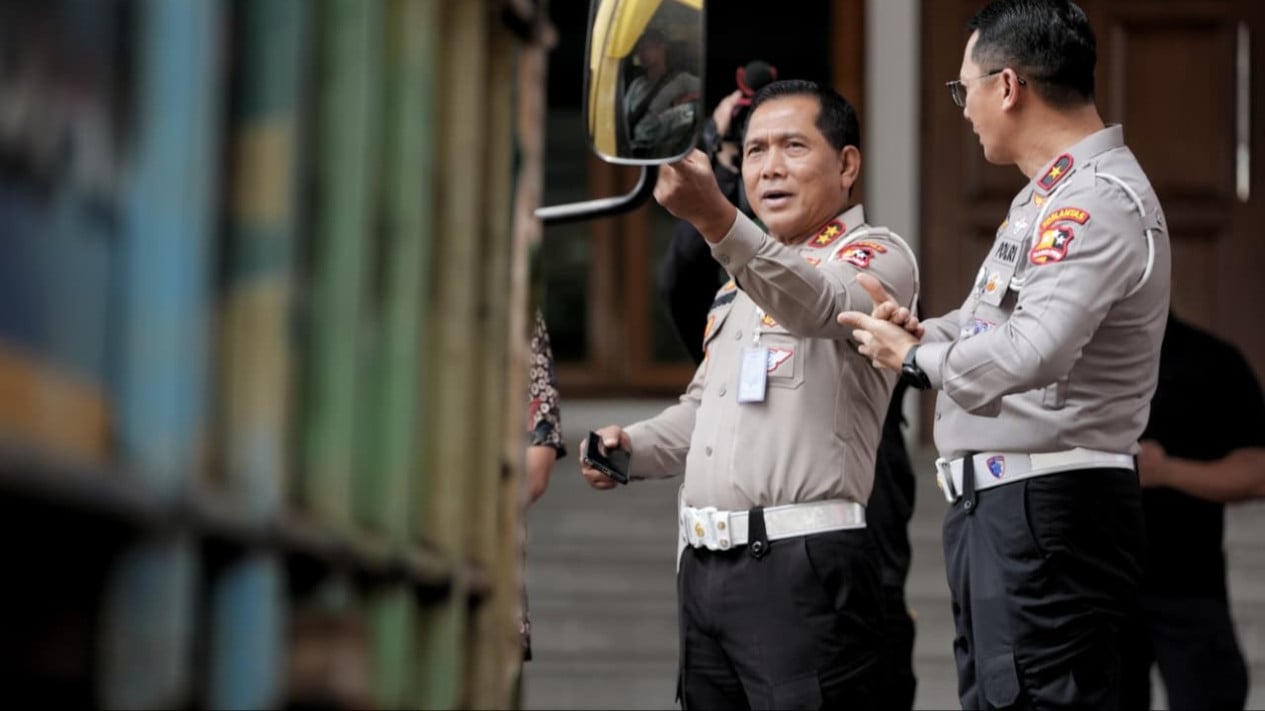
The Head of the Indonesian National Police Traffic Corps, Inspector General Wibowo, has inspected the readiness of specialised law enforcement equipment (almatsus) for mobile units intended to support enforcement against Over Dimension and Over Loading (ODOL) vehicles.
The inspection took’place at the NTMC Polri field on Thursday (1/10/2026). The check was conducted to ensure that the vehicles and their supporting devices are ready for use in supporting traffic law enforcement.
During the activity, Wibowo was accompanied by the Director of Legal Affairs of Korlantas Polri, Brigadier General I Made Agus Prasetya, and the Chief of Police Policy Maker, Brigadier General Aries Syahbudin.
Wibowo stated that these vehicles are part of the Korlantas Polri specialised equipment prepared to support mobile traffic law enforcement, specifically targeting violations involving over-dimension and over-loading.
According to Wibowo, handling ODOL violations is not merely about traffic infractions. Vehicles with excessive dimensions and loads also pose potential risks to safety, increase the likelihood of traffic accidents, and impact the durability of road infrastructure.
To support inspections, these vehicles are equipped with several technology-based devices. These include ANPR (Automatic Number Plate Recognition) cameras to read vehicle registrations, axle cameras to determine the number of axles and dimensions, and surveillance cameras to record the inspection process.
Additionally, the equipment features Weight in Motion (WIM) technology, which can be used to weigh vehicle loads and dimensions while in motion.
This specialised law enforcement equipment is also integrated with the National ETLE (Electronic Traffic Law Enforcement) system. This integration supports technology-based traffic law enforcement, ensuring that data and evidence from field inspections can be managed more comprehensively to support enforcement actions.
With these devices and system integrations, the inspection and enforcement processes are expected to be faster and supported by robust evidence.
“Our steps regarding inspections, including the enforcement of traffic violations or crimes, will become faster, easier, and supported by strong, accountable evidence,” said Wibowo.