
Koperasi Merah Putih and the effort to restructure the people's economy
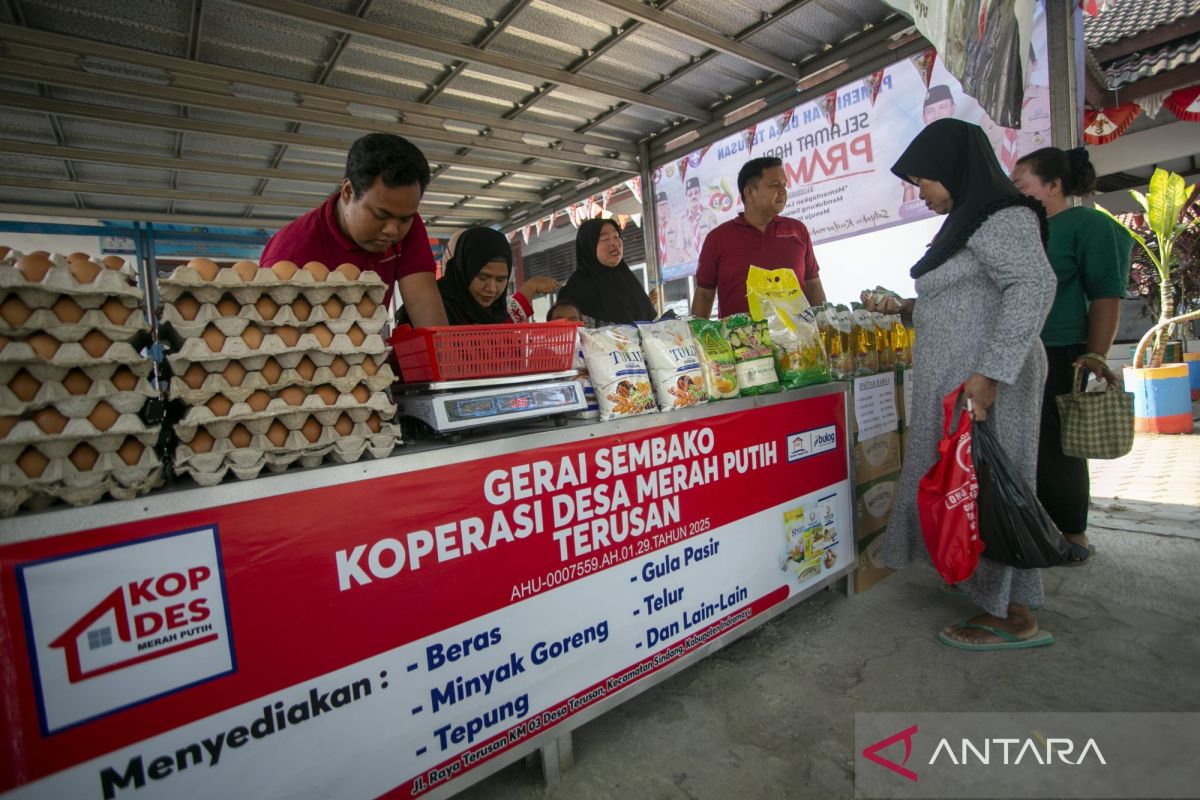
We are witnessing something that for decades has too often stopped as a sentence in the constitution: economic democracy that is beginning to take institutional form.
There are times when a policy cannot be adequately understood by asking how much it costs. We need to step back and ask a more fundamental question: why is the policy necessary in the first place?
That is the kind of question that should precede the debate on the Koperasi Desa/Kelurahan Merah Putih (KDKMP).
If KDKMP is immediately placed on a calculator—how much capital, how much turnover, when will it break even, who bears the losses—we may obtain a reasonable business analysis, but we lose the historical reason why the state feels it necessary to intervene.
KDKMP was born after Indonesia spent decades pursuing economic development. Modern markets have grown, trade has become more open, and technology allows transactions to be completed in seconds.
After all that progress, one old question still follows us. Why do so many food producers live far from the prosperity that should be generated by the goods they produce?
The problem, it turns out, is not simply the ability to produce goods, but who controls the journey of goods after they are produced.
Between the paddy field and the dining table there are warehouses, dryers, transport, working capital, price information, processing, distributors, wholesalers and retailers. At every link in the chain there is added value. And the further a commodity travels from its producer, the more parties have the opportunity to obtain a share of that value.
Thus, the poverty of producers is not always caused by low productivity. It can also arise from the low position of producers in the economic structure.
This is where we need to reread one word in Article 33 of the 1945 Constitution that is often quoted but rarely seriously contemplated: ‘disusun’ (structured).
The Constitution does not say the economy should merely be ‘allowed to grow’. Article 33 paragraph (1) states that the economy is structured as a joint endeavour based on the principle of family. After the constitutional amendment, paragraph (4) even affirms economic democracy with the principles of togetherness, efficiency with justice, sustainability, independence and balanced national economic progress.
The word ‘structured’ carries major philosophical consequences. It assumes that the economic structure is not something that must be accepted as a law of nature.
The state may—indeed, in certain circumstances must—establish institutions, create rules, correct imbalances of power and build the economic capacity of society so that economic freedom does not turn into the freedom of the strong to determine the fate of the weak.
That is the more appropriate starting point for understanding KDKMP. It is not merely a project to build shops. It is the state’s commitment to restructure part of the economic structure from below. This is why state intervention does not automatically mean state capitalism.
State capitalism occurs when the state becomes the owner or controller of capital and uses that power as a dominant economic actor. The cooperative ideal is different: the state uses its power to help society build collective capital whose ownership lies with its members.
The difference lies in a simple question: after the intervention is carried out, who becomes stronger? If the state becomes stronger as a trader, we may suspect statism. If large corporations become stronger, we are enlarging the concentration of private capital.
But if farmers, fishers, livestock breeders, small traders and village households obtain an economic organisation that they own together, then the state is doing something else: distributing economic capacity. That is what the essence of KDKMP should be.
Reducing dependence
The state is present, initially not to replace the people forever, but to create institutions that will eventually make the people no longer constantly need state assistance.
The paradox is interesting. The most successful state intervention is precisely the intervention that ultimately reduces society’s dependence on the state.
For decades we have held the belief that if markets are expanded, infrastructure is built, credit is available and trade becomes more open, economic benefits will eventually flow automatically to the lower levels of society.
Some of that has indeed happened, but a larger part has not.
This is why cooperatives, from the beginning of their history, are not merely a form of business entity. They are a social technology for turning many small people into one economic force large enough to negotiate.
Cooperatives do not abolish the market, but they change the people’s position within the market.
From here we can understand why the distribution of subsidised goods is an important issue.
The state spends money so that fertiliser, energy, food or certain goods can be obtained by the public at prices below their economic price.
But after the subsidy is provided upstream, the goods must make a long journey to the recipients. It is on that journey that a paradox can occur.
The state subsidises goods for the people, but at certain links in the chain the goods are treated again as commodities from which margins are sought. In fact, for some commodities, subsidies create new rents because the difference between the subsidised price and the market price has economic value.
If so, the problem is no longer simply the size of the subsidy budget, but the architecture of subsidy distribution.
KDKMP has the potential to become an institutional answer to that problem—provided the design is correct. Not by killing off small shops.
What must be done is to make cooperatives public distribution nodes owned by the community. Small traders become part of the network.
Cooperatives carry out purchasing aggregation, warehousing, record-keeping and distribution.
Source: jawawa.id (https://jawawa.id/newsitem/koperasi-merah-putih-and-the-effort-to-restructure-the-peoples-economy-1786863238)
Originally published by Antara (Indonesian) (https://www.antaranews.com/berita/5697025/koperasi-merah-putih-dan-ikhtiar-menyusun-kembali-ekonomi-rakyat), translated from Indonesian